
When I work with a poem, I will sometimes read it for pleasure but then will sometimes “pull” at it.
Here is a series of pictures for how Donne’s sonnet was atomized. In the post for tomorrow, I will see about writing a unified interpretation/appreciation of the poem.

The bare text of the poem, whose first few words has seeped into common parlance, often without folks recognizing the source in this poem.
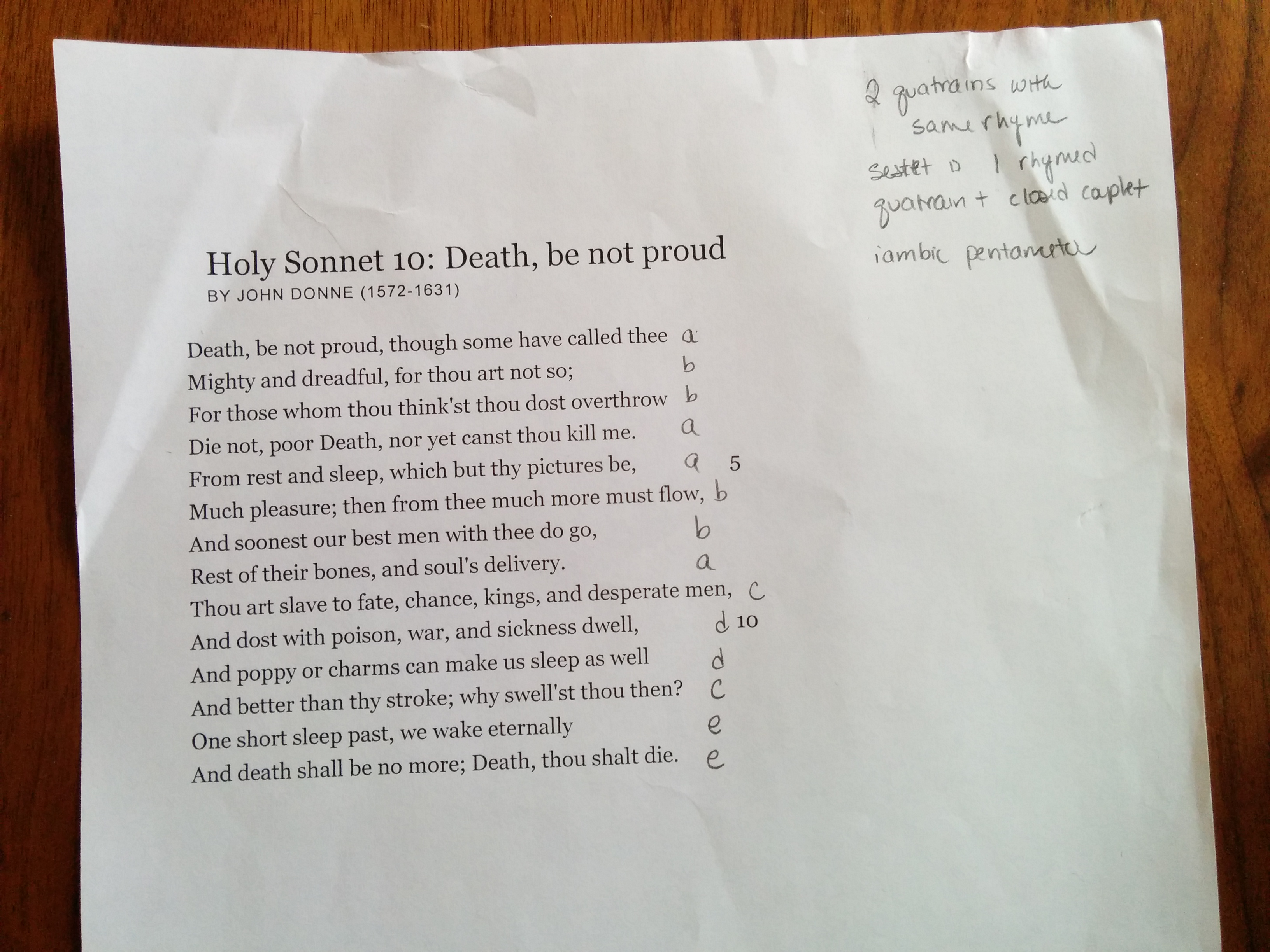
Generally, I identify the poetic form, rhyme scheme, stanza structure. I also check for end punctuation. This one has full stops for each quatrain.
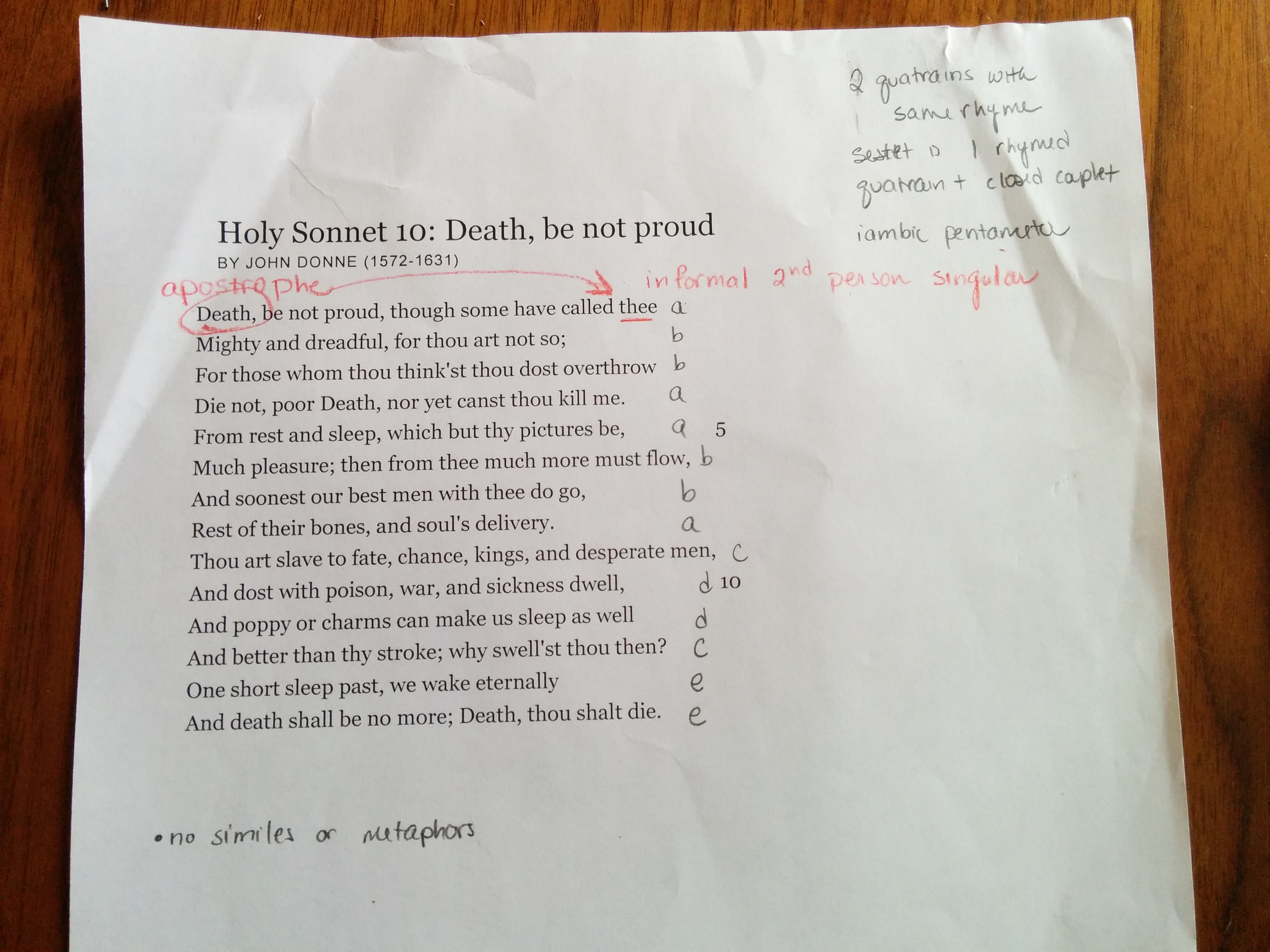
Next I look for any obvious literary or rhetorical devices. Donne personifies death and addresses it directly in apostrophes throughout the poem. What is interesting is that there are no discrete similes or metaphors.
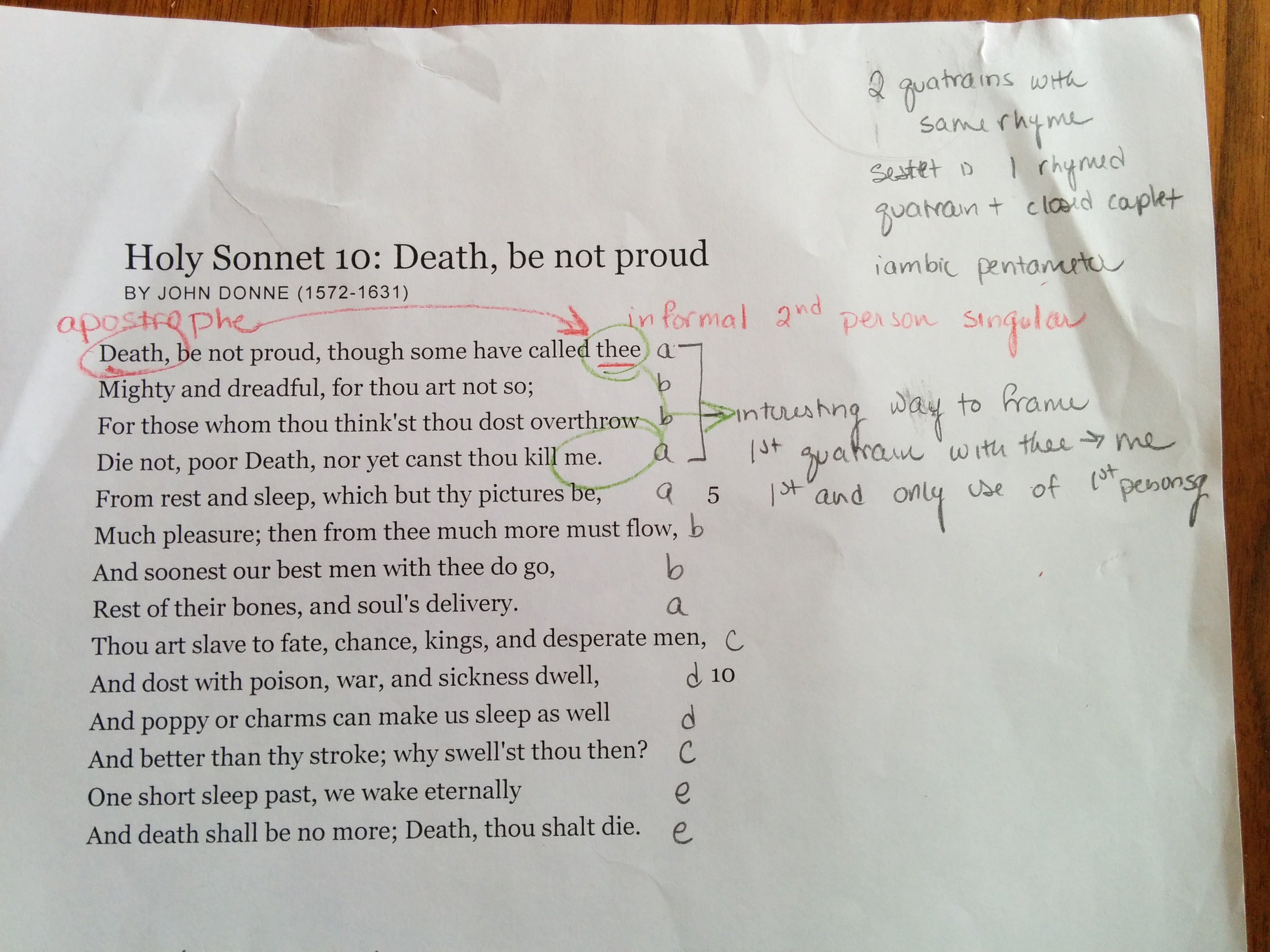
When Donne addressees Death, he uses the second person singular informal. This choice mirrors how God is addressed in the King James bible as “thou.” In both cases, the choice of pronoun shows intimacy. In the case of God, the informal pronoun suggests that the narrator has a close, loving, respectful relationship. In the case of Death, the informal pronoun suggests disrespect and derision. In Shakespeare’s plays, characters will use this pronoun for those who are beneath them socially or those who are being disparaged.
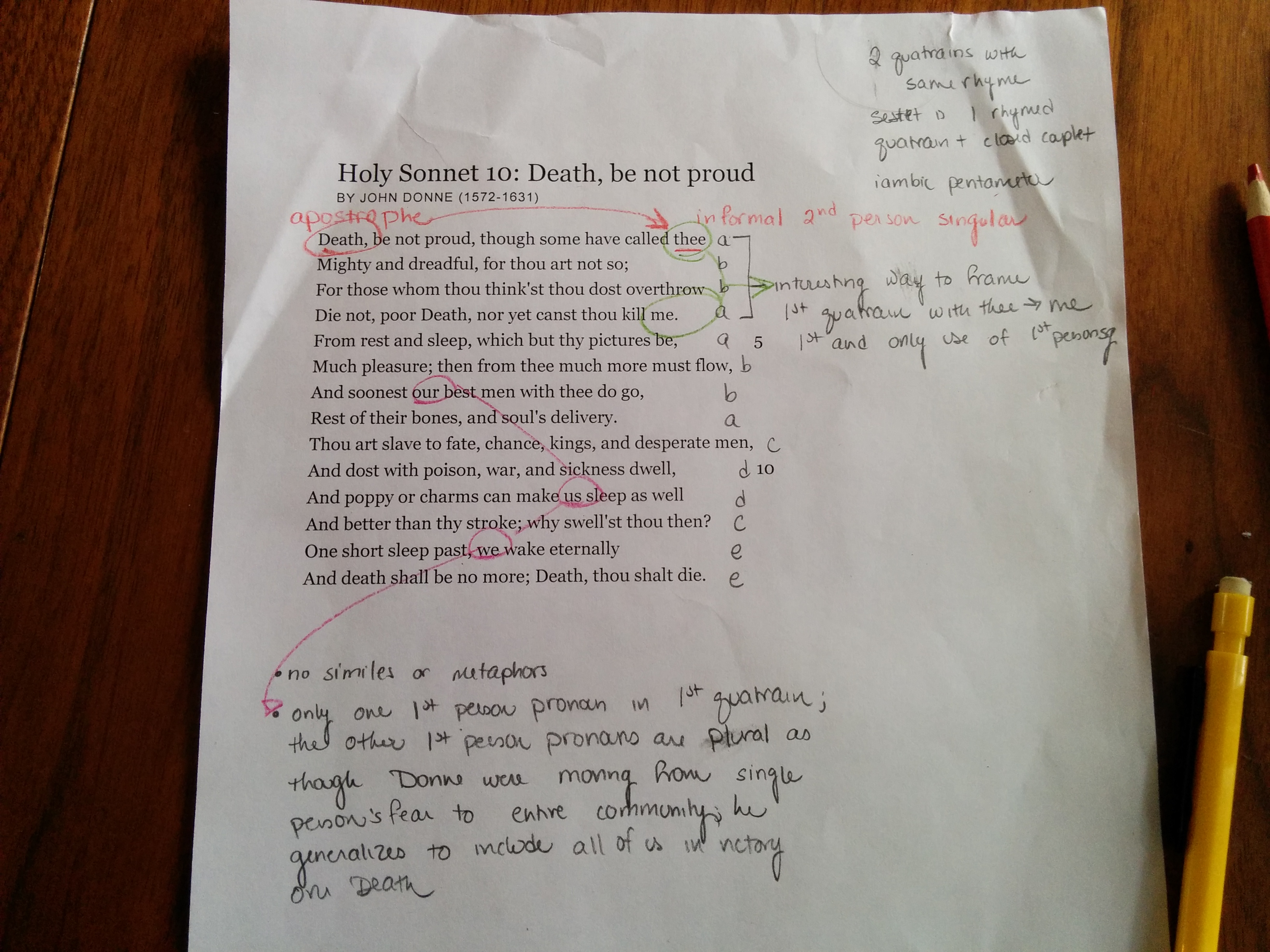
I also check every poem for repetition. This one repeats negative words. Not much else to say since it is in the note.

Next, I noticed the reference to pictures. To paraphrase, Donne tells Death that it is just another version of sleep. Sleep and Death are pictures of each other. I want to do some more work and rereading of Macbeth and Hamlet to see how Shakespeare uses pictures in those plays. I suspect that saying death is like sleep is just a worn trope.
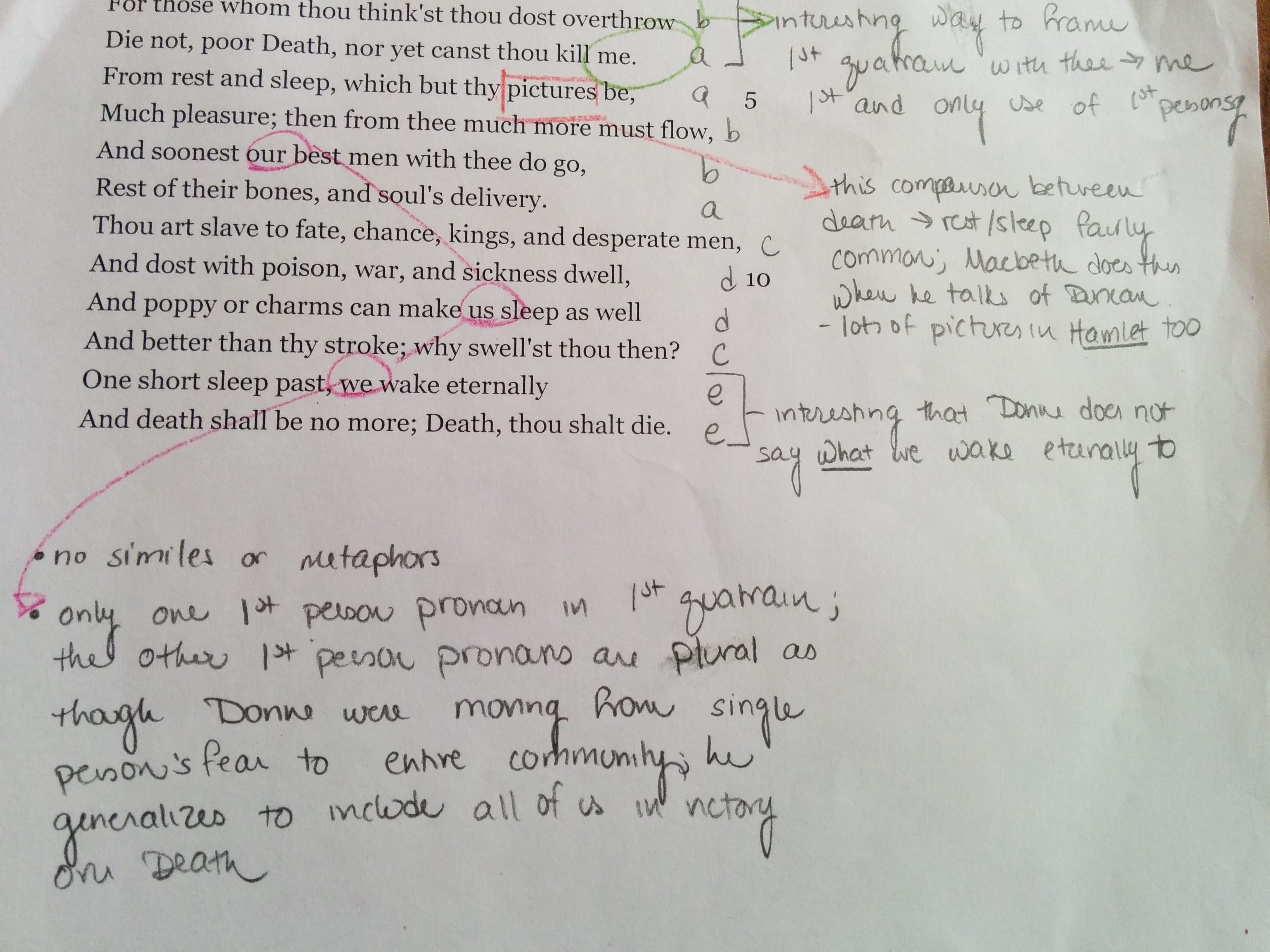
The poem ends with a closed heroic couplet. At the time I was marking up the poem, I was focused on how Donne does not actually say where we go after we die. Now I am struck by how he contrasts “eternally” and “die.”
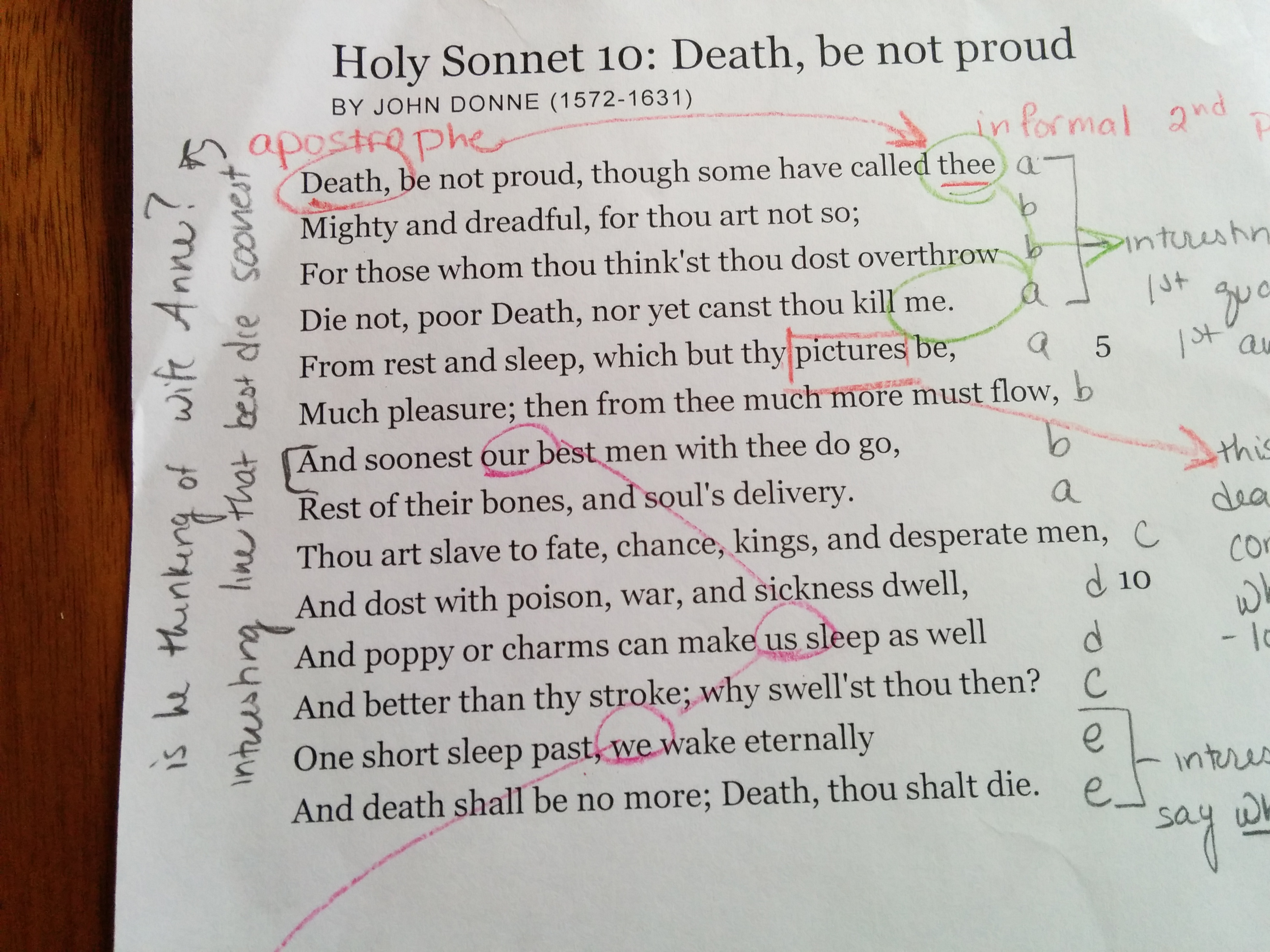
This next note is just thinking about why Donne says that the best men meet death soonest. This just seems to be another trope about how the most beautiful and the honorable always die first.
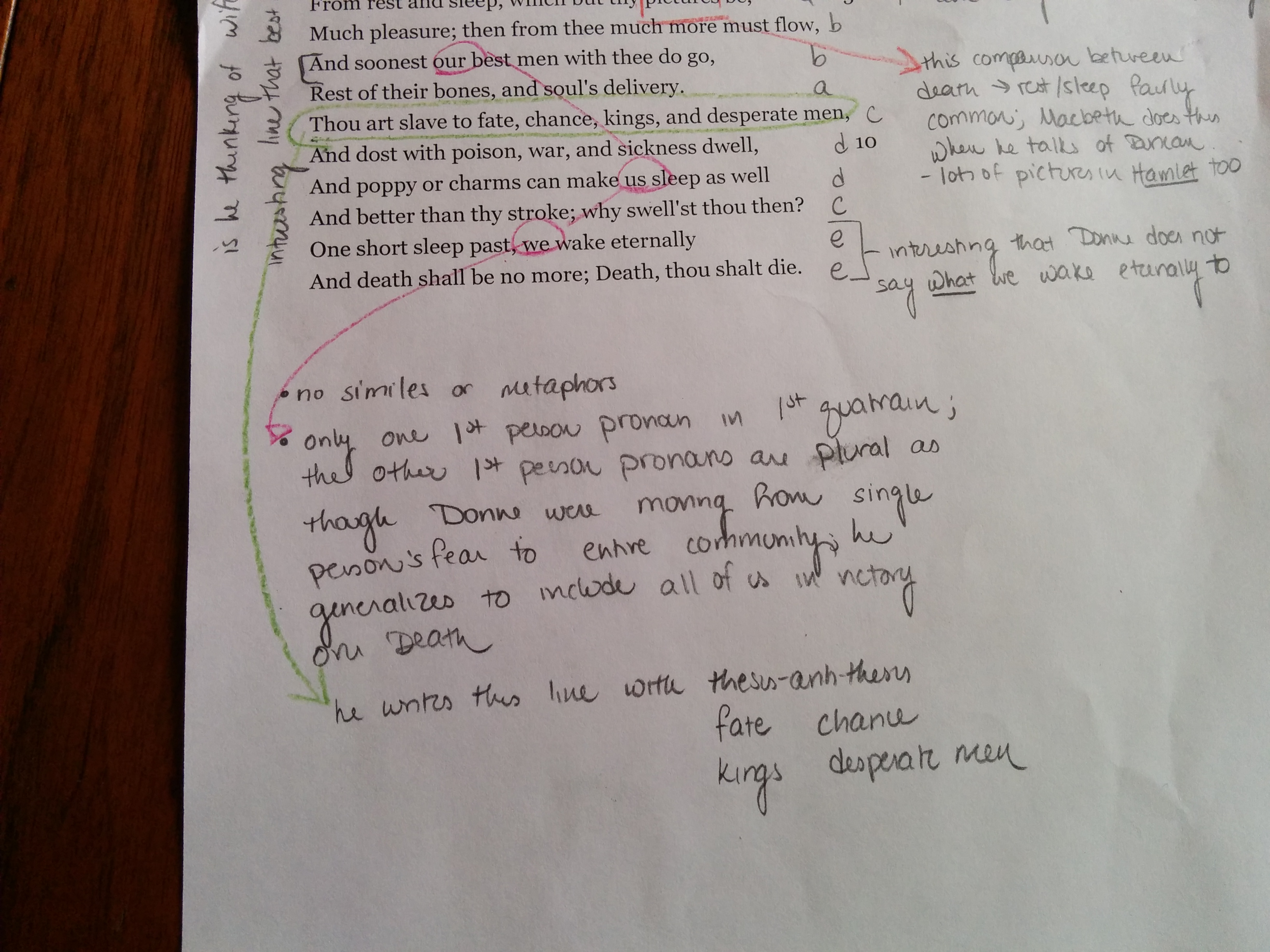
The first line of the sestet has a 4 item list of what enslaves Death.

For this comment, I came back to the negatives in the sonnet.
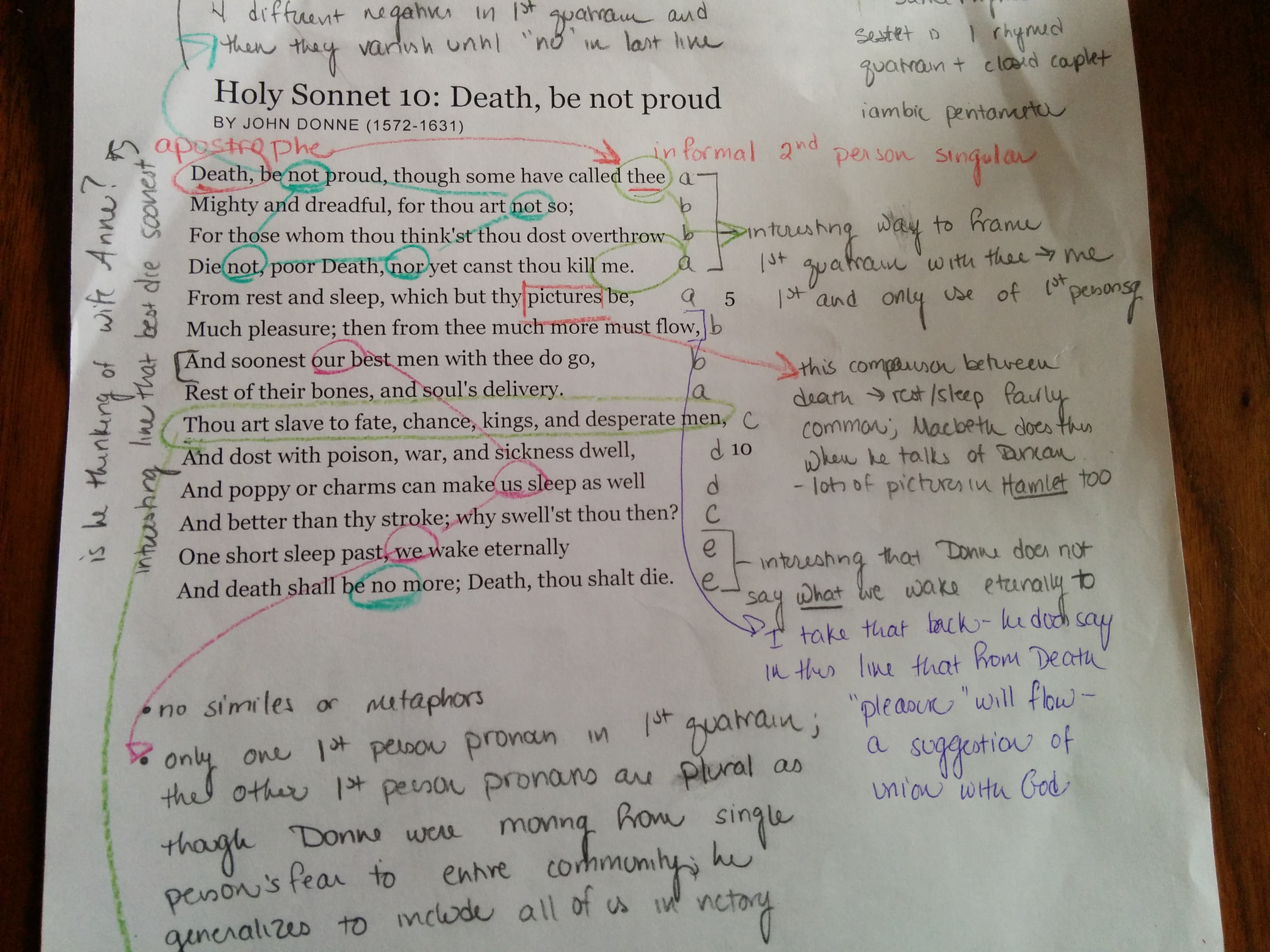
In the purple script, I revise my earlier comment that Donne does not say anything about what the after life is like. He does but it is in line 6.

Sound echoes and patterning is critical for binding the lines of a poem together. Here Donne plays with the /well/ sound, using the rhetorical technique of prosonomasia. Another great example is when Macbeth says in Act III, “I am cabined, cribbed, and confined.”
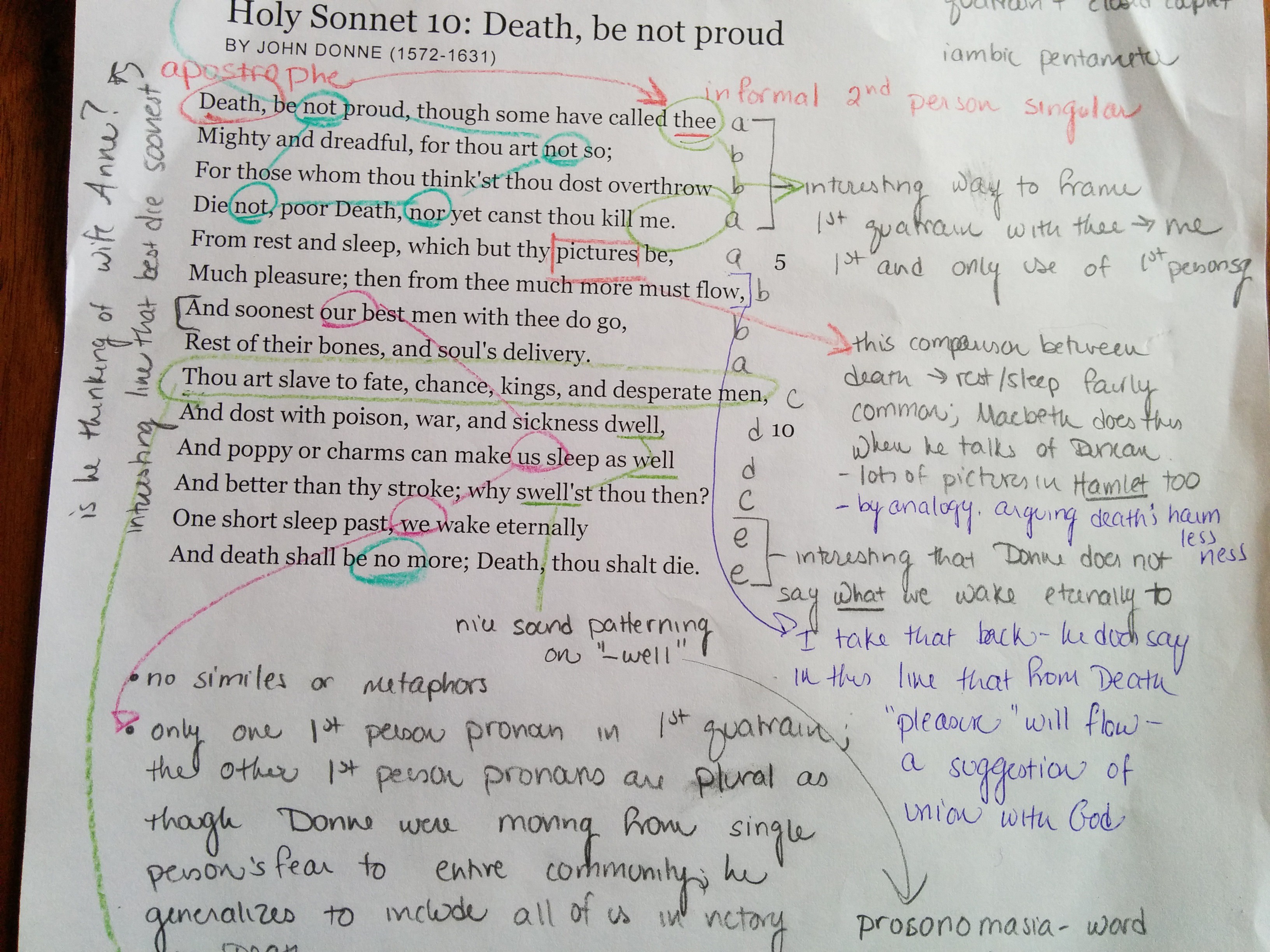
I came back to the picture comparison in the second quatrain. Not much else to say.



 Who needs to think?