
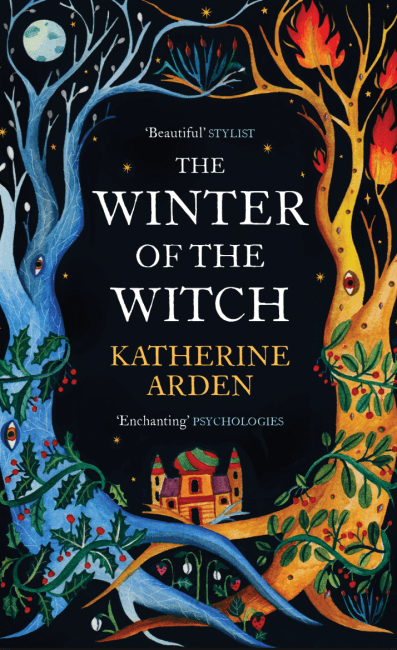
 Recently I just finished the third book in Katherine Arden’s Winternight trilogy about a woman in medieval Russia who takes on the responsibility of trying to save her people of Rus from human depredations and supernatural threats and negotiate a compromise between Christianity and animism.
The third book was vastly more satisfying than the second.
Without giving away too much the plot, Vasya reunites with the winter-king after freeing him from a spell — any astute reader of this genre of books knows that they will inevitably reunite. But the way Arden describes the morning after has a wryly humorous moment when the winter-king Morozko says that bathhouses will now be forever seen as places for unseemly encounters.
Much later at the book’s climax, Vasya and Morozko have an argument about what Vasya should do.
Here is the conversation:
What I love is Vasya’s declaration that she as a woman is allowed to want the things that a man wants: power, honor, respect, freedom.
Arden writes the scene and prepares for the scene in such a way that the characters are believable in that moment and Vasya’s declaration is not out of place in medieval Russia. So yes, she does give Vasya the desires and ambitions of a modern woman, but she also gives Vasya a family lineage which aligns to Russian folklore traditions of strong women who are labeled witches (such as Baba Yaga) and makes her declaration believable.



 Who needs to think?