
I have carded almost 1 pound of a 5 pound merino fleece, which I bought at the 2024 Maryland Sheep and Wool Festival. Probably when my SH reads this blog (and he reads my posts almost as soon as I publish them) will be yet another confirmation that my STABLE is too big.
Anyway. After carding nearly a pound of wool, I am finally beginning to understand the fleece I bought.
I have developed a process that works for the moment so that carding and spinning an entire fleece does not seem like an impossible undertaking. I focus on 1 ounce or approximately 30 grams at a time.
I weigh an ounce of fiber and then spend about an hour and a half popping the locks and carding them into rolags.
Now when I have a clump of wool, I look for a staple where the wool forms a section — usually between 1-3 inches in width.
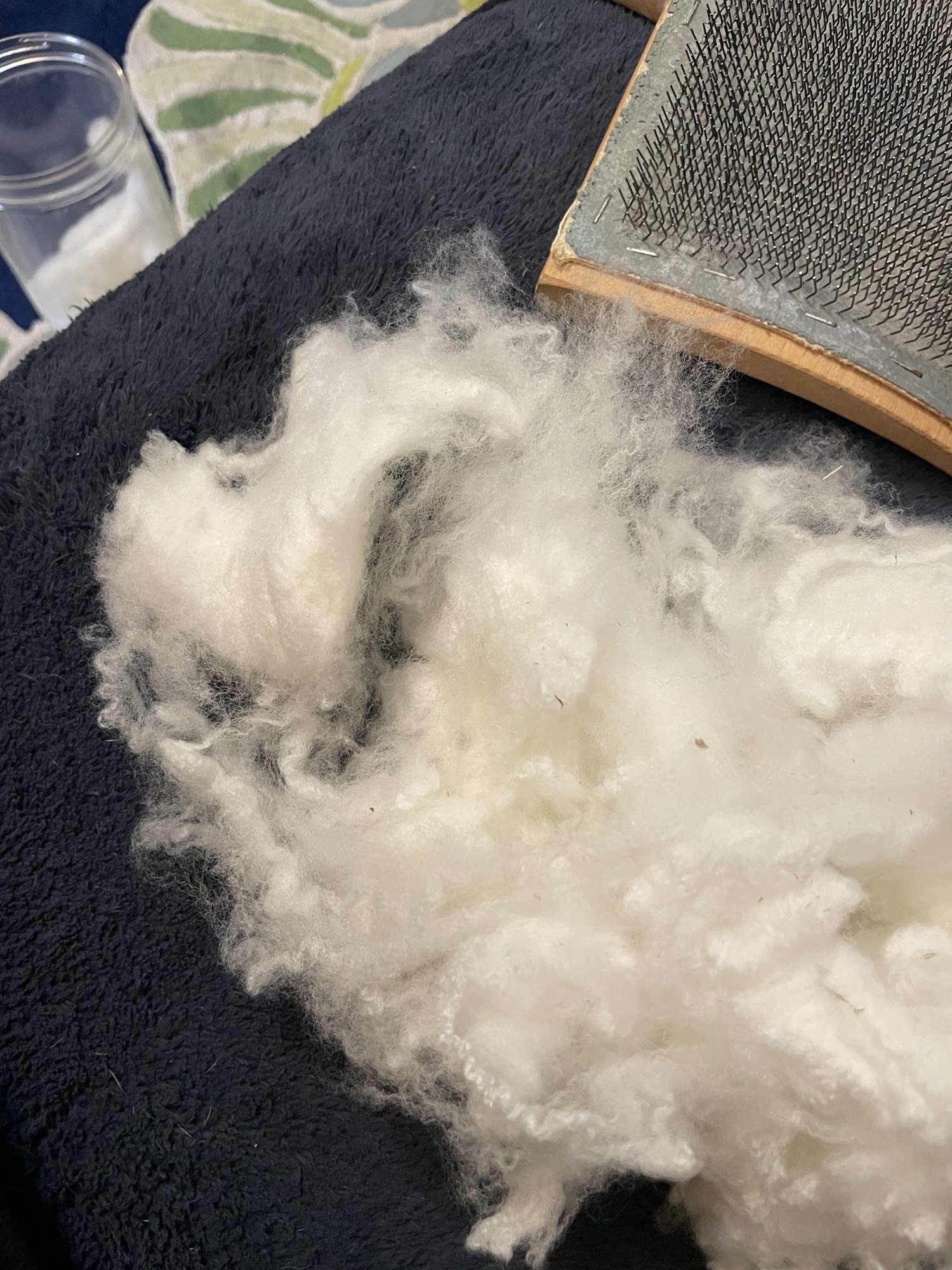
If you look in the picture above, do you see that clump that kind of stands apart toward the left? That is what I am looking for. I grasp that section by the cut end and pull it away.
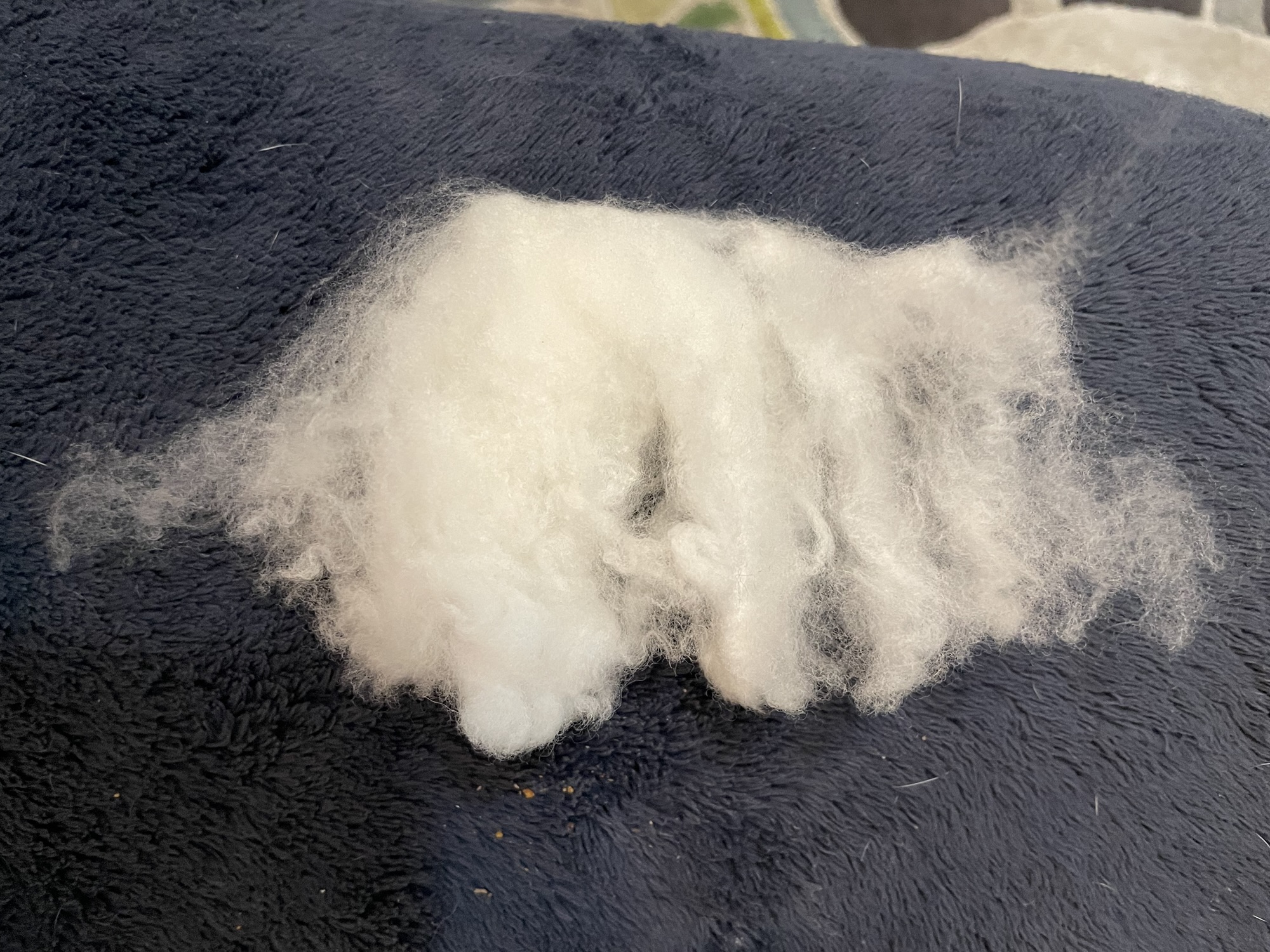
There it is laid out. At the top, you can see the straight edge where the wool was cut from the fleece. At the bottom, you can see the crimped, wavey end of the lock. I separated the cut end a bit so it was more spread out and thus easier to card.
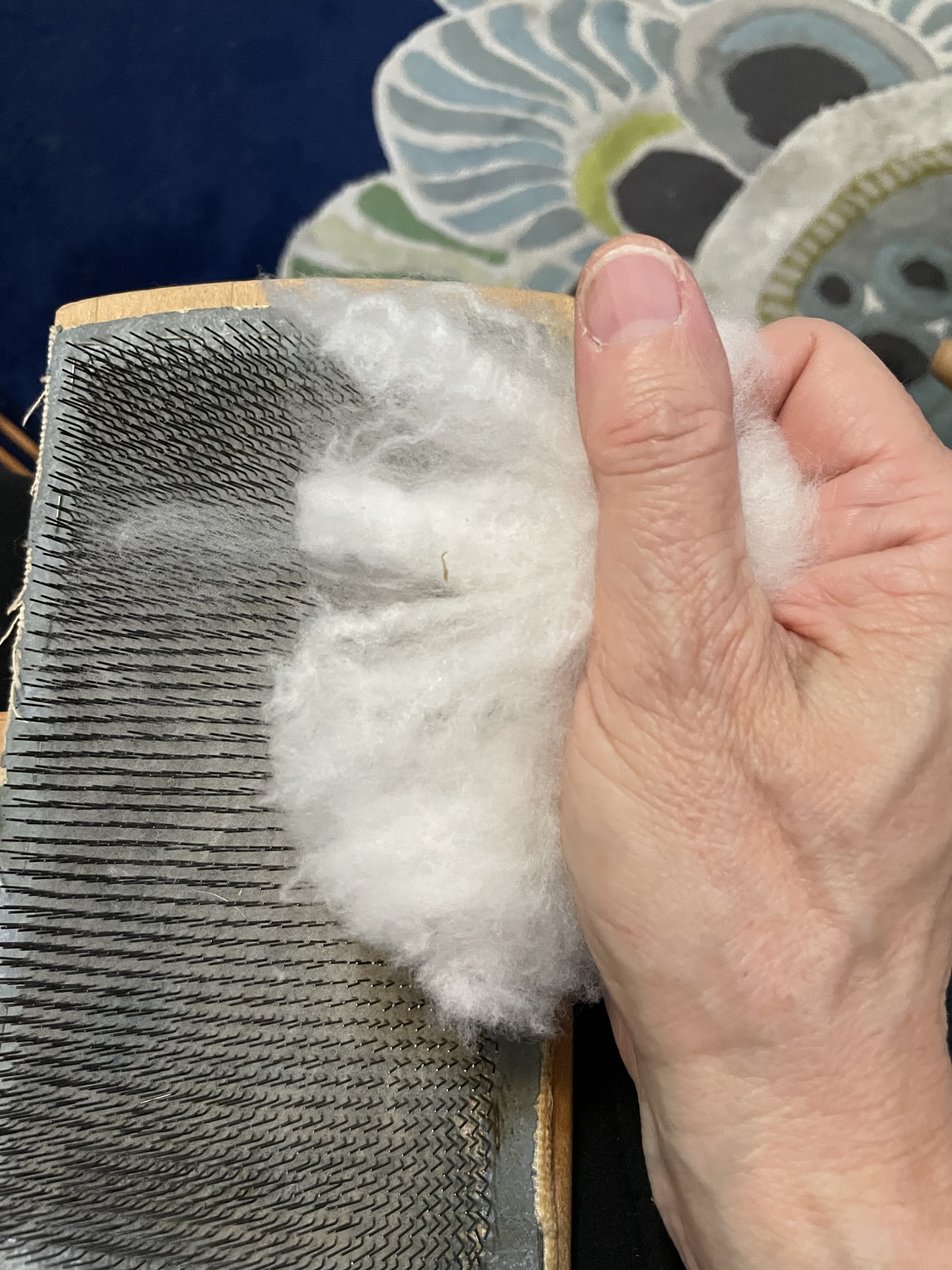
In the picture above, I am popping out the cut end by tapping it into the teeth of the cards and popping it out to separate the fibers. I turn it over and then do the other side of the cut end. Then I flip the lock and pop open the curly end on both sides.
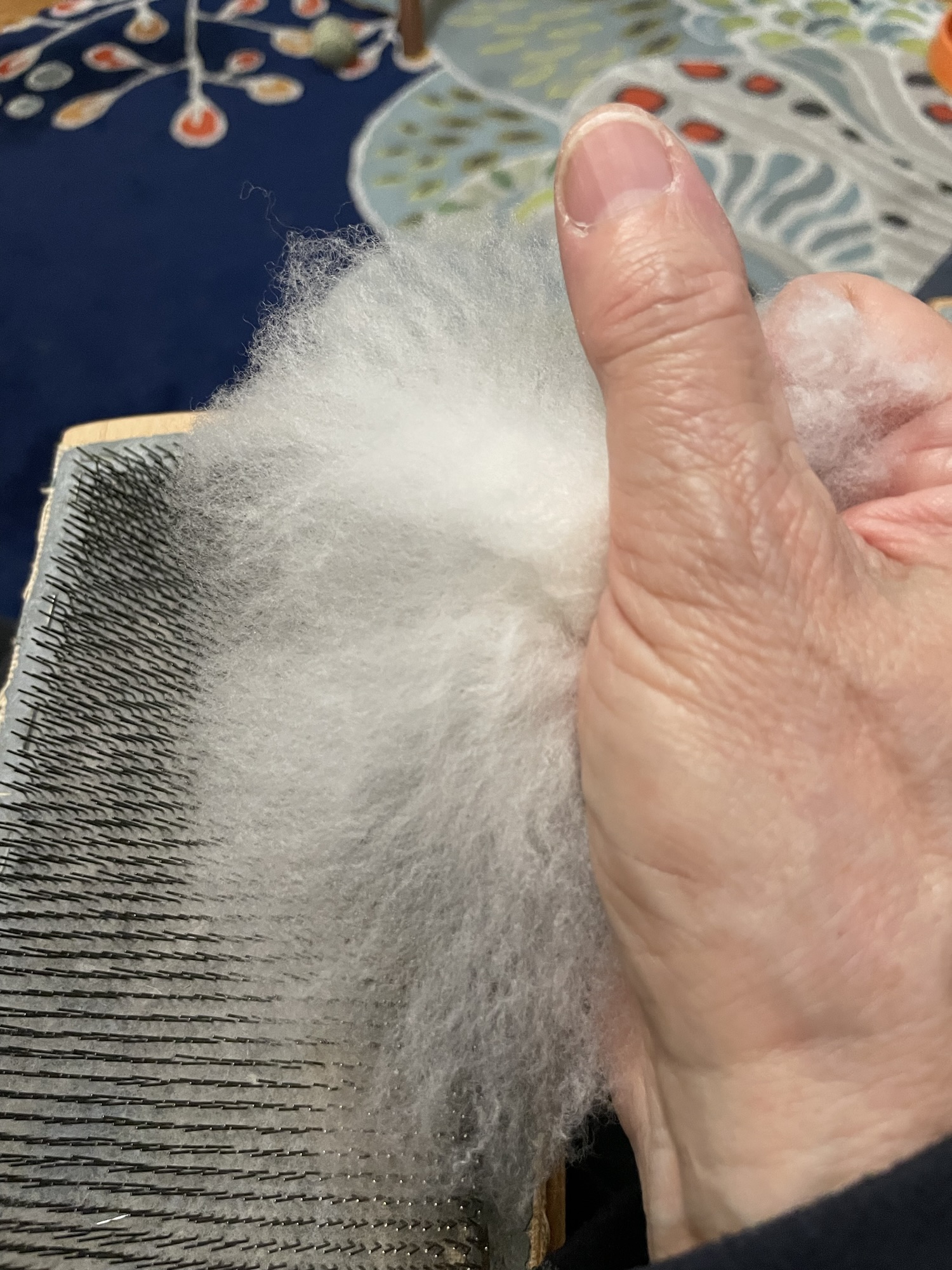
Here is a picture of a lock with one side “popped.” See how the fibers are fanning out and have more air to them?

And here is a picture of a fully loaded comb and the resulting rolags.
I used to think that carding wood was tedious and boring and avoided it whenever possible. The wool I carded never seemed to produce a smooth yarn. Now I finally understand that it was my fiber preparation that was the problem and not my spinning.



 Who needs to think?