Late May Garden Update

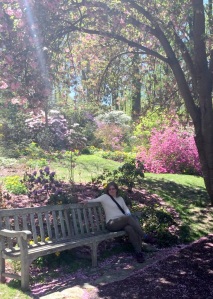
I took these pictures after several hours of time invested in the garden on beautiful spring days.

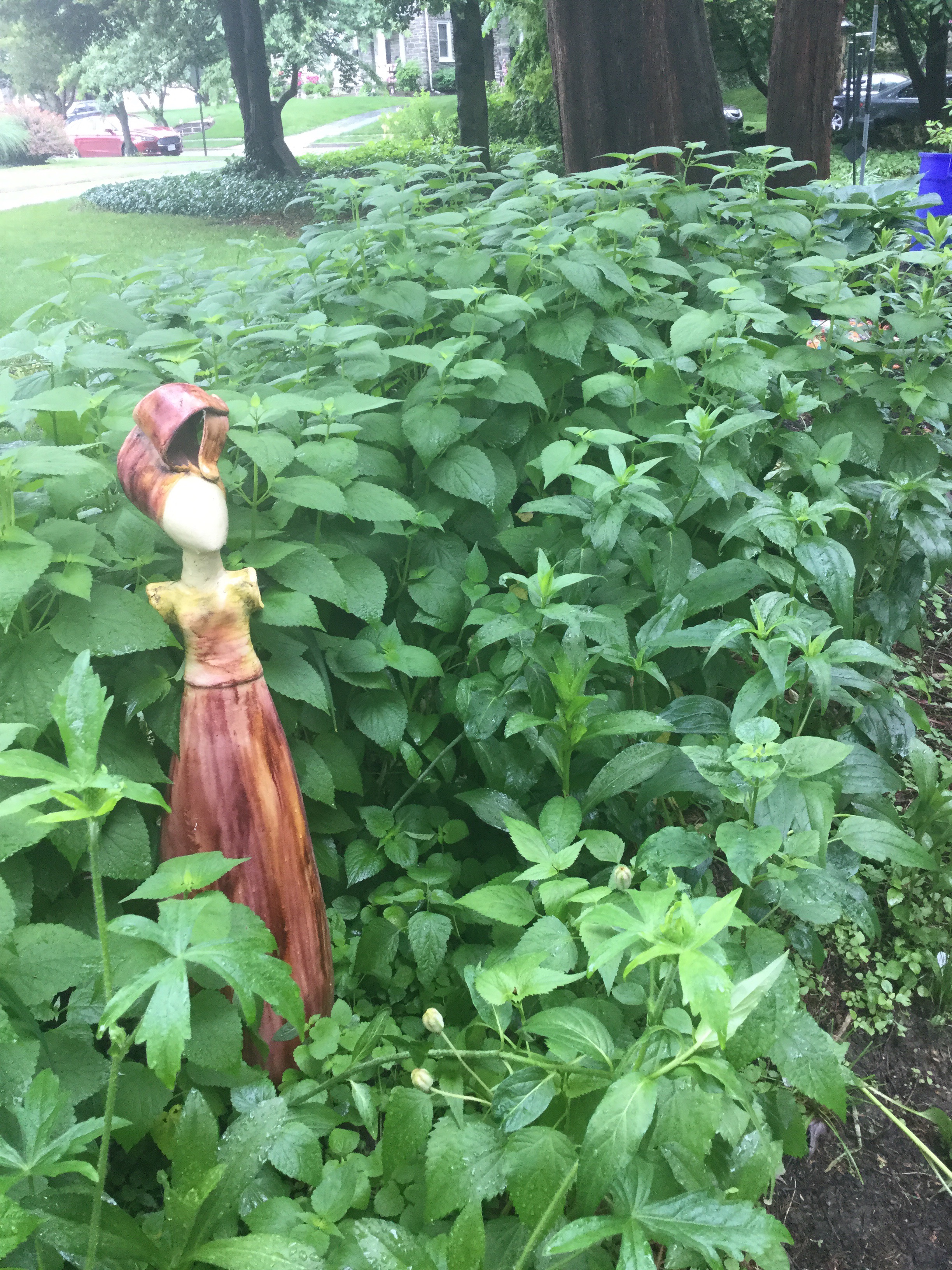
The butterfly garden is lushly green.

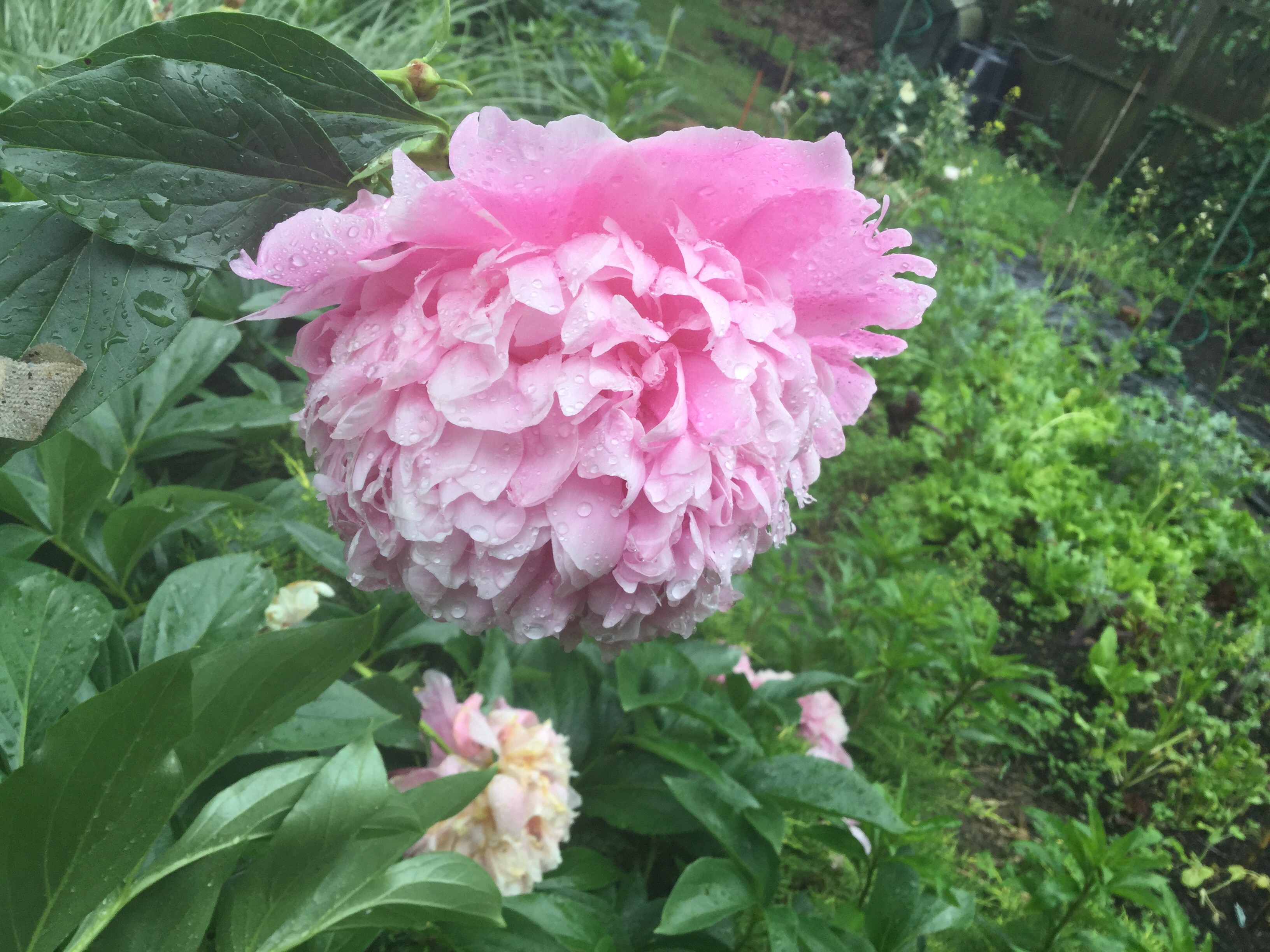
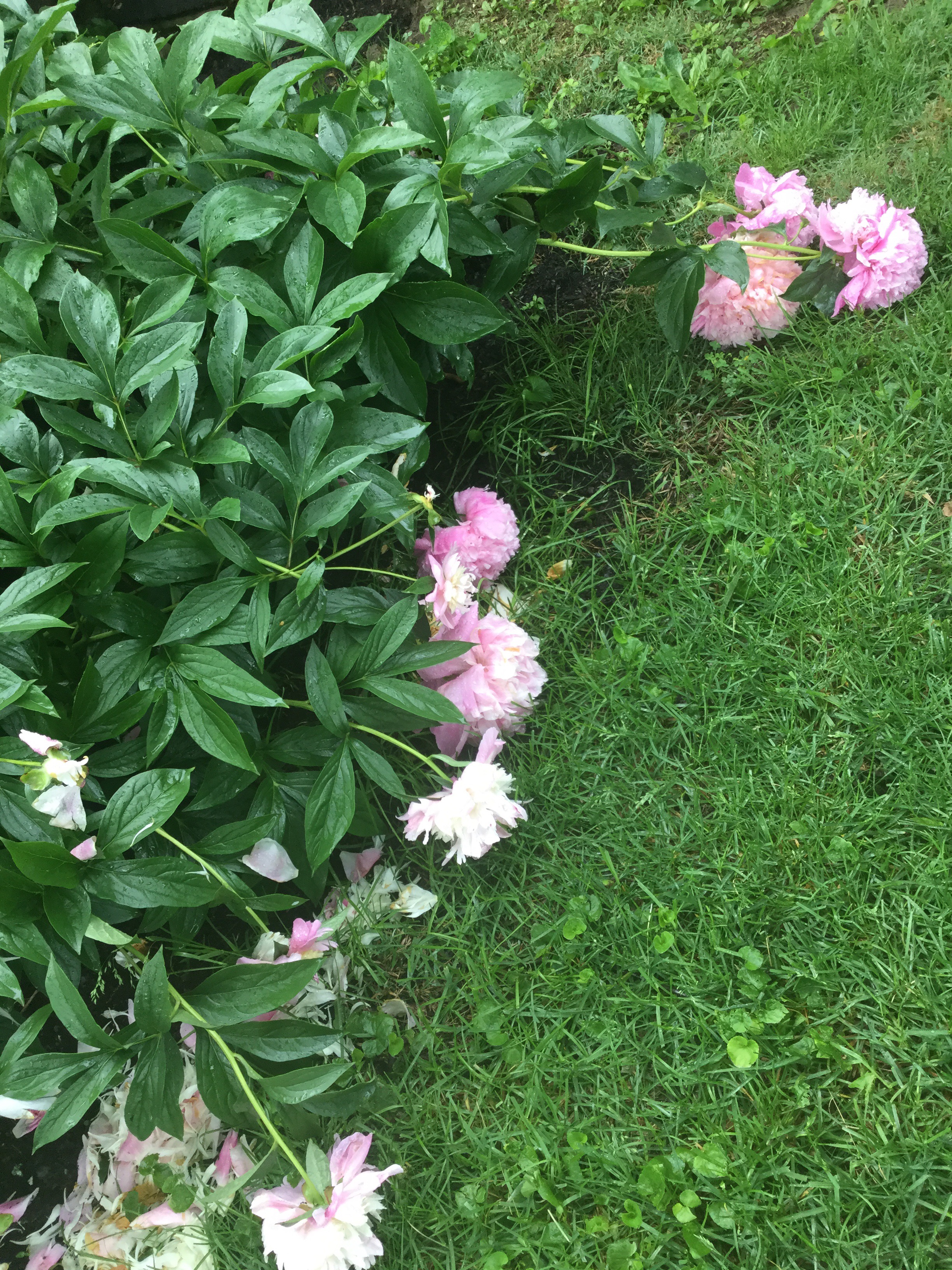
Peonies always hang their heads in the rain.

Lettuce is finally doing well after several bags of compost.

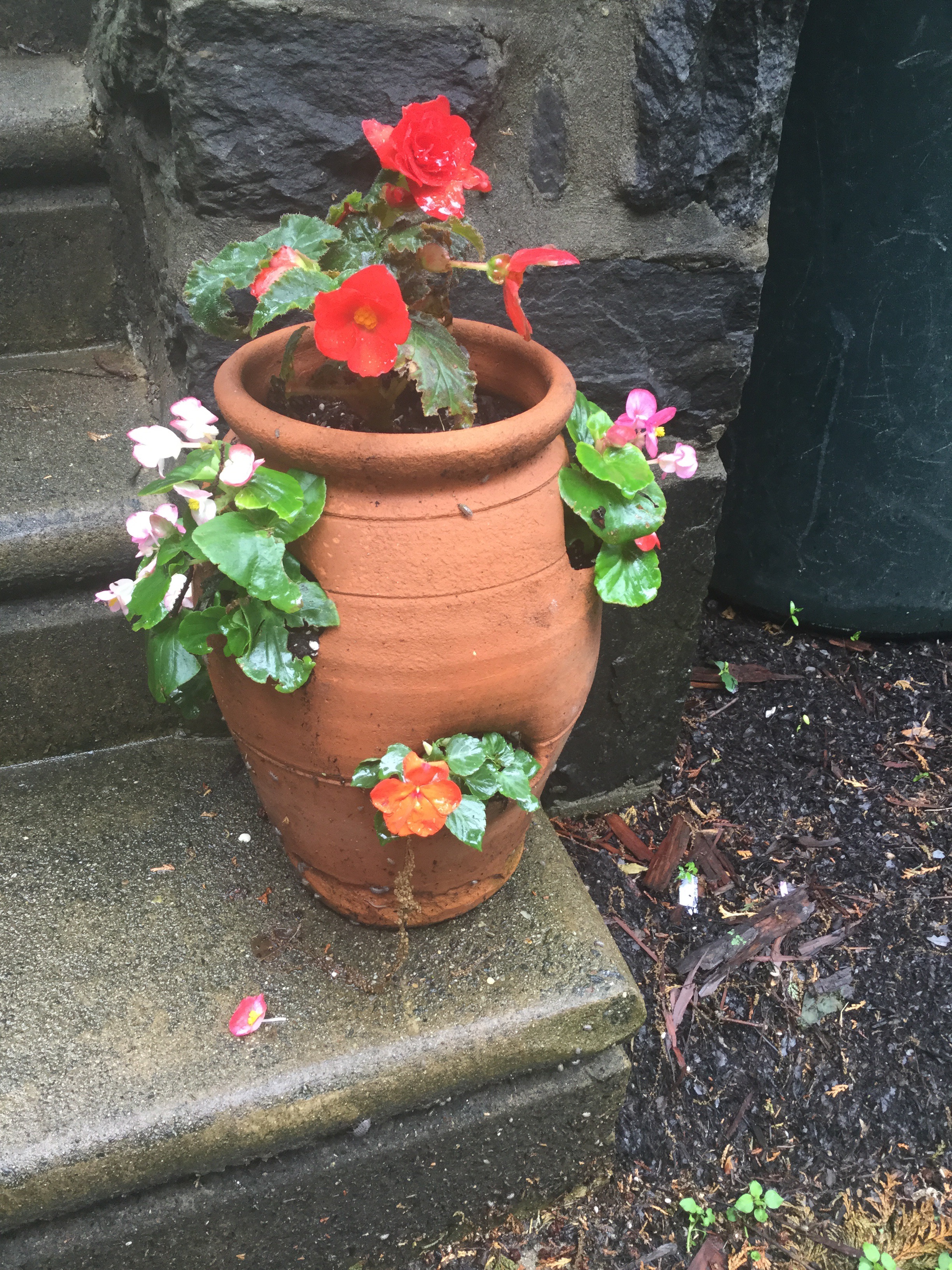
from Bob. He and Debbie used it for impatience but I plantd begonias.

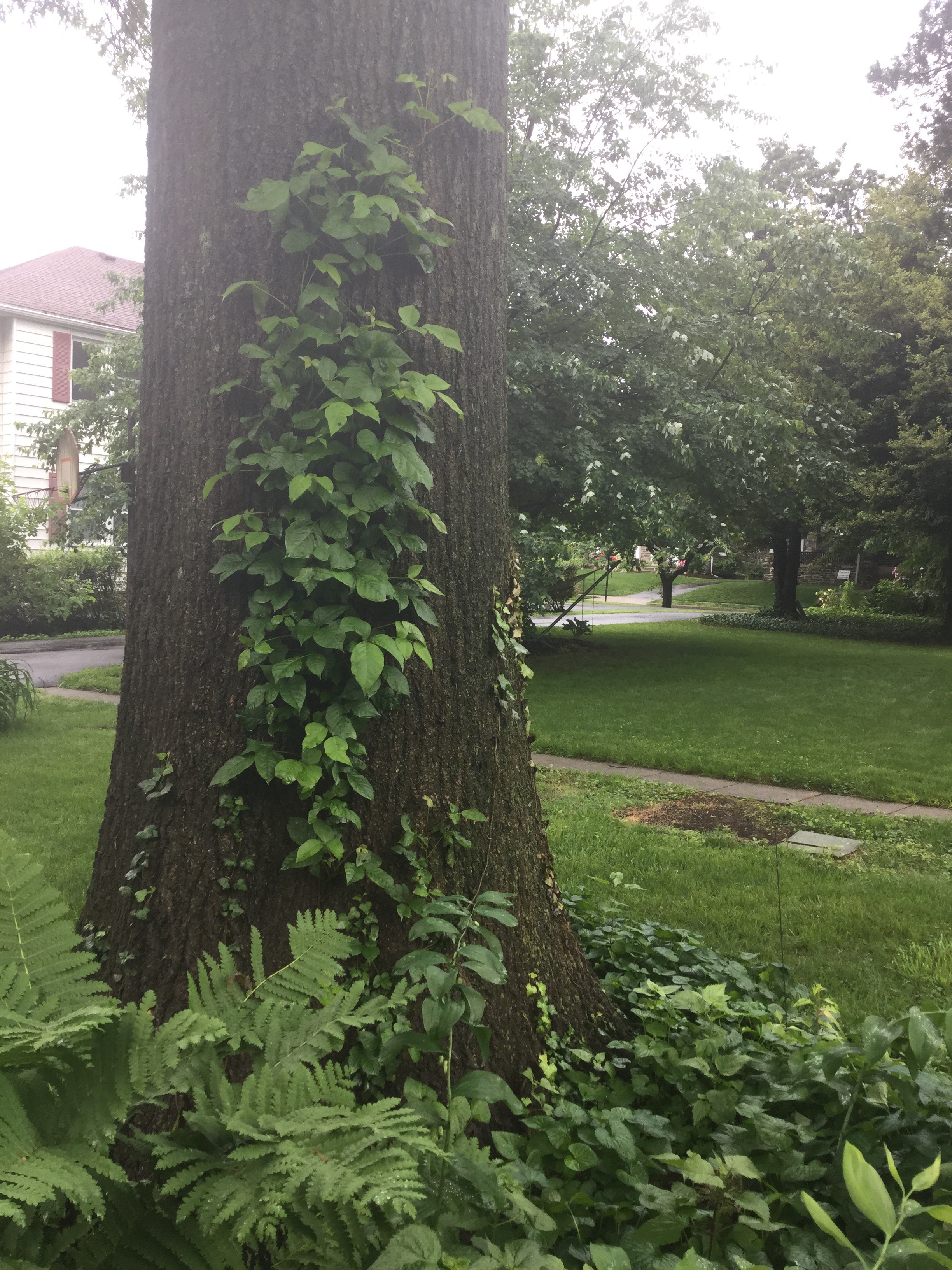
Yes, that is poison ivy and growing up that oak tree.

which was planted two weeks ago.

planted one month ago.

Posted in Uncategorized | Leave a comment

Anticipation for what they will say about Song of Solomon

In a few hours, my class of juniors will troop into class for our discussion of the last chapters of Morrison’s novel Song of Solomon.

This was not a book I was at all eager to teach because of the fraught subject matter which has only been heightened (for me anyway) by the recent news of black men and boys being killed for just living and walking. Even though the novel was published in 1977, the issues are still prevalent and real and persistent.

But the terrific group of juniors whom I teach have embraced the novel and its questions and challenges. They have met the novel and its characters with searching, questioning heart[s]” as Brenda Flyswithhawks admonishes us. They were not horrified by the scene of Ruth breastfeeding her son until he was much too old. Instead they looked at the scene through her eyes and recognized this was the only way she feels successful as a woman and mother since her husband berates her for her cooking and existence. They did not judge. They understood and sympathized.

That is how they have approached the entire novel. At one point, one of the girls said she was very frustrated with Milkman for not realizing the racial oppression of African-Americans and thinking only about himself. She was so happy to see him embark on his journey to discover himself and his family. I wonder what she will say today.

Just a few minutes ago, another student came up and said she wants to talk about how Morrison says in the last paragraph that Milkman “rides” the air. She was so keyed into the significance and import of a single verb and thought it might be the linchpin for interpreting the ending and indeed the entire novel.

These girls have simply been amazing as they explore the holes which Morrison deliberately left in her language for the reader to interpret and examine.

Posted in books, literature, teaching, Uncategorized | Leave a comment

Repeating Myself – AGH!

Good teaching requires a certain amount of repetition. But it makes me crazy when a student asks a question, I answer, and then another student asks the same question.

There are moments when that repeated question comes that another student will say, “She just answered that” and then go on to repeat word-for-word what I just said or paraphrase it. I love those moments because a clear message is sent from peer to peer.

But how to avoid this in the future? Not for the rest of this year — that is a lost cause — but for next year.

Rebecca Alber in a post on Edutopia recommends be the teacher who repeats nothing starting on Day 1. She has three other big suggestions as well, but that is the one I am going to implement starting next year.

My colleague who has the same issue reminds herself that the repeated questions are just caused by anxiety. That will be my mantra for the next few weeks. These students are just anxious and that anxiety shuts down that part of the brain — or hobbles it. Anxiety reduces working memory, makes people unfocused, causes them to worry and ask internal questions, makes them unreceptive to any communication.

How can I teach students to listen better? Michael Webb has a discussion called “Mindful Listening” for how to foster more attentive listening both from the speaker’s and the audience’s point of view. The post is from September 2008 but is definitely something to read carefully. His main suggestion to to teach listeners to become more aware of their own internal bodily sensations and tensions and get them to relax. This suggests that at the beginning of the year, build in moments during class when I have the class do a tension check and focus on relaxing. I could do that even now and that might help as we get closer to exams and the anxiety levels spike.

Another study by two researchers at Takming University of Science Technology gave a helpful explanation of the idea of “cognitive load.” Cognitive load is “the total amount of mental activity performed by working memory at any point in time.” They stress that working memory is finite and thus students cannot be expected to hold too much information in working memory or that produces confusion and inattentiveness and anxiety. They identified three types of cognitive load:

  1. intrinsic cognitive load
  2. extraneous cognitive load
  3. germane cognitive load

Teachers cannot change intrinsic CL which is defined by basic information being communicated. Teachers can change extraneous CL which is caused by the lack of instructional support. In other words, if the teacher does not supply visuals, students must use working memory to hold an excessive amount of detail. Germane CL is when the students are able to use intrinsic CL to construct new connections and systems of memory.

This article also underscored the complexity of the activity of learning by listening. The student must:

  1. comprehend what is being said
  2. retain relevant information in working memory
  3. integrate the information with what has preceded and what will follow
  4. adjust their understanding of the entire lesson based on prior and incoming information

They suggested several ways to improve listening comprehension — not all of them relevant for my purposes. But they suggested supplying audio-visual aids, repeating important points, giving lots of encouragement to build confidence, and conduct pre-listening activities.

I feel like I do many of those things already by using a smart board and Haiku. But I could try using listening practice games such as giving them a series of words or numbers and see if they can repeat them back. Or having them do some memorization of poetry to strengthen the memory muscle.


Posted in School, teaching | Tagged | Leave a comment

The Bruising Game of Politics

Last night was the Pennsylvania primary. We were of course interested in the results for the presidential hopefuls. But we had a particularly personal interest since our middle son has been working for Joe Sestak for at least 80 hours a week for the last 4 months. Joe lost the primary race to another Democrat who entered the contest late and received the support of the establishment Democrats. Outside money poured in and Joe could not stem the flood despite the tireless work of his team under his leadership.

I believe Joe would have made an ideal senator because he truly believes in helping us and he would have been an independent voice in Washington, a man who is guided by his own moral compass and not big business or DNC leadership.

He wrote an email of thanks to all of his many supporters and I wonder how he will console his staff  in Media. I imagine he will talk to them like he did his young sailors.

joe sestak

Posted in life in general, Uncategorized | Tagged | Leave a comment

April Walk at Jenkins Arboretum

jenkinsOn Sunday, SH and I took a walk at Jenkins Arboretum in Devon to see the blooming azalea and rhododendron. We were there for about an hour and walked according to the fitbit exercise tracker 1.06 miles. Not a fast pace — oh not at all. But we did stop often to examine various blooming plants such a Virginia Bluebells and this yellow globe flower and admire the many types of azalea — deep red, vibrant coral, shocking pink, pale lavender and soft white. We also sat by the pond on a bench, talked about family, absorbing children, a dwindling old lady, and summer plans and soaked up “natural vitamin D.”

We saw families whose parents were running the children, older couples toiling up the steep paths, one older woman sporting a “Bernie” button, and younger couples walking hand in hand.

SH and I did not walk hand in hand but we did sit close together on the bench and my knees pointed toward him. How lovely that after so many years married we still like spending a few hours alone together.

20160424_135221

Posted in nature | Tagged | Leave a comment

Which of Chaucer’s Tales Would Win the Prize?

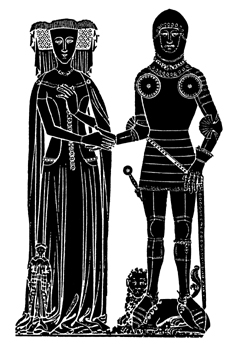
039If I had to award the prize to the best tale, it would be on the basis of which tale contains the lesson I need to apply right now in my life. Not the tale which was told by the most honorable pilgrim just because he has the highest social rank. Not the tale where Chaucer seems to match the tale with the teller perfectly. Not the tale that is a delight to teach as students react to the raunchy denouement of a hot poker strategically applied.

“The Franklin’s Tale” would be my choice for the message it gives about the importance of patience and forbearance and self-control for a relationship to survive the knocks of fortune and unintended consequences of ill-considered words (or actions).

From the very best of motivations, Dorigen makes a thoughtless promise to a squire which jeopardizes her marriage and her integrity of spirit and body. She never thought her condition would be met, but somehow Aurelius manages to make the “blake rockes” disappear, and she must face the reality of her rash promise. What I do find interesting is that Aurelius announces that the rocks are gone and then he disappears. She stands all alone looking down the cliff and sees not rocks. All alone. How often do we face problems alone?

Her first reaction is absolute astonished quiet and all the blood leaves her face. Then she goes home and waits for her husband to come back from a two day trip. The Franklin says she “wepeth, wailleth, al day or two / And swowneth…But to hirself she spak.” So in other words, she is very upset but she tells no one and waits for Arveragus. She places her complete trust in him, and she believes that he will help her. She knows that he will listen to her and find some kind of solution.

How often I have been in a similar situation where something is just dumped on me and all I can think about is getting home and waiting for my husband to come home so we can talk it through. He always makes me feel better with his very presence. That is what Arveragus does for Dorigen. He arrives home and listens to her and puts everything in perspective. He does not berate her for making a silly promise, he does not doubt her own love for him, and he does not take the situation personally… at least not for a while. And when he does finally burst out crying, he still reinforces his message that they are in this together and they must keep the secret of her promise and that he will endure his woe.

The trust Dorigen feels for Arveragus, and the trust he returns to her models how all lasting relationships survive.

At the end of the tale, the Franklin says,

Arveragus and Dorigen his wyf
In sovereyn blisse leden forth hir lyf.
Never eft ne was ther angre hem bitwene.
He cherisseth hire as though she were a queene,
and she was to hym trewe for everemoore.

Now what is interesting in the lines is the plural third person possessive pronoun and its following singular noun in the second line: “hir lyf.” The Frankin emphasizes that Dorigen and Arveragus share their life — not lives. This seems to imply even greater harmony and unity than the superlative noun phrase “sovereyn blisse.” And they “leden forth” suggests as well that they are both leading the way forward in their shared life. The Franklin also lets us know that he continues to treat her like royalty and does not claim that he was higher than his beloved “queene.” This follows from the beginning of the tale when Arveragus vows to always obey her while she promises to be “youre humble trewe wyf.” It is as though at the end of the story, they renew the marriage promises they made at the beginning.

There I think is another lesson that relationships must be renewed on a regular basis and particularly reconfirmed after moments of crisis and conflict.  This has been one of my favorite tales for literally decades. Initially I loved it for the romanticism of Dorigen and Arveragus, but now I love it for the maturity of the characters as they meet an unexpected, disrupting challenge from the outside to their shared peace and love.

Posted in literature, Uncategorized | Tagged | Leave a comment

The Franklin’s Tale through older eyes

My first exposure to Chaucer was in a modern English excerpt from “The General Prologue” in twelfth grade honors English. Not inspiring.

My second exposure was as an undergraduate English major at the University of Cincinnati. The professor was Elizabeth Armstrong. She taught me Shakespeare and after that I wanted to take every one of her classes because of her dynamism, excitement, and straight talking. We read Chaucer in Middle English. She had to teach us how, of course. How to pronounce the words, the different vowel sounds, the rolling of the Rs, the different grammatical forms. Reading Middle English was like reading in a dream. The words and sounds were familiar yet exotic. Intoxicating even in their strangeness. I wrote some naive paper about the lovers of “The Knight’s Tale” and tried to argue that one had a worthier love than the other.

Thereafter my next leap came when I took Derek Pearsall’s graduate seminar on Chaucer at Harvard. He was and is the foremost Chaucerian…even greater than Larry Benson who edited the Riverside Chaucer. I remember with some shame the paper I wrote for him that made some ridiculous argument about oral formulaic theory and Chaucer. What was I thinking?

Then I taught Chaucer in college. Pearsall’s irony had not penetrated so I taught the tales with a romantic orientation. And some appreciation of the possible feminism of a few of the tales. But I always saw “The Franklin’s Tale” as the resolution to the marriage and mastery debate.

Now I am returning to Chaucer after quite a hiatus and rereading the tales with a more objective eye. Having just quickly reread this tale, I am bemused by the tale’s emphasis on appearance. Arveragus leaves Dorigen to seek fame in England. Aurelius wants the rocks covered up so he can force Dorigen to keep her promise. Dorigen may be the only character who is not concerned with surfaces. When she looks at the dangerous rocks, she truly wants them gone so ships may safely put into port. She wants them “sonken into helle for his sake!” Now come to think of it, the third person singular possessive pronoun is rather interesting. I know as reader that she means Arveragus, but nowhere else in her speech of 28 lines does she mention him by name. I know from the narrator’s description of her that she is only thinking of him. Dorigen seems totally devoted to him. She does not seem to have the concern of the men with outward behavior and inward truth.

The other thing I noticed is that when Dorigen prays to “Eterne God,” she seems to be addressing a deity with rather Christian characteristics: the world is a fair creation, mankind is the fairest part, and the winds are governed by him.  She does accuse the God of sowing confusion in the fair world with the black rocks. But then she backs away from such an overt criticism by saying she will leave this ontological problem is why evil is in God’s world to the clerks. She disciplines her thoughts and instead asks God to sink the rocks into hell. 

When Aurelius prays in his lovelorn distress, he prays to Apollo, refers to Lucina and Neptune and Pluto. Is anything to be made of this? If I remember correctly Arveragus does not refer to any pagan gods. He seems to evoke the same God as Dorigen. I wonder if anything can be made of the different evocations? Maybe Franklin is proposing a new model for love to replace that of courtly love? But again, no. Chaucer could do that without the evocations. That is losing one’s self in minuscule details which really don’t matter.

What does matter coming back to the “Franklin’s Tale” is the question of how much my understanding of the tale has shifted over the intervening years. Chaucer was my age or older why he wrote it and he had had his share of life experience. His vision of love and humans is more multilayered than my younger or even older self might see.

Posted in Uncategorized | Leave a comment

Reunited with Chaucer

Just this past week, teaching a new class required that I rediscover Geoffrey Chaucer. Sometimes folks will ask me what book I would want on a desert island. I usually say the Riverside edition of Chaucer. That huge tome has all his works with textual and explanatory notes.

But why him instead of Shakespeare? That will be answered later.

In the midst of preparing lessons for this class, I discovered that one can actually turn the digital pages of both the Ellesmere MS and the Hengwrt MS! And that since I studied Chaucer in graduate school, scholars have established that the same scribe, Adam Pinkhurst, wrote both manuscripts and it looks like the Hengwrt is the older copy. If you like to see the Hengwrt MS and read about its history, click here. The Ellesmere MS is more lavishly illustrated with the pilgrim portraits and wonderful illuminations and thus might be the “good” copy. If you would like to see the Ellesmere MS, click here. 

And then there is the even more amazing web site called Mirador which will allow you to compare the two manuscripts side by side! Or any other work of art or text if you can paste in the URL.

And the for the use of students, there is a wonderful site which will allow you to compare simultaneously the Middle English with the Modern English for each and every one of the Canterbury Tales. Click here for this resource.

All of these internet sources are quite simply astonishing! When I was in graduate school, if you wanted to see the manuscripts, you had to travel to the library, provide a letter of introduction to the rare book librarian, and then maybe get to turn the folio leave while wearing white gloves.

Now you can “see” the manuscripts on your computer. Yes, it is not the same. But is better than looking at a poor facsimile or just dreaming about seeing the thing.


Posted in books, learning, medieval | Tagged | Leave a comment

Winter walk

Yesterday Starter Husband and I took a walk at Skunk Hollow Park which is in Radnor Township. We started at the mansion at the Willows and followed the white blaze trail. Several other folks era also walking, often with their dogs. We met a bouncing puppy which was clearly happy to be outside in the lightly falling snow. The path led us down into s valleys with a stream. We could hear the distance pops of guns being fire and one woman told us that the Aronimink club offers shooting practice on their tennis courts. We walked along the stream and listened to the water rush over the stones. The snow fell in light flakes. We walked for maybe an hour until we finished the loop and went back to the car. 

We plan to take many more walks together this year, inspire in part by our hikes in Grindelwald last summer. Before we had our first child, we hiked through Glacier National Park. Those days and hikes are some of my best memories with SH because we were all alone in the mountains and only had ourselves to depend on. We worried about bears and so wore bear bells in our packs. We walked all day and ate our lunch in mountain valleys overlooking tranquil lakes or gazing across to tall peaks covered with snow. 


Posted in life in general | Tagged | Leave a comment

Downton Abbey Again!

downtonabbey-dowagersviewofworldI said  in my last post that I loved the New Yorker. The issue for January 4, 2016 arrived today on Thursday, December 31. The front cover was minimalistic with a woman standing on an iceberg in a field of ice looking at the stars,  but it was the back cover which made me smile and hand the magazine to Starter Husband. We both agreed that Maggie Smith got the role of her career by playing the irascible Dowager  Countess of Grantham, Violet Crawley. She has some of the best lines and you can look them up on the web such as at the Huffington Post.

Over Christmas, my German mother-in-law had the local PBS station on the television, and I watched the last episode from season 5. Now after that episode in May 2015, I was feeling a bit weary of the whole crew at the Abbey. Mary was just too self-contained and cold for words. It was totally unrealistic that Carson would propose to Mrs. Hughes. Can Anna and Bates just catch a break instead of always being pulled around by fortune and false accusations?!?! Lady Edith is too pitiful for words. She finally finds a man whom the brown shirts kill, she has baby and has to hide the baby, and it goes on and on. Enough! And why doesn’t Isabel just marry nice Lord Merton. Really! Don’t worry about Christmas with his awful sons.

Wait….after this past Christmas I might need to reconsider that last bit of advice.

Still, I am very much looking forward to Sunday night at 9 Eastern Time so I can watch the first episode of season 6. Preferably with a glass of red wine.

Posted in life in general | Tagged | Leave a comment