Discovering poetry

The New Yorker is my favorite means of discovering new poetry and poets. Just a few minutes ago, I finished an article by Dan Chiasson in the August 31, 2015 magazine about Linda Gregerson who is a professor at the University of Michigan. Apparently her specialty is Elizabethan Renaissance poetry which has greatly influenced her own work. Chiasson uses a t called “open voicing,” which I am not familiar with. But it seems to be some descriptor of the pauses created by syntax and lines to craft a speaker voice which responds to an unseen audience. 

He writes this sentence, integrating Gregerson’s opinion with his own, “‘I think of grammar as a social contract’ she has said; without it, relations of all kinds cannot be expressed.” Now that is a very interesting statement, especially for me when I have just finished trying to teach reluctant students grammar. She elevates grammar to a stratospheric importance, suggesting that our correct sequencing of verbs, nouns, conjunctions determines how we live together as people in a community and the world. I am not sure my students would buy that idea at all.

After reading Chiasson’s article, I want to buy her book, Prodigal: New and Selectd Poems, 1976- 2014. 

The other poet or form of poetry which The New Yorker has brought to my attention is the concept poetry of Kenneth Goldsmith, which was discussed in an article last October. Concept poetry is poetry based upon an abstract idea or perhaps predetermined method. For example, Goldsmith turned the New York Times as printed on a single day into a 900 page long poem. That is definitely NOT something I even want to look at. But the author did quote from his poem “The Day” which was a series of poems drawn from the New York Times as printed on 9/11. With line breaks and selective capitalization, he made the weather report ominous and foreboding. In addition to Goldsmith, I learned the names of some other conceptual poets such as Christian Bok and Cathy Park Hong. Hong does not like Goldsmith in the least. And according to the article Goldsmith got himself into quite some trouble with an ill-conceived poem based on the autopsy report for Michael Brown. 

This article I had my junior class read and my next post will be about their response to Goldsmith and his poems and the nature of poetry.

Posted in literature, poetry | Tagged , | Leave a comment

The Teacher’s Challenge: Designing Paper Topics in an Internet Age

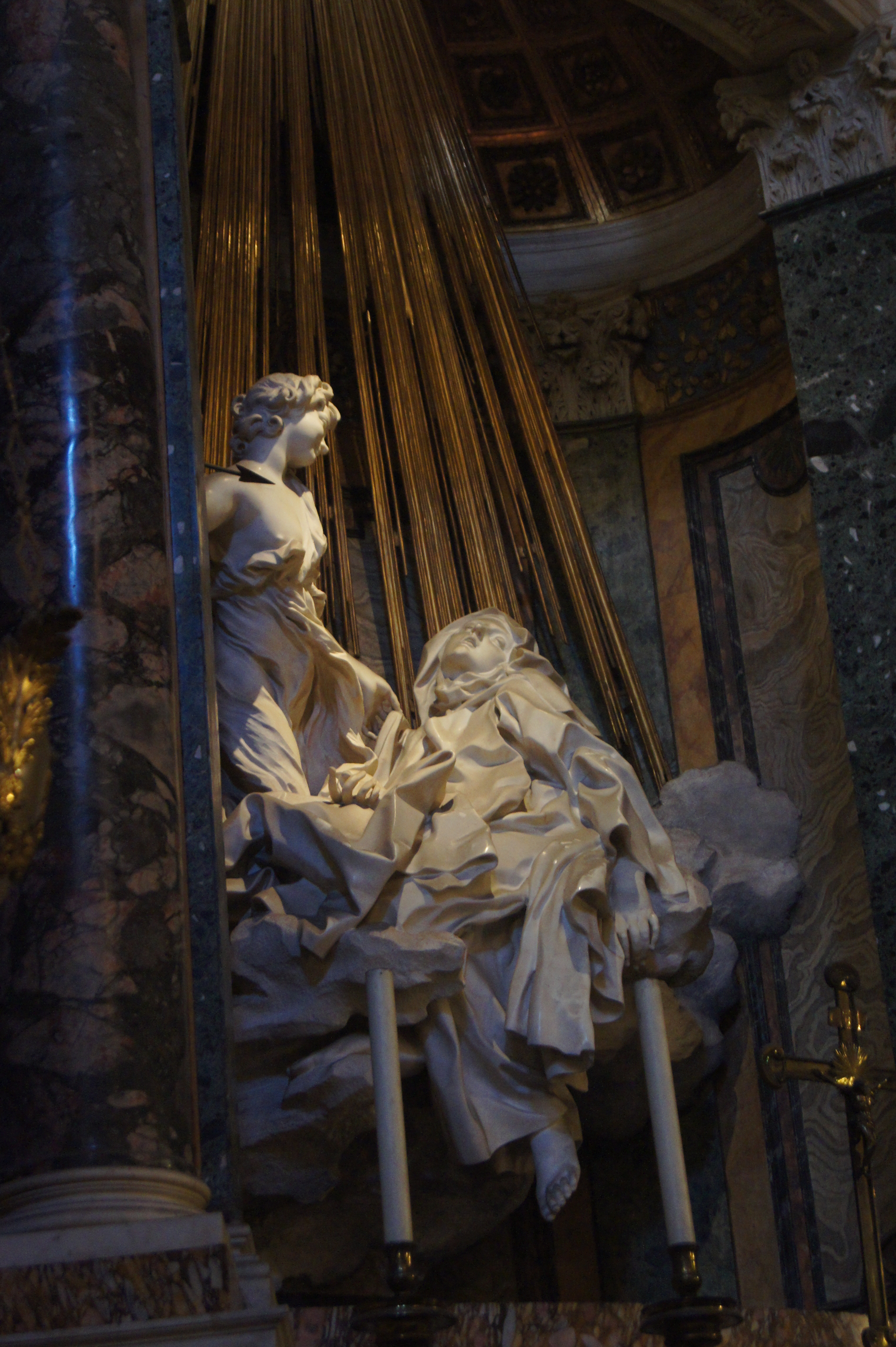
SONY DSC

An Ambiguous Cupid

My colleagues and I regularly discuss the paper topics which we assign our students. We are acutely aware that nationwide a high percentage of both high school and college students plagiarize (see the Sept. 7, 2012 article in the NYT) So we worry about how we can design assignments to reduce the student temptation to scavenge the internet.

The chief weapons are student excitement and engagement. If students like what they are reading, care about the characters, are intrigued by the plot, they are less likely to see what some anonymous person thinks about the book. In addition, if students find class exciting and the discussions in class relevant and meaningful, they want the chance to expound their own ideas. I think all teachers want students to have this high level of enthusiasm. Not every student gets there all the time. Maybe a student has too much work in other classes to read carefully; maybe a student has too many co-curricular commitments; maybe a student is just downright bored by the book; maybe a student has some other things going on that make concentration on reading impossible.

As you might know from reading this blog, we teach Jane Eyre. A teacher who had retired from the school left her a treasure trove of Jane Eyre paper topics from her more than 30 years of teaching. We loved all her topics but hesitated to use them because we knew students could easily find entire papers on the subject of Jane’s independence, Rochester’s mutilation, Bertha’s madness, St. John’s oppression of Jane, etc. We are going to try a compromise. We decided to have them write the rough draft in class during one 75 minute block period and then upload the draft to Turn It In. Then the next step was to have the students revise the paper over the next day and re-upload the paper to Turn It In. Our hope is that if they just get a draft done, they will overcome the challenge of beginning and be more likely to depend upon their own analysis than seek internet assistance.

In another class, the students had to write a character analysis and then prediction paper after reading the first two parts of Cather’s O Pioneers! Here our thought was that since the student are writing part of the paper from the I-perspective, they would look to find passages and develop analysis that supported their individual predictions.

We also worry about internet temptations when we teach poetry. I love the Romantics as much as the next person (actually not really) but know only too well that a student can find an explication of Keats’ sonnet “When I Have Fears” or Wordworth’s “The World is ‘Too Much With Us.” For this reason, when I teach poetry, I tend to go for the modern stuff that appears in the New Yorker magazine — these are brand new poems and no explanatory notes or erudite commentary exists on most of them.

Or this year, I am going to try something a bit more diabolical. The third floor of our house is lined with book shelves which contain books from my graduate school days. I found an old edition of Elizabethan lyric poetry. It contains literally hundreds of poems. We are going to pull 70 poems from this anthology and each student in the eleventh grade class will get one of these lyrics and will have to write an explication of it. I already imagine the groans and frowns when this assignment gets distributed but these poems are accessible and playful and challenging but not impenetrable. Some of the poems in this anthology are famous ones such as Donne’s “Death Be Not Proud” — we will not choose any of these —

but most of them are unknown and unappreciated. I doubt even Elizabethan scholars write about some of them.

I am eager to see what these students will do with their individual poems. They surprise me with the freshness of their observations which are untainted by the gobbledy gook of academic snootiness.

Posted in literature | Tagged , | Leave a comment

Mr. Rochester Really Riles Them Up!

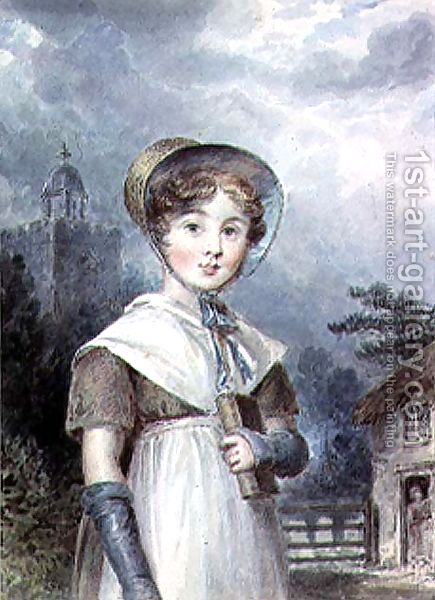
Little-Girl-In-A-Quaker-Costume,-Holding-A-BibleYesterday as my students came in for class, I heard various declarations:

“I LOVE Mr. Rochester!”

“I used to like him but now I am mad at him.”

“I feel so bad for him.”

“I HATE Mr. Rochester!”

This morning as I prepped lessons for today, my advisees trooped in — all talking about Jane Eyre. Another girl entered the room and said, “I am the lone wolf in my class. I am the only who loves Mr. Rochester.” Huge debate erupted about how he perpetuates the patriarchy, about how he wants Jane to express herself, and about how he has been trying all along to control her.

As they left, one student said she would like to have a class-wide debate (meaning the entire class of 2017 which numbers some 70 students) but would be afraid of the violence that would ensue because other students have such strong opinions.

Ever since the students met Mr. Rochester, they have been weighing his personal defects, his charms, his male chauvinism, his passionate love of Jane, his mysteriousness, his arrogance, his deception of her. I scarcely have to even teach my class. They arrive with their own insights, passages to analyze, and strong opinions. What is also interesting is how they step back from their own ideas about the text to examine how they see the male gender in general. For example, one student announced that the school’s students have the reputation in the region as being “the man haters.” A couple of girls objected to this characterization and said they just wanted to be treated as equals — like Jane wants to be Rochester’s equal when they stand at God’s feet after death.

As I listened and listen to them talk about the novel — so engaged, so vehement, so passionate, so insightful and intelligent — I am struck by how the novel was accepted (or barely tolerated) at my previous co-ed school, which is no slouch when it comes to academic rigor. I taught the novel once there in the fall of 2007 to a group of seniors, many of whom I had taught the previous year. Some of them read the novel; some read the summary on the internet. A couple of the boys I know really read the book because they talked to me about it later after they graduated as a favorite book. I think all the girls in the class read the book; however, they never spoke up about the characters in the way my current students do in this single sex school. The girls at the co-ed school held back. They did not talk about Mr. Rochester and his character. They did not express approval or disapproval of him or his relationship with Jane. They did not criticize Jane for loving him or for leaving him.

Not the way my current students do.

It seems to me that when these girls read, they become Jane for that expanse of time. They feel her emotions utterly and some are in despair that she has run away from Rochester.  They are not afraid to express their feelings and ideas in class or in their lounge or in the hallway. They are not shy about tacitly admitting that the characters are as real to them as if they were people standing next to them. For some, Jane and Rochester are more fully realized and understood than some of the people they meet everyday because Bronte has so exquisitely drawn the characters, set up the situations, and warped the tension and emotion.

I wish Bronte could have known how much these girls care about her creations, Jane and Rochester.

Posted in literature, teaching | Tagged , | Leave a comment

How do people feel about their old elementary school? Pretty good!

Over 100 people came to see the old Llanerch School before a developer starts to convert the building to apartments.

Former teachers came in to see their old classrooms. Students who graduated from the elementary school came to see if the school was as big as they remembered. Neighbors stopped by since they wanted to see the inside of the school after walking by it for years.

But what was really wonderful was how I saw some folks hug each other — surprised to meet again after many years.

“Oh, do you remember me?”

“Look, there is our old classroom!”

“I taught in that room for years.”

“See this pole with the hook? That is how I used to open those huge windows.”

One lady drove all the way from New Jersey so she could walk through her old school.

It was a good way to spend a Sunday afternoon and I am grateful to the Llanerch Advocacy Group and the developer for making it happen!

Posted in chance encounters, life in general | Leave a comment

Picking up the Pieces of the Past

Recently I reconnected with a dear, old friend from our graduate school days. We had not spoken in several years. We simply lost touch since immediate life and family interfere and break the ties between distant friends.

My friend had much news to share about colleagues and friends and old professor whom we both knew. She told me that one of our friends had died tragically. She had been biking when her bike broke. She was pushing it back to town and a car hit her. She died on the spot.

My friend then asked if I knew about my old professor from University of Cincinnati. She thought she had seen some notice on the Celtic Department website that he had died this past summer. I was horrified. She back pedaled and said that maybe she was wrong. After we hung up (after an hour and half of talking), I jumped on the web. Sure enough, he had died at the beginning of the summer “after a long illness” and there had been a memorial service for him at the end of August. I was so sad. This man had inspired my love of Celtic languages and literatures. He it was who planted the seed that I might be good enough to study at his graduate school alma mater.

Death framed the conversation my friend and I had, since we had reconnected because another friend of ours from graduate school had recently lost his wife to cancer.

So right now, I just want to be grateful for having another day to teach my students, love my husband and children, and enjoy my friends.

Posted in life in general | Tagged , | Leave a comment

Teachers (and students) are lucky! We begin anew every September

Nothing about this blog post will sound anything but trite. The first day of school overflows with excitement, hugs, happy faces, positivity — even for the teachers whom the students could not tolerate last year.

Everything is fresh and new and wonderful.

Of course, no one has given any homework and no one has collected any papers to grade.

The big question is how to prolong or maintain or rejuvenate even portion of this excitement throughout the rest of the year.

The answer I do not have, but I do know that if students feel a real connection to each other and their teachers, they can be cajoled to tackle intellectual challenges, debate controversial issues, and ask honest questions.

Posted in Uncategorized | 1 Comment

Mom, who can listen to “Love and Marriage” anymore?

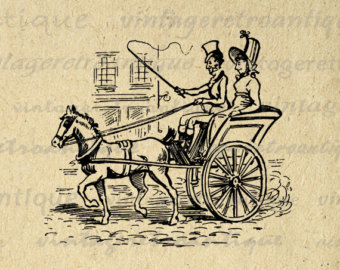
il_340x270.434420053_5z1eDriving to Montreal earlier this week, my son and I listened to lots of music, including Frank Sinatra (son indulging mother).

As my son listened to the lyrics of “Love and Marriage,” he got this funny look on his face and then he exploded: “How can you listen to this? It’s all about oppression!”

“What do you mean?”

“Look, ‘Love and marriage, love and marriage / They go together like a horse and carriage.’ That means that love is the horse and marriage is the carriage. The wild, free horse is tamed and has to pull this heavy carriage. Marriage is oppression.”

The speech over, he waited for a response. What could I say? He had given that metaphoric analogy quite the interpretation.

As an aside, Frank recorded the song first in 1955 for a television version of Thorton Wilder’s play Our Town (according to Wikipedia).

Posted in Uncategorized | Leave a comment

In this version of Red Riding Hood, the Huntsman becomes the Dad

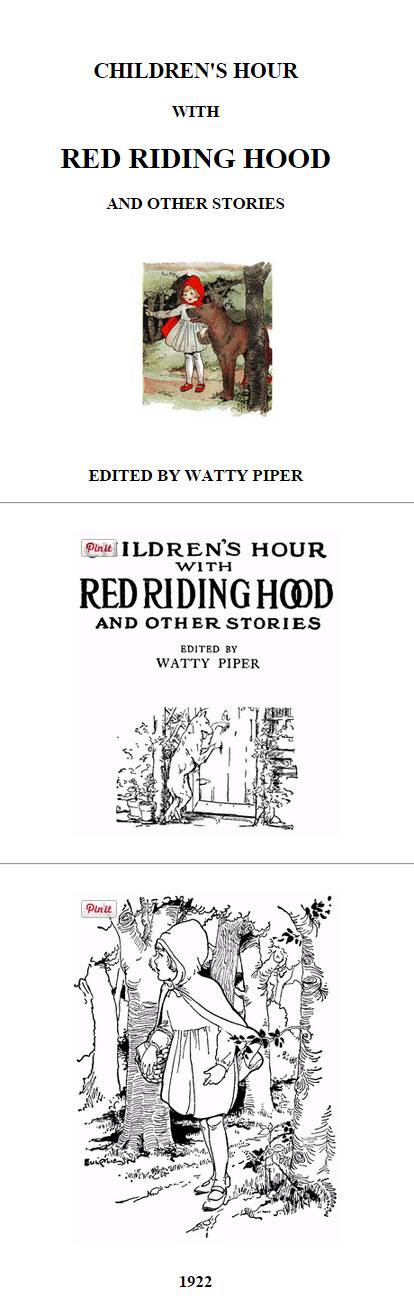
riding-hood-table-contentsLast night I was combing through the fairy tale books on Gutenberg Galaxy’s bookshelf of Children’s Myths & Fairy Tales. I was looking for prefaces to various collections for a lesson for my students.

I came across this edition by Watty Piper from 1922. While it did not have any kind of preface, I did notice something about the first story “Red Riding Hood.”

Usually the little girl is rescued from the wolf by a huntsman or woodsman who hears her screaming as the wolf is about to eat her.

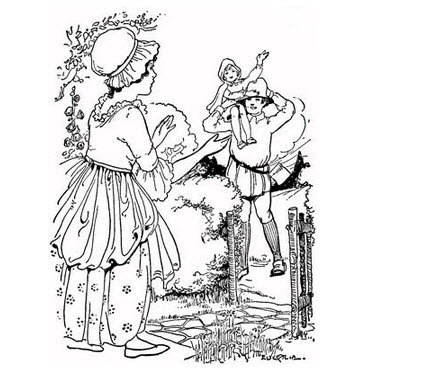
In this version, the little girl is rescued (coincidence) by her father  who just happens to be nearby.

I think it is interesting that the rescuer has been transformed into a powerful, protective father who is saving his little darling from a rapacious, slavering male wolf. Is there any version of Red Riding Hood where the wolf is not male? Of course, the wolf in psychoanalytic terms if a symbol of all those bad men who want to “eat” a tender, sweet little girl.

By shifting the unrelated woodsman to a blood-related father, Piper takes out the new threat to Red Riding Hood’s virtue. His version of the story becomes a celebration of the enclosed nuclear family where each member takes on the usual gender stereotype.

In the last illustration from the title pages,  Red’s cloak is  caught by a tree branch. Is this symbolic of that cautioning hand that believes going into the forest is not a good idea?

red-riding-hood-dad

The happy return to the mother.

Posted in literature | Tagged | Leave a comment

A Fable

1260534965_a2bff067a0_mOnce upon a time in the early of a summer morning, a woman was walking her dog. It was a beautiful summer day — bright blue sky, cool breeze, gentle light.

A man came out of a house. He wore shorts and a polo shirt. Not old. Not young.

He bent down to pick up a couple small pieces of paper trash in the street.

As she approached, he said, “I would like to stuff this trash down the throat of whoever it was who littered.”

She walked by.

He went back into his house and shut the door.

The morning was not so beautiful.

Moral: Don’t greet a stranger with bitter words.

Posted in life in general | Tagged | Leave a comment

When professional development does not meet expectations

cesme-lemonsOn Monday and Tuesday, I spent time with a sizable number of fellow educators at an “Institute” which turned out to be a great disappointment. Life is full of disappointments so the question is always how to make the best of a situation and not emphasize the negative.

Let’s list the positives:

  • I got to know two of my colleagues at my school much much better and feel like after this shared learning (yes, some learning did go on) experience that we could support each other in some new initiatives
  • I learned about some cool web resources such as Trello and Paper.li
  • I learned about a couple of ed-tech websites which published articles for teachers such as Edsurge (click on this link to see Pinterest board Experimental Ideas/Pedagogy)
  • I created a couple of resources for a new fairy tale class (a pinterest board and The Fairy Tale Daily on paper.li)
  • I fine-tuned a Prezi for tomorrow’s Edcamp DV-IS and created a Pinterest board called Shakespeare Reboot (click on the link to see)

Another thing that happened was I talked to the person who ran the institute about my (our) disappointment. Now this might now seem like much, but I avoid confrontation or hard conversations. They make me stressed and nervous and I doubt my own judgment of the situation. But this time, I felt too strongly about what had happened (actually not happened) and spoke to the person. It ended up being a relatively positive exchange — no acrimony, no defensiveness, no anger and I think we both got something out of it. Thus a positive for me is that I overcame a personal limitation which has stymied me in the past.

Posted in learning, life in general, teaching | Tagged , , | Leave a comment