Finding Music in a Strange City

Here is what I do when visiting cities and towns in Europe — I find church concerts. My husband says I have an uncanny knack for this.

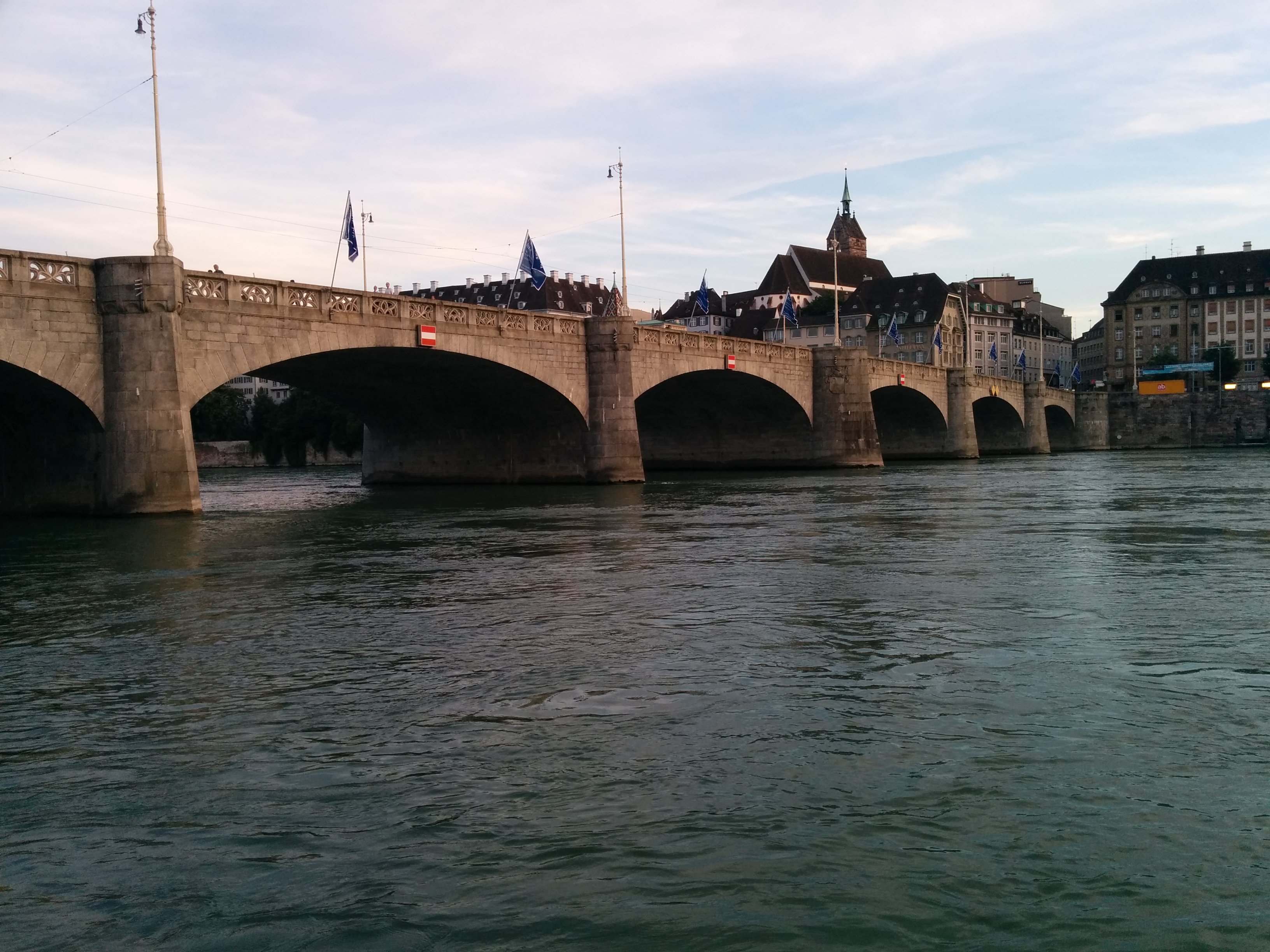
concert-basel-posterWe had arrived in Basel around noon, and about 3 pm I left to walk from our hotel to the Rhein and then across the Middle Bridge to stroll the old city. Within about 30 minutes or so I saw what I hoped for. A poster under a bridge announcing a concert — for that very night in a few hours.

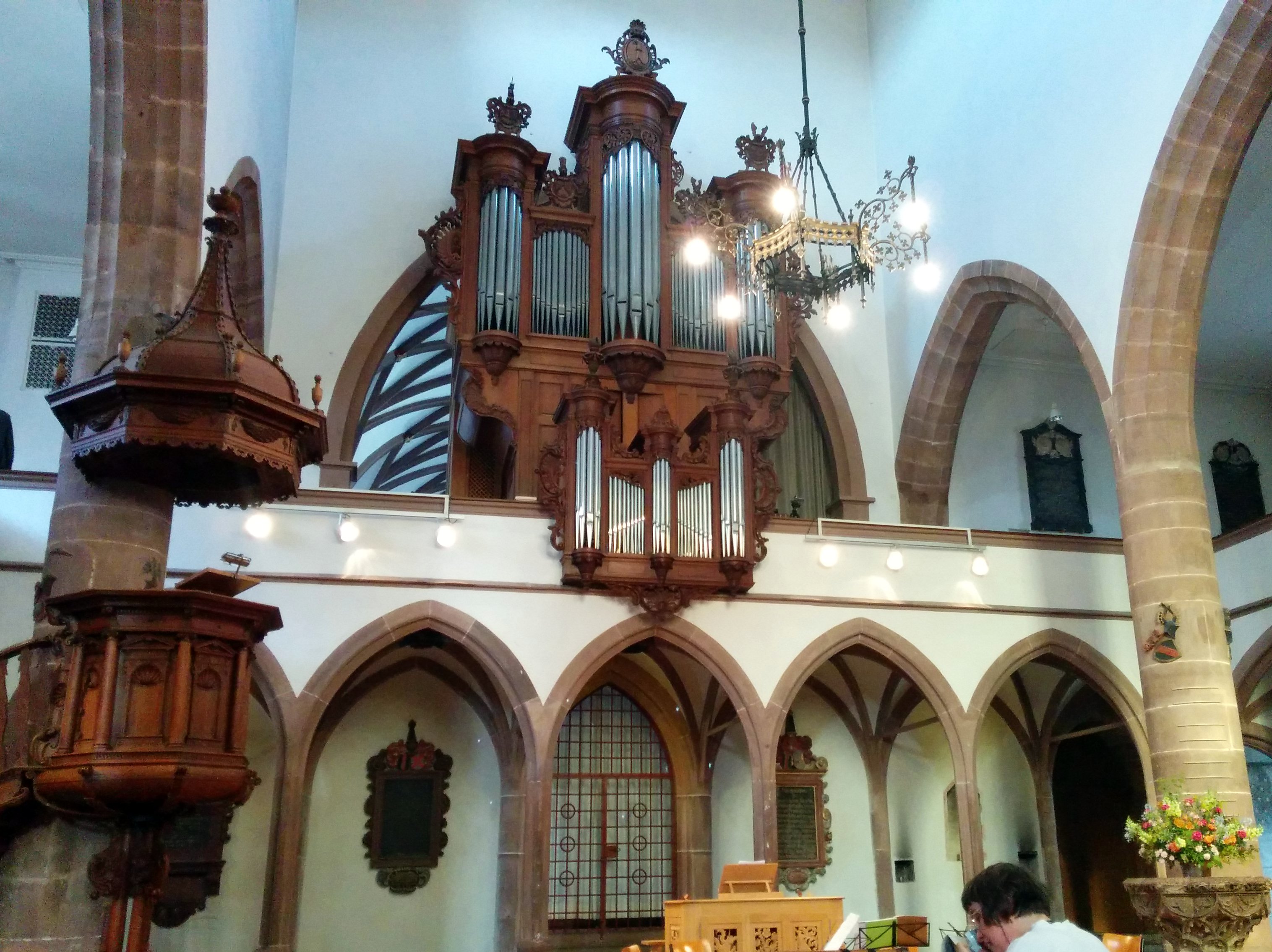
Ever since my husband’s German uncle had taken us to hear a Mozart requiem in a Roccoco church in the Black Forest many years ago, I had become addicted to hearing music in churches. Each church’s organ is built for that space — the pipes, their arrangement in harmonious ranks, their integration into the bones of the foundations pillars, their melding to the sacred space of the alter. Then when the organist touches the keys, the entire church resonates and vibrates. Sitting in the pews, the vibrations come through the wood and into your bones.

So I found a concert at St. Peter’s Church of Bach, Mozart, and Bunk (not a promising name given what the idiomatic meaning of the word).

With some time to waste meant I could have a beer and dinner and then attend the concert.

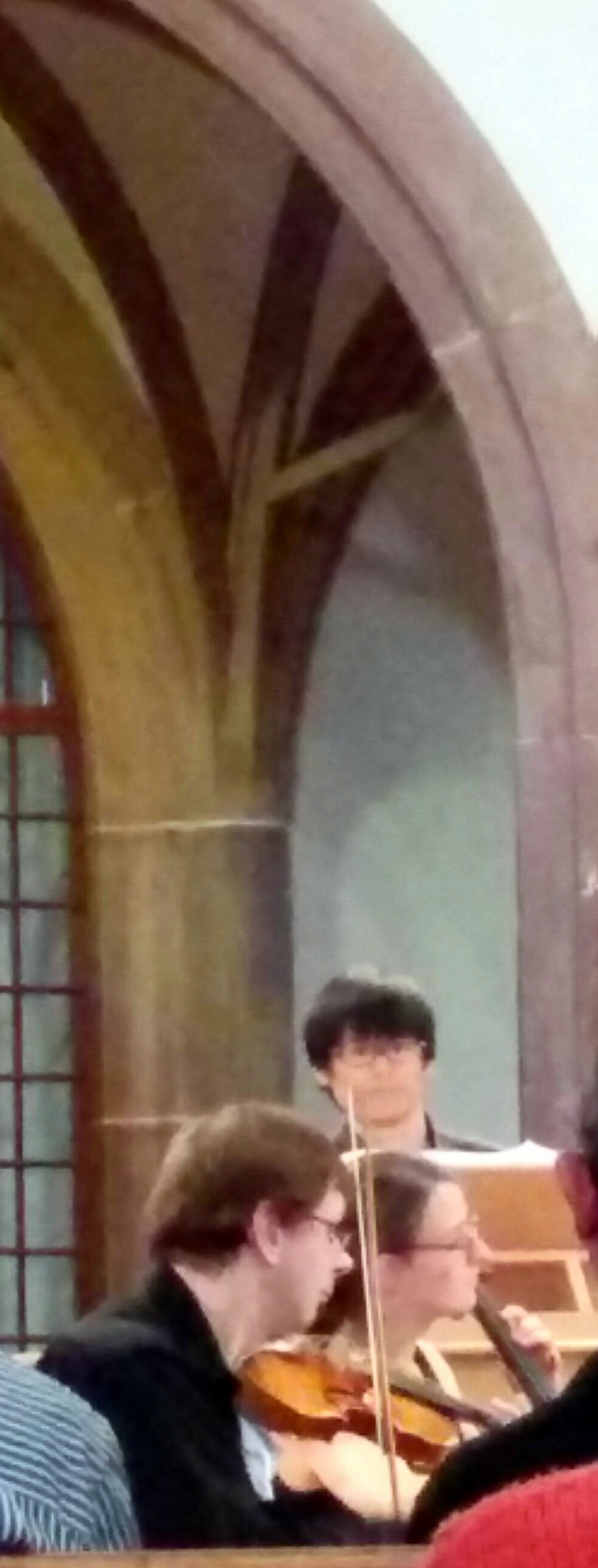
concert-basel-insideThe church was spare inside and soon full of a primarily elderly audience. The performers were three sisters and a man, who led the quartet. The organist was a Japanese organ student studying in Salzburg. The program began with a Bach fugue played first in its original form by the organist and then performed by the quartet. It took four string players to achieve the complex weaving of notes which a single organist could achieve.

concert-basel-organistAfter that piece, the organist played an improvisation based on the Bach. Interspersed between each “serious” piece, he improvised and revealed a delicious sense of humor and lightness. I do not have the musical language to describe what he was doing but he made this Swiss audience laugh at his tonal jokes.

concert-basel-windowBut the surprise for me was the piece by a composer whose name I did not recognized: Gerard Bunk (1888-1958: German).  This piece seemed to have echoes of Faure. It was modern without being atonal or discordant or jarring. It was tender and romantic. The air resonated with the notes of the organ at the end of each part. It was like the notes dripped from the high gothic archways. There is a youtube recording of a performance by the Bank-Kammermusikkreis.

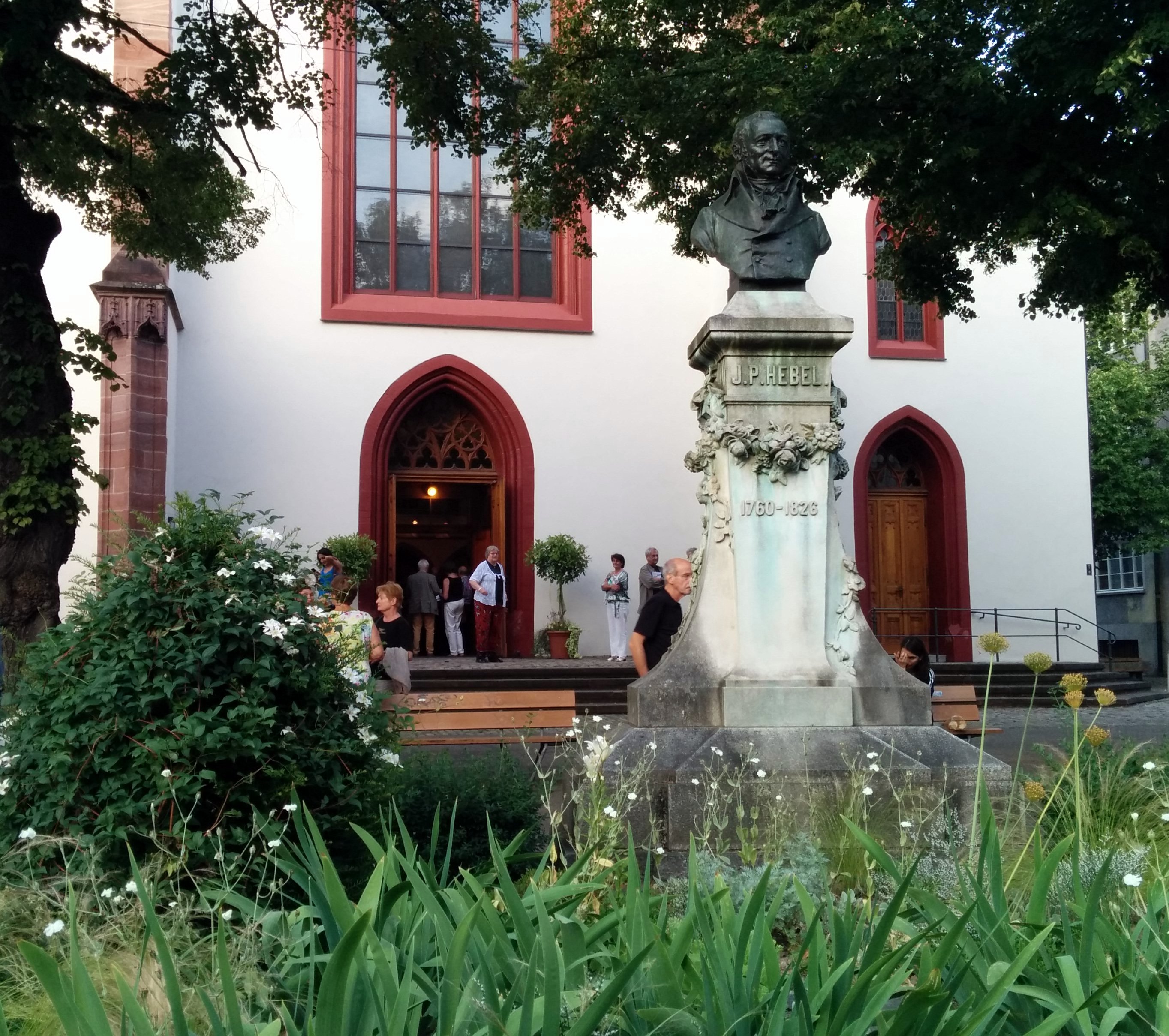
When the concert finished, I put my donation in the basket and walked outside to a twilight filled with the heavy, sweet scent of blooming lilies.

concert-basel-church

Posted in music | Tagged , , | Leave a comment

Reporting on the Summer Garden

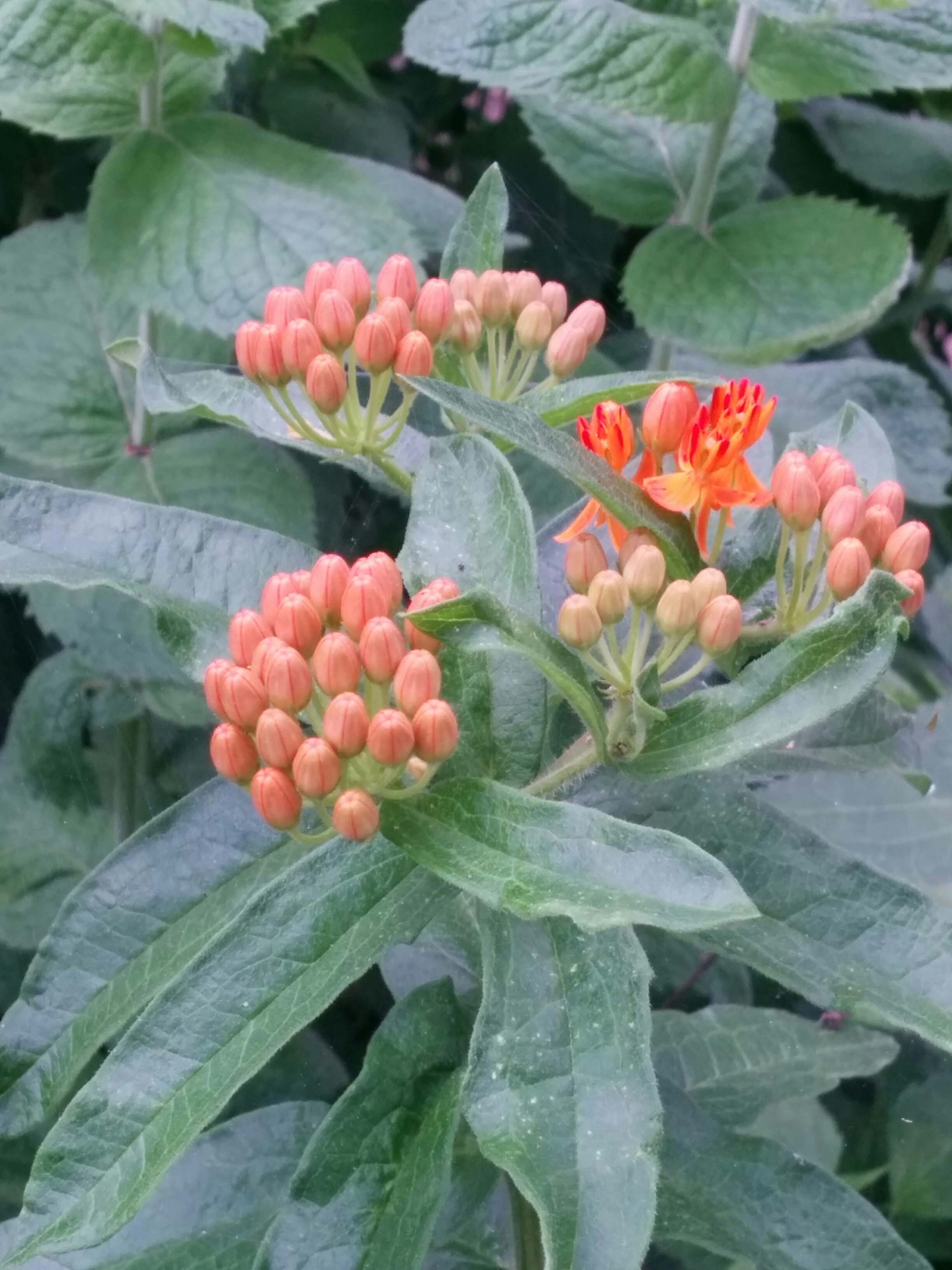
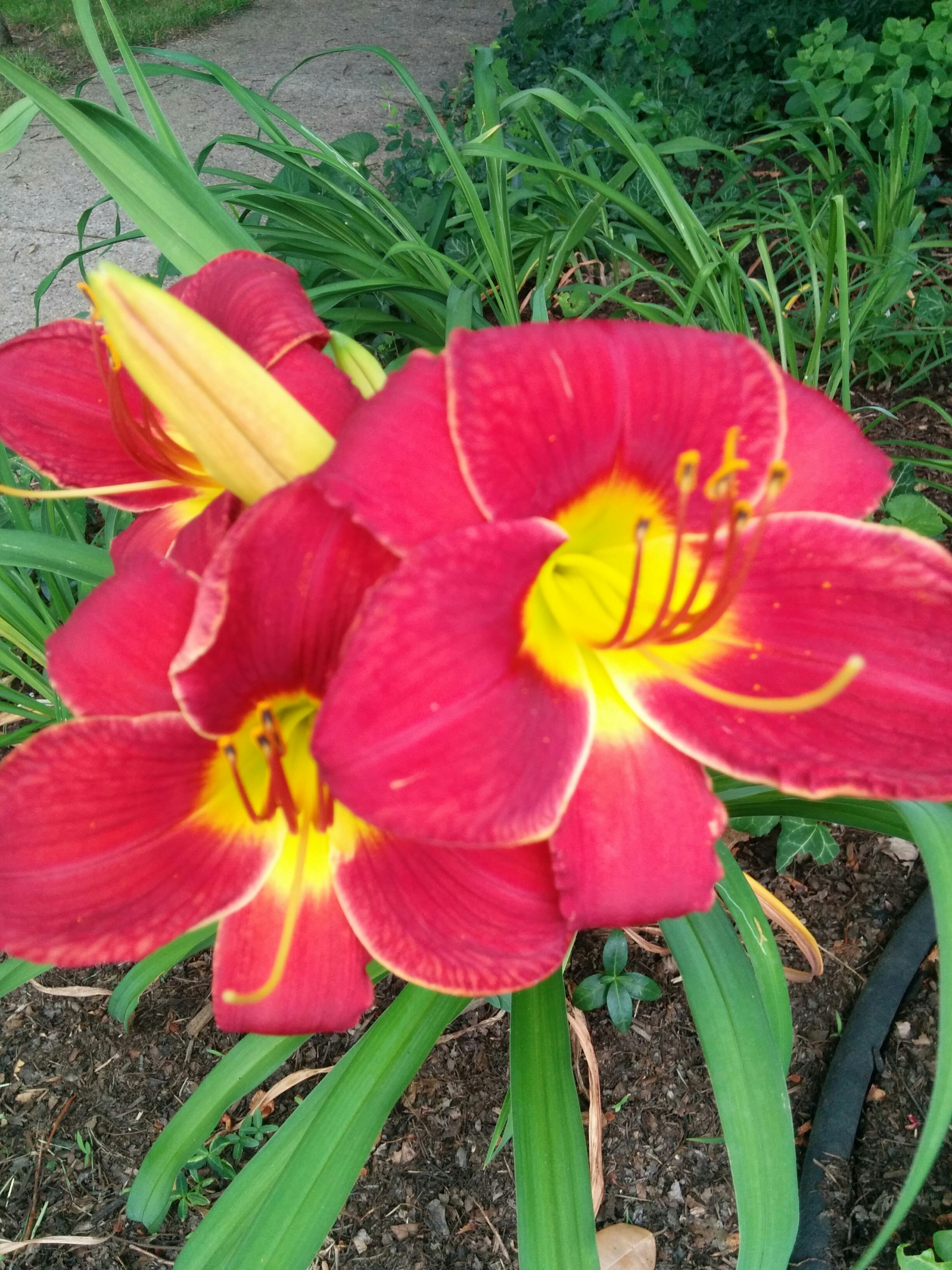
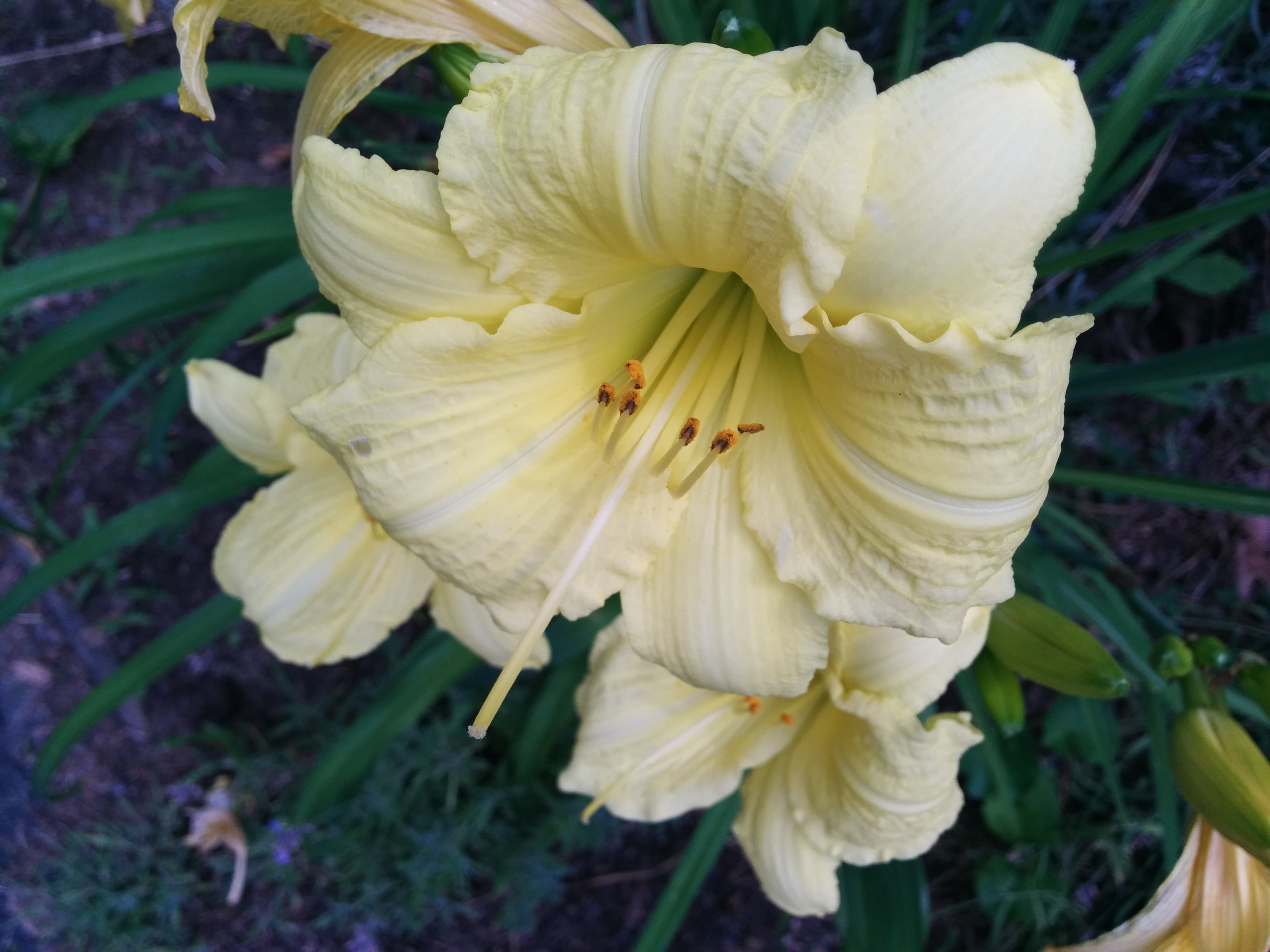
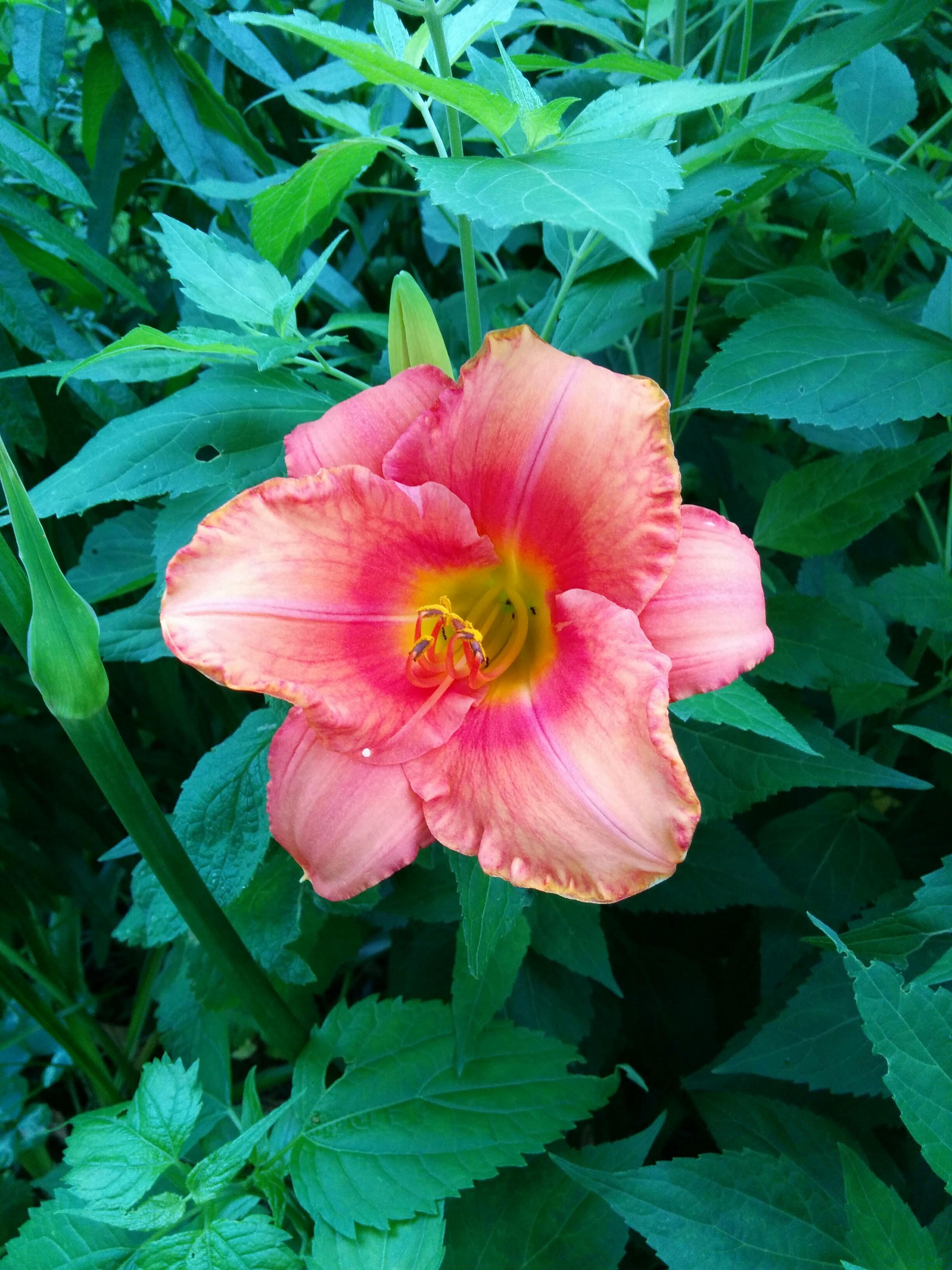
Now that it is early July, it is time to take note of what is blooming in the garden. The daylilies are magnificent — especially if the colors are rich and dark. The yellow ones look a bit anemic or even acidic.

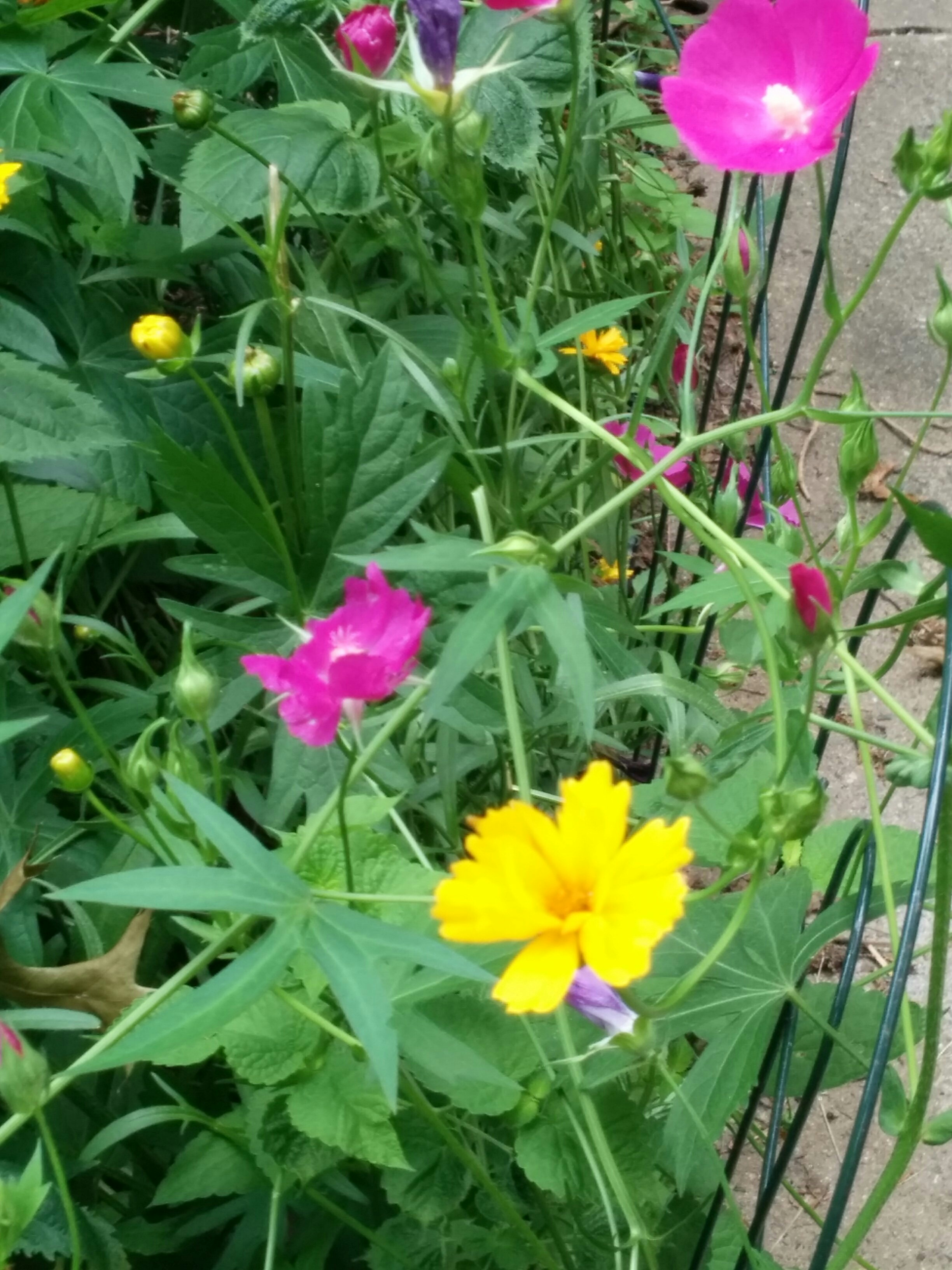
The other things that are very pretty are the poppy which are a translucent, glowing magenta. They are highlighted beautifully by the white daisies.

But oh after a week of being gone, there is so much weeding to do! And just tomorrow I leave for another week and then the garden will really be over grown! Who said that working in a garden was edenic?

Poppies with a yellow flower.

IMG_20150623_120407 IMG_20150623_120421-EFFECTS IMG_20150623_120504 IMG_20150623_120522 IMG_20150702_092531 IMG_20150702_092548 IMG_20150702_092600

Posted in garden | Tagged | Leave a comment

A Footnote to Frankenstein: Paracelsus and his Introduction of Laudanum to Western Medicine

Woodcut from Astronomica et Astrologica, 1567.

Woodcut from Astronomica et Astrologica, 1567.

In Mary Shelley’s novel Frankenstein, Victor is set on his scientific quest to create new life in part by reading the words of Paraselsus, whose full name was Philip Theophrastus Bombast von Hohenheim (d. 1541). He rebelled against common ideas of medicine of the time such as the belief that the body was controlled by the stars and planets. But he also developed his own radical ideas such as not packing wounds with dried dung but leaving them open to drain. For more information, see Encyclopedia Britannica on Paracelsus.

Paracelsus lectured in German (not Latin) in Basel as a professor at the University. It is little wonder that Frankenstein found a volume of his work in a dusty library, since Frankenstein grew up in Geneva.

I also learned something interesting while reading Jennifer Potters’ book Seven Flowers and How They Shaped Our World. On his travels and in his studies, Paracelsus introduced laudanum to western medicine. Laudanum is a medicine containing opium and other ingredients. Paracelsus wrote a recipe for making a sedative using laudanum and cinnamon, musk amber, and mandrake among other ingredients. Funnily enough, the mixture is baked inside dough as if it were bread and then the resulting compound is crushed for use.

So what is the Frankenstein connection? Last spring, one of the students asked if Victor was using drugs. She showed me the line:

Ever since my recovery from the fever I had been in the custom of taking every night a small quantity of laudanum, for it was by means of this drug only that I was enabled to gain the rest necessary for the preservation of life. Oppressed by the recollection of my various misfortunes, I now swallowed double my usual quantity and soon slept profoundly. But sleep did not afford me respite from thought and misery; my dreams presented a thousand objects that scared me. Towards morning I was possessed by a kind of nightmare; I felt the fiend’s grasp in my neck and could not free myself from it; groans and cries rang in my ears. My father, who was watching over me, perceiving my restlessness, awoke me…

Now when I read the paragraphs about Paracelsus in Potter’s book, I immediately recalled the student’s question. Certainly, laudanum use was quite prevalent in Europe at the time Shelley was writing her novel, but to learn that Paracelsus, Victor’s spiritual mentor and scientific inspiration, was credited with the introduction of laudanum as a drug I found very interesting. Did Mary Shelley know about this? She was uncommonly well read and educated.

Posted in books, literature | Tagged , | Leave a comment

Cooling off in the Rhein

IMG_20150630_113330For our vacation (and husband’s work), we traveled to Switzerland. The first part of the stay was in Grindelwald and the second part in Basel. Basel (and Europe) is suffering in a heat wave with temperatures about 100 F or 33 C.

In Basel, even on an ordinary summer day, folks will put their clothes in a waterproof sack and jump into the the Rhine. There are steps where they can walk down to the river and jump in. The river flows fairly fast and they just paddle their arms and that is enough to keep their heads up above water.

However, there is an alternative way of getting into the river.

IMG_20150629_151243Two nights ago, I was sitting by the river near the Mittlere Brücke, which is for trams and pedestrians, and heard a yell. A boy had jumped from the bridge into the Rhein on the other side in between the spans of the bridge. He shot under the span and then three friends followed him. They laughed and shouted. Such fun.

I felt envious.


Posted in life in general, travel | Tagged , , | Leave a comment

Why does Jane Eyre end with columnar St. John Rivers?

The last chapter of Jane Eyre begins with the simple declarative address to the reader: “Reader, I married him.” That is all. No fanfare. No drama — unlike Jane’s last attempted wedding. She describes how various people receive the news. Mary and Diana reply with warm approbation but St. John never replies to the letter which Jane sends announcing her marriage. Jane tells us that all his other correspondence is calm and measured, exhorting her to not live just for the earthly.

Jane says midway through the chapter that “I have been married ten years,” so she writes this autobiography well after the events. The last chapter is really just wrapping up the ends.

Adele she removes from a too strict school and places in a more school “conducted on a more indulgent system.” Jane visits her often and observes: “As she grew up, a sound English education corrected in a great measure her French defects….” Now that overt bias against the French I find hilarious and will explore further on a later post.

Jane tells us that Mary and Diana marry: “Diana’s husband is a captain in the navy; a gallant officer and a good man. Mary’s is a clergyman: a college friend of her brothers; and, from his attainments and principles, worthy of the connection.” These two sisters symbolize two different religious? cultural? moral? influences for Jane. Diana symbolizes the classical goddess of the hunt, preserver of virgins and children. Mary symbolizes Jesus’s mother Mary. In the book, the darker-haired Diana speaks much more frequently than Mary. The almost blonde Mary is described as quiet, retiring, and distant. In chapter 29, when Jane first comes down after being so sick, Mary’s words are summarized, but Diana’s are included in a direct quotation. Jane says, Diana looked and spoke with a certain authority: she had a will, evidently.” Therefore it only makes sense that Diana marries a military man whose orientation is to soldierly, athletic, conscripted violence and that Mary marries a clergyman. Though it is amusing that Jane feels she has to justify the clergyman more than the navy captain!

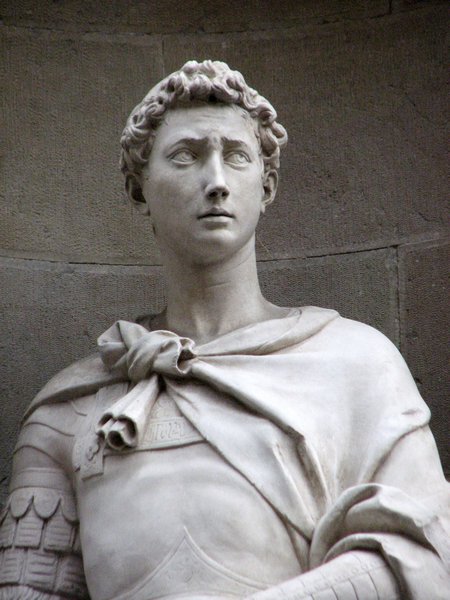
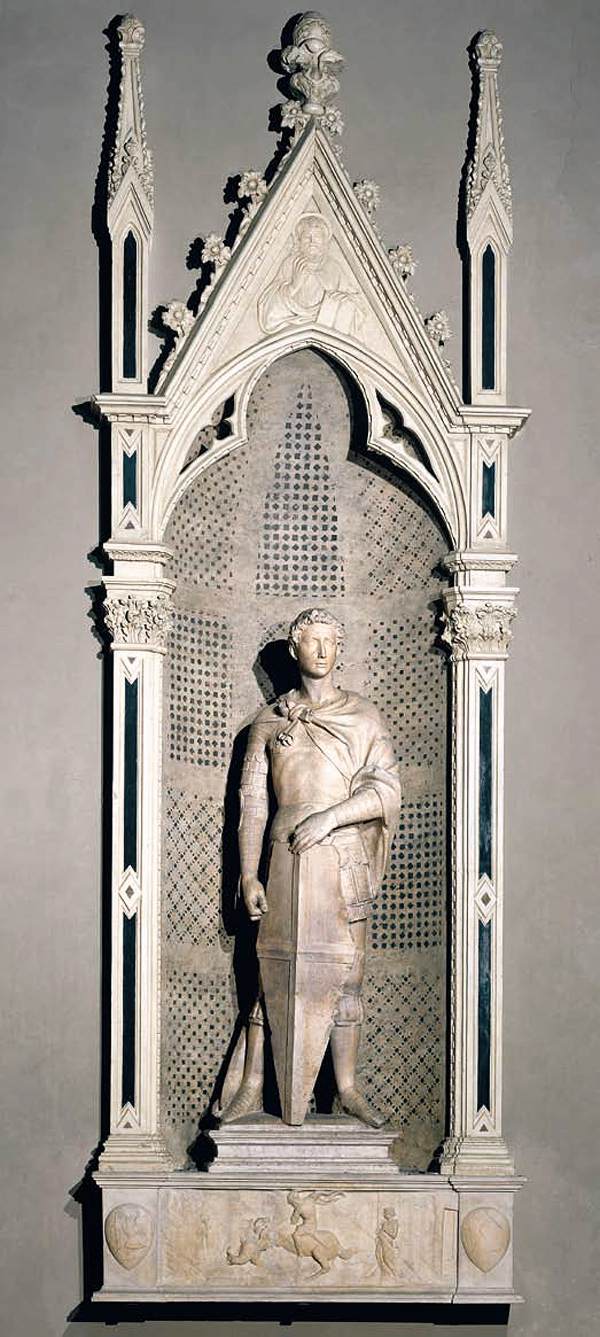
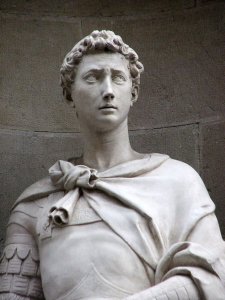
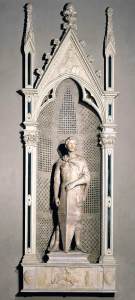
St. John Rivers is their older, sterner, stricter, brother of classical good looks: “his face rived the eye; it was a like a Greek face, very pure in outline: quite a straight, classic nose; quite an Athenian mouth and chin. It is seldom, indeed, an English face comes so near the antique models as did his.” The description reminds me of a statue by Donatello which I 4950060-Donatello-s_St-_George-_Florence-0saw in the Florence at the Museo Nazionale del Bargello last March. This statue completed in 1416 shows St. George holding his shield. The classically Greek face possesses a pair of eyes gazing into the far distance and the eyebrows are quirked in concentration. This St. George is beautiful with his sensual mouth, straight nose, round cleft chin, carefully disarranged curls, thoughtfully creased forehead, and muscular neck. This St. George, like St. John, is untouchable.
In the novel, Jane describes St. John with words such as these: “the ice of reserve”; tall figure all white as a glacier”; “like chiseled marble”; “his lofty forehead, still and pale as a white stone”; “a cold, cumbrous column, gloomy and out of place”; “so keen was it [his gaze], and yet so cold”; “there he lay, still as a prostrate column”; “compressing 019-donatello-theredlisthis well-cut lips”; “what terror those cold people can put into the ice of their questions”; “he was in reality become no longer flesh, but marble; his eye was a cold, bright, blue gem; his tongue, a speaking instrument — nothing more.”
Some of the phrases are echoes of how Mr. Brocklehurst in described at the very beginning of the book: “the grim face at the top as like a carved mask, placed above the shaft by way of capital” (ch. 4); “the same black column”; “this piece of architecture”; “looking longer, narrower, and more rigid than ever”; “the black marble clergyman” (ch. 8).

Now that I juxtapose the phrases describing each man, I observe that Mr. Brocklehurst is always described as “black” whereas St. John is always “white.” The colors must symbolize that the two men, while allied in terms of rigidity and sternness, are distinguished because the first is motivated by superficial, hypocritical religiosity and the second is motivated by deep, sincerely, evangelism. Jane’s life is bookended by these two men.

Why, oh why is the last person Jane mentions St. John? Why do we end with an account of his missionary work in India and the fact that he will die soon? Why do end his words that “Amen; even so come, Lord Jesus!”

When I read this ending in twelfth grade honors English, I was puzzled. I remain puzzled. Is Bronte trying to conciliate her more conventional readers who want an affirmation of their Protestant Christian morality and faith? Is she trying to soften the fleshly happiness of Jane, who loves to sit on Rochester’s knee? Is she feebly affirming a patriarchal structure and authority by having the novel end with a man speaking to the Superman?

Up until this point, all the men in the novel have been flawed. Rochester is tamed and symbolically castrated — he even fears Jane won’t love him because he has only “crippled strength” (ch. 37).  St. John tyrannizes Jane with his calm rationality. Mr. Brocklehurst is a hypocritical clergyman. John Reed is a despotic, drunken boy who commits suicide. Mr. Mason is weak and cowardly.

Only the women are idealized and perfect — except for the Reed family of Mrs. Reed, Eliza, and Georgiana. The novel really is a paean to women and their power and love and character.

St. John really is the only one besides Mr. Rochester who is given some three-dimensionality.

I really do think he is Bronte’s sop to the expectations of her readership. He is the little moral lesson you get at the end of a fairy tale that allows the reader to enjoy all the other more questionable, ambiguous events, such as the beautiful princess sleeping with a frog on her pillow.

A Side Note

I noticed anew this passage from rather late in the book. It describes a scene when Diana insists that St. John kiss Jane good night in the same what he kisses his sisters good night. Of course it is Diana who orders St. John to perform this action and not Mary!

“…St. John bent his head; his Greek face was brought to a level with mine, his eyes questioned my eyes piercingly — he kissed me. There are not such things as marble kisses, or ice kisses, or I should say my ecclesiastical cousin’s salute belonged to one of these classes; but there may be experiment kisses, and his was an experiment kiss. When given, he viewed me to learn the result; it was not striking: I am sure I did not blush; perhaps I might have turned a little pale, for I felt as if this kiss were a seal affixed to my fetters.” (ch 34)

When St. John kisses Jane, he has to stoop down because she is so much shorter than he. But given the many times he is described as a marble statue, I think of just how hard it must be for him to bend that little bit to kiss her. Even though the kiss is just a kiss, it so much more given how their eyes are described. St. John’s eyes look into Jane’s “piercingly.” I am sorry but that is more than a little Freudian. The entire episode is symbolic of a first sexual encounter. It is not good that Jane thinks St. John’s kiss could be marble or ice. That does not bode well. And worse, it is an experiment! Almost certainly, St. John has not kissed anyone else but his sisters or close relations. He never would have kissed Rosamond Oliver. In this instance, Jane has more experience than the man St. John, since we know she has been thoroughly kissed by Mr. Rochester.




Posted in literature | Tagged , | Leave a comment

Strawberries, Cherries, and Bilberries in Jane Eyre

wpid-img_20150619_082037.jpgI am almost done with Jane Eyre. I have stopped at the chapter when Jane is teasing Mr. Rochester about St. John as she lets him believe she is in love with  this Grecian statue.

Now why might you ask did I select the basket of cherries and strawberries for this post? What possible connection do these have with Bronte’s novel? Strawberries only appear once when Adele is picking them in Chapter 23. Cherries as a fruit only appear in this chapter as well when Mr. Rochester is roaming his garden inspecting the fruit ripening on the trees. It is midsummer eve which is June 21 and the longest day of the year.
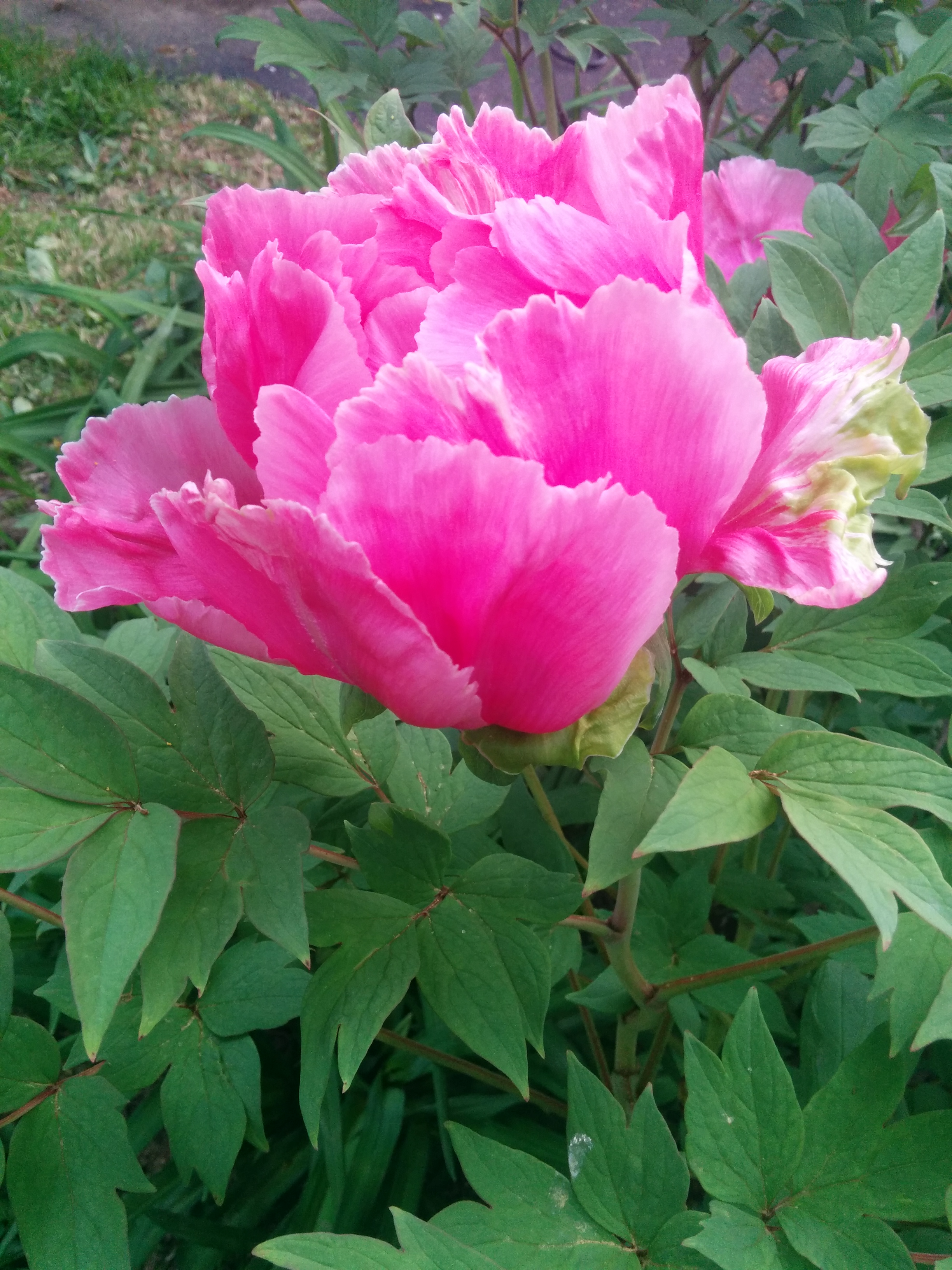
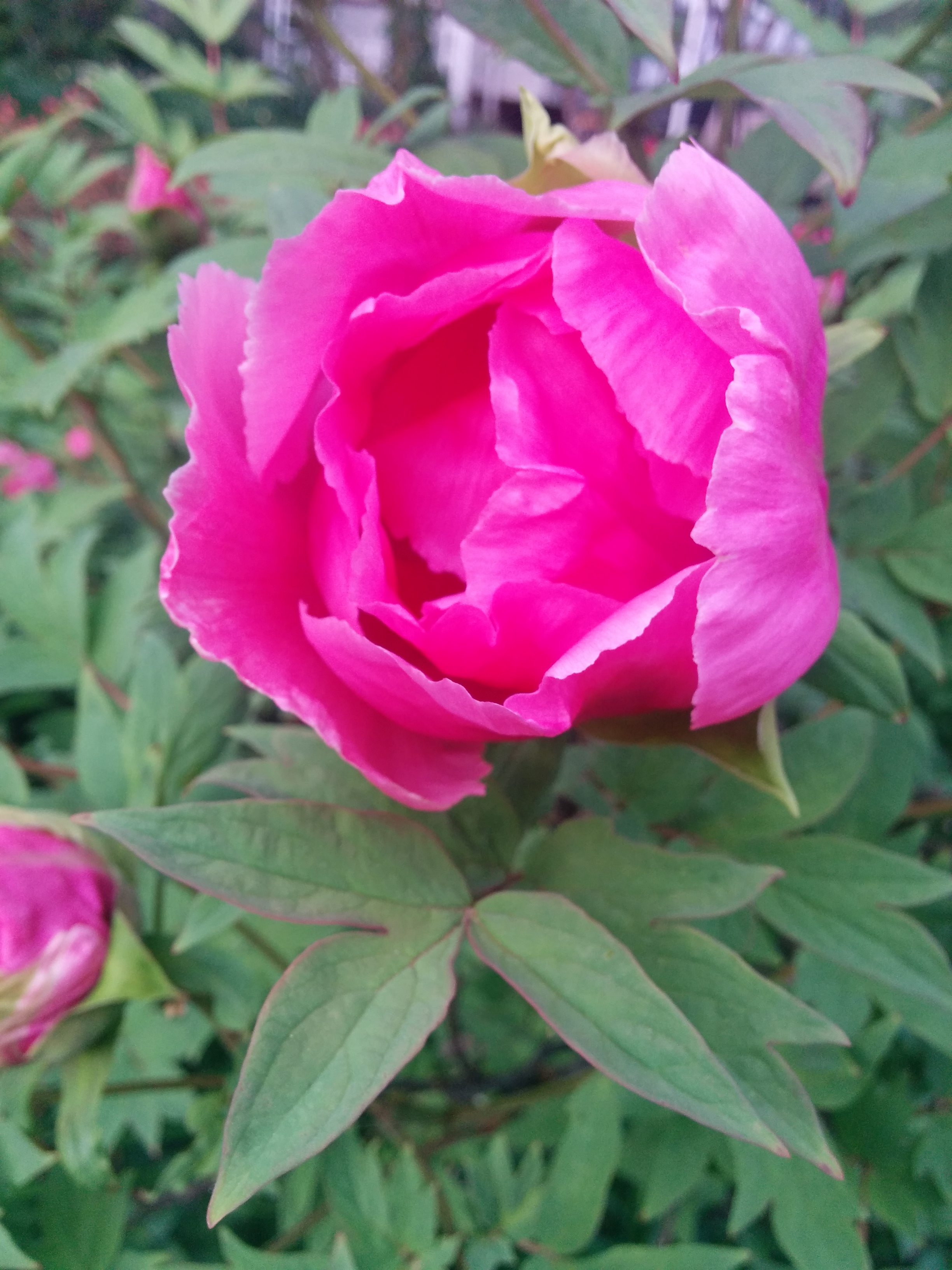
This is the chapter when Jane declares her love for Rochester and Rochester asks her to marry him. Most of that conversation takes place under the “great horse-chestnut” which is riven in two by a symbolic lightening bolt.

Both strawberries and cherries are fruits that only ripen in the early summer. And of course, in the nineteenth century, fruit only ripened in season — there were no strawberries in the winter, shipped from southern climes. The emphasis on Rochester walking his garden and inspecting each tree and bush turns him into an Adam figure and thus Jane into an Eve.

Here is how Bronte describes the scene;

While such honey-dew fell, such silence reigned, such gloaming gathered, I felt as if I could haunt such shade for ever; but in threading the flower and fruit parterres at the upper part of the enclosure, enticed there by the light the now rising moon cast on this more open quarter, my step is stayed—not by sound, not by sight, but once more by a warning fragrance.

Sweet-briar and southernwood, jasmine, pink, and rose have long been yielding their evening sacrifice of incense: this new scent is neither of shrub nor flower; it is—I know it well—it is Mr. Rochester’s cigar.  I look round and I listen.  I see trees laden with ripening fruit.  I hear a nightingale warbling in a wood half a mile off; no moving form is visible, no coming step audible; but that perfume increases: I must flee.  I make for the wicket leading to the shrubbery, and I see Mr. Rochester entering.  I step aside into the ivy recess; he will not stay long: he will soon return whence he came, and if I sit still he will never see me.

But no—eventide is as pleasant to him as to me, and this antique garden as attractive; and he strolls on, now lifting the gooseberry-tree branches to look at the fruit, large as plums, with which they are laden; now taking a ripe cherry from the wall; now stooping towards a knot of flowers, either to inhale their fragrance or to admire the dew-beads on their petals.  A great moth goes humming by me; it alights on a plant at Mr. Rochester’s foot: he sees it, and bends to examine it.

The scents of the flowers, the dew dripping down, the nightingale singing, the solitude and silence, the moths flying around — all are emblematic of the Garden of Eden. In Jane’s eye, Rochester almost seems like God as he stoops down to inspect the plants and the fruit. But he is much more so like Adam, waiting to claim his Eve. They sit and talk together under a this ancient tree, and, when the storm breaks, they rush into the house at just midnight. Then the tree is hit by lightning. And God passes judgement on their engagement in a terrific storm which blasts the tree (of Knowledge), dividing it into two parts connected only by the roots. When Bronte later describes the tree in the next chapter, the description cries out as foreshadowing and symbol.

In Bronte’s version of the fall, the temptor is not the woman but the man, who knowingly asks the woman to marry him, even when his mad wife lives on the third floor of Thornfield. It is rather refreshing for the sinner to be the man since the woman so often gets the blame.

And while Jane does pray to a patriarchal God when she is deciding to leave Rochester after the aborted marriage, the figure in the sky which seems to warn her and shelter her is feminine. In point of fact, throughout the entire novel, Jane is sheltered and protected primarily by women (Bessie, Miss Temple, Mrs. Fairfax, Diana and Mary) and only repressed by men (Brocklebhurst, St. John, Mr. Mason, Mr. Rochester [until he is purified]).

But back to cherries and strawberries. They are the sweet fruit of the summer and Jane herself never tastes them. Adele picks strawberries. Rochester inspects cherries. But Jane never eats. She is not like Lizzie in Christina Rossetti’s poem “The Goblin Market.” She drinks tea, eats porridge, has morsels of break and cake, once a sip of wine. But all her food is “cooked” in a Claude Levi-Strauss way. She does not eat from nature except when she runs away from Thornfield. Then in chapter 28, she eats bilberries and a crust of bread the night the coach leaves her at Whitcross. That is the only time.

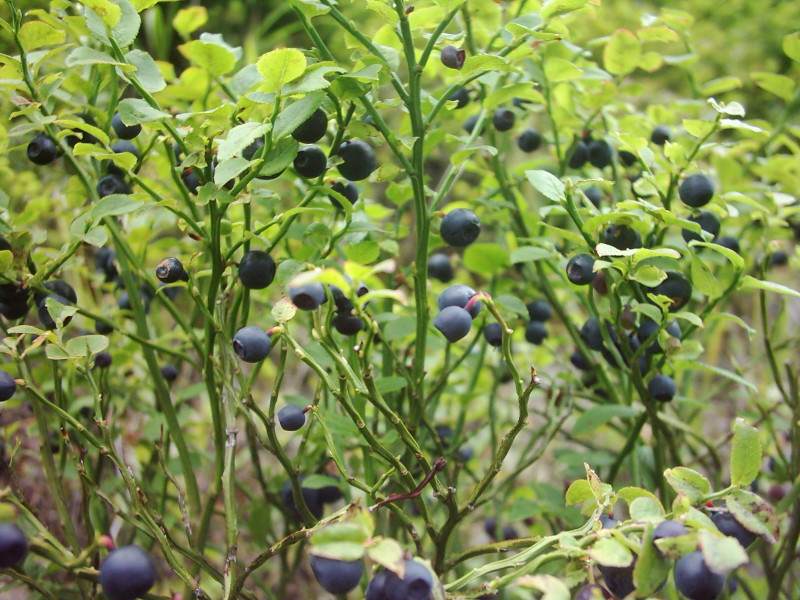
Bilberries growing wild

Bilberries growing wild

Bilberries are closely related to blue berries. They grow in poor soils and are wild, not easily cultivated and thus not cultivated. Interestingly, they are supposed to improve night vision. Wikipedia says the pilots in the RAF ate them to improve their vision during World War II. They are also supposed to be good for heart conditions.

When Jane eats these berries, she is picking a fruit no one wants (really) and which only grows wild. Did Bronte know that bilberries were supposed to improve night vision? Would Bronte be suggesting that Jane is improving her “vision” by eating these berries? Now really that may be going too far.

I just did a search with the terms Victorian symbolism berry and stumbled on an article by Courtney Alexander entitled, “Berries as Symbols and in Folklore.” Here I learned that strawberries are associated with the Norse goddess of love Freya and in the Victorian era were symbolic of “sweetness in life and character” and had many positive associations. Well, no wonder Jane eats no strawberries!

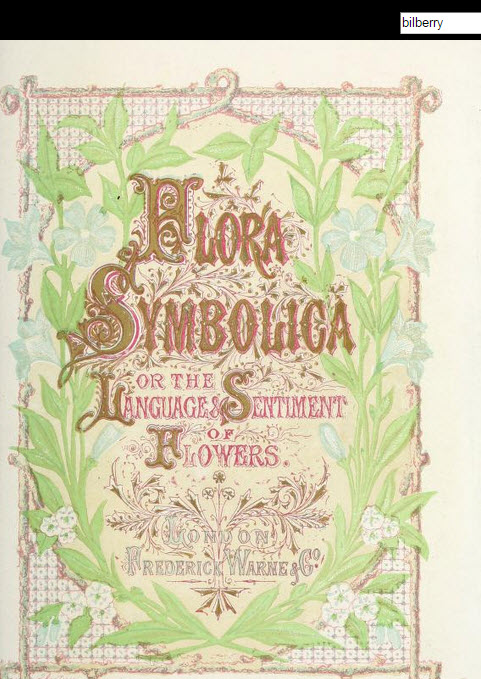
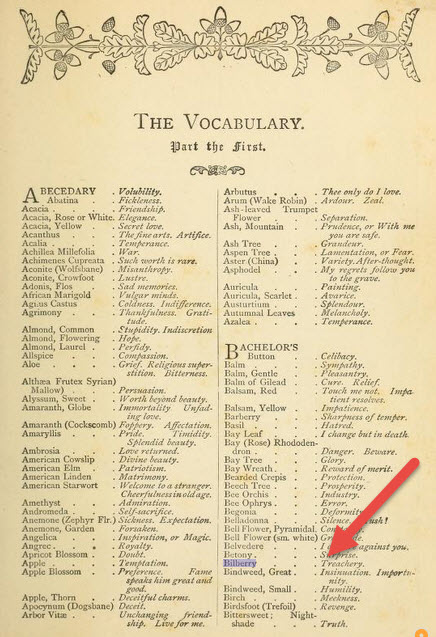
by John IngramIn 1869, John Ingram published a book called Flora Symbolica which listed flowers, fruits, trees, etc and their associated symbols. In this book, he lists that the bilberry represents “treachery.”  Now that is interesting. Is Jane eating bilberries because she is treacherous? She will be soon assuming the alias Jane Elliot. Or is she eating bilberries to “eat” Rochester’s treachery and deceit and thus free herself of them? I rather like that idea. Instead of Jane becoming treachery and deceit by consuming bilberries (a la Claude Levi-Strauss), she is destroying those qualities by ingesting them. She will transform them by her own digestion.

Would Bronte have known about the symbolism of bilberries? I think (cautiously), “yes.” Thus when she has Jane eat this fruit as opposed to any other, she is making a veiled statement about Jane’s moral development.Bilberry = Treachery

Posted in literature | Tagged , , | Leave a comment

Stop! Don’t Sully Your Thoughts with Some Scholar’s Ideas about Jane Eyre!

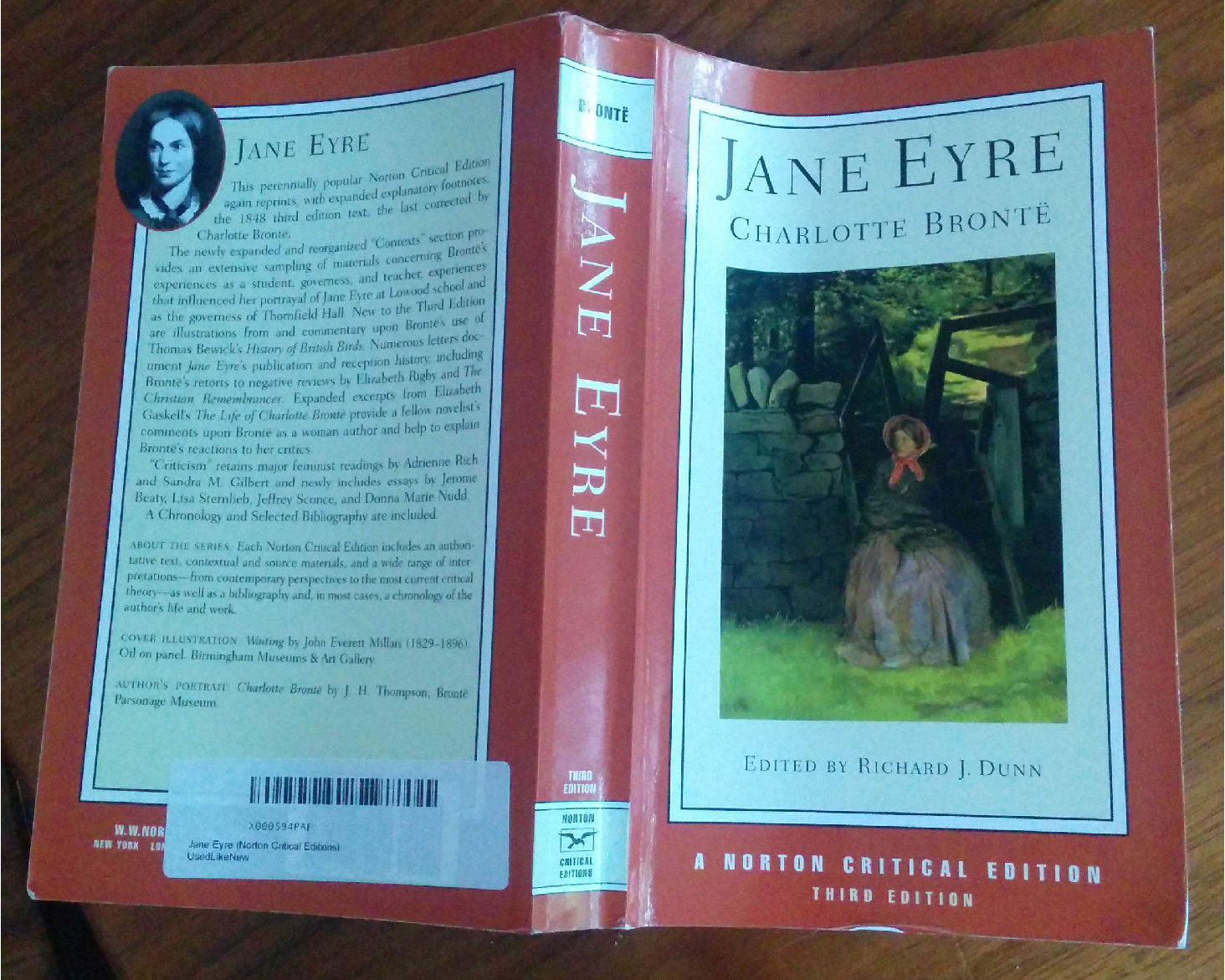
imageFor the last couple of days, I have been reading Jane Eyre (again) in preparation for teaching it in the fall.

I am reading from the Norton critical edition and before starting the first chapter, read Adrienne Rich’s article “Jane Eyre: The Temptations of a Motherless Woman.” Rich observes that Jane does not long for a man when she walks the roof of Thornfield; she longs for freedom and breadth of experience and richness of life. She also comments on how unusually Bronte put the madwoman on the roof instead of the cellar (subconcious) to symbolize that Jane’s desire for just these things is akin to madness for a Victorian woman.

I regret reading this excellent article because after so many years, here was my chance to come to the novel fresh — almost like a student reading it for the first time. Now my thoughts are tainted and twisted by Rich’s voice.

Often I tell my students to avoid criticism and to read their books with their own open eyes, hearts, and minds and see what strikes them. These girls will have plenty of time to be be tainted by literary criticism. They don’t believe me when I say that their own thoughts are worth more than any random scholar’s thoughts. Only with the fresh eyes will new ideas be brought to these old texts.

I do bitterly regret reading Rich’s article.

Bronte has Eyre refer to the novel as a play in Chapter 11. I do wonder if the novel can be marked into five acts like a play. Bronte must have had Shakespeare in mind. Rochester refers to Macbeth in Chapter 15. He says that he is at the cusp of a great choice and that a spirit is daring him to take his fate in the same way the witches dare Macbeth. That the spirit is daring him to like Thornfield. Rochester seems to have given up a great deal to protect this house — and since I am a repeat reader — I know exactly how much he has sacrificed.

Rochester is such an interesting character — the first real Byronic hero… well, may be Victor Frankenstein is a Byronic hero. No definitely, Frankenstein is Byronic. But Rochester is the prototypical Harlequin Romance hero. The mysterious, older man scarred by a dark past who must be redeemed by the pure love of a young, innocent girl.

Rochester’s latest incarnation is Christian Gray of Fifty Shades of Grey. His Thornfield Hall with the drawing room with white carpets and crimson couches is the Red Room of Pain in Grey’s Seattle penthouse (what a trope). And there comes the great confession that I have read the first book in the dreadful trilogy bur could not read any more — at least for a while — too hackneyed and hyperbolic and unrealistic.

Rereading this book is also an prod to remembering my past since the first time I read this book was as a senior in high school. Some later post will be about what I thought of the book then — in so far as I remember my own thoughts for those many years ago.

Posted in books, literature | Tagged , | Leave a comment

Blossoms and Radical Pruning in the Garden

Now that I have decided to include garden notes in this blog, it is time to add some more pictures.

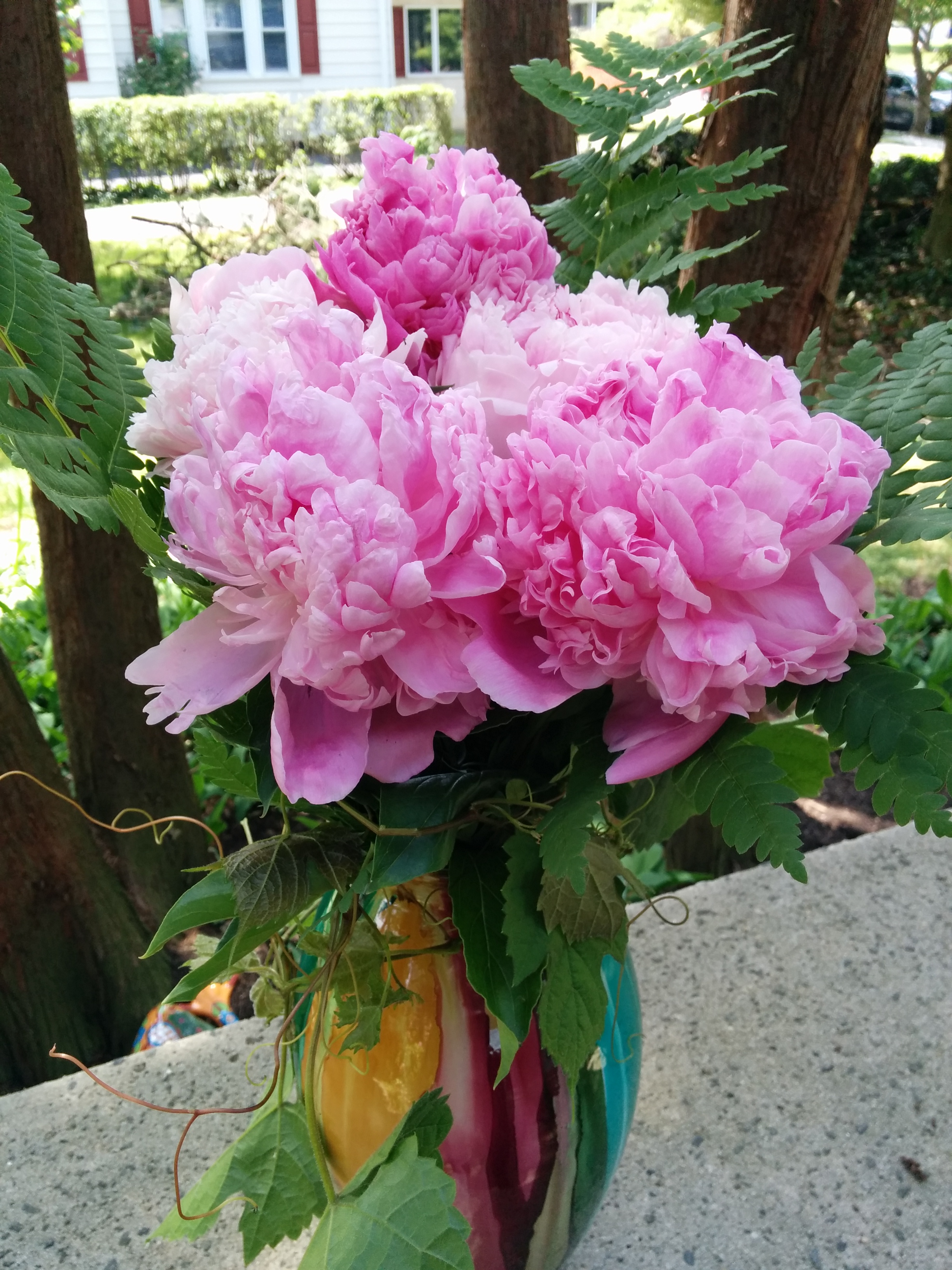
A peony  bouquet for a friend cut on May 24. On the same day, I cut 6 unopened peony buds, wrapped them in plastic wrap, and stuck them in the refrigerator for later. Martha Stewart says you can keep a peony bud in stasis this way for up to 6 months.

A peony bouquet for a friend cut on May 24. On the same day, I cut 6 unopened peony buds, wrapped them in plastic wrap, and stuck them in the refrigerator for later. Martha Stewart says you can keep a peony bud in stasis this way for up to 6 months.

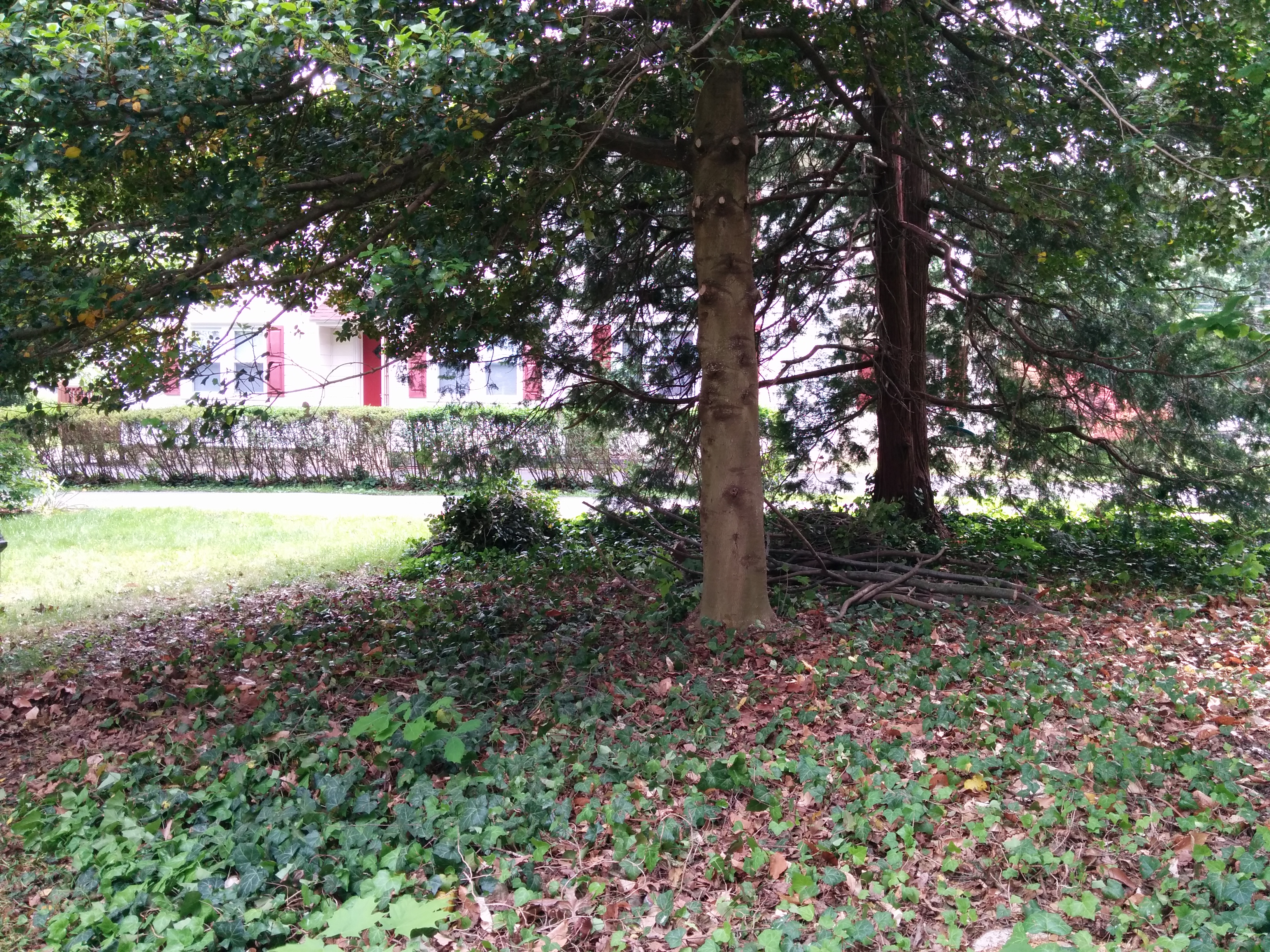
On May 16 this is what the area under the holly and cedar looked like after the boys helped pruned the lowers branches.

On May 16 this is what the area under the holly and cedar looked like after the boys helped pruned the lower branches. The amount of brush to bundle was impressive and as the holly leaves dried, their spikes got even more aggressive. But the change met with approbation — even the change resistant middle son.

IMG_20150516_162438

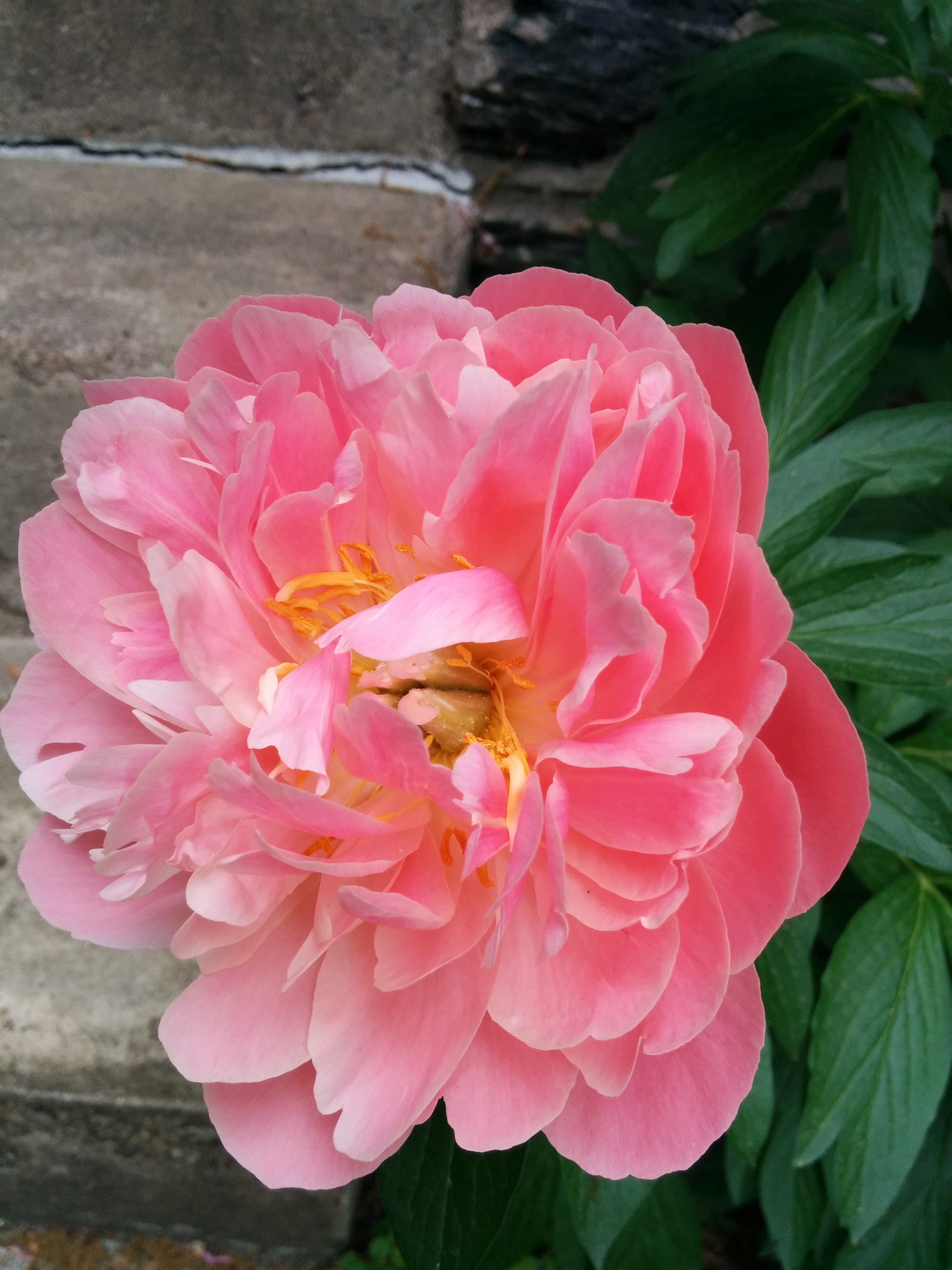
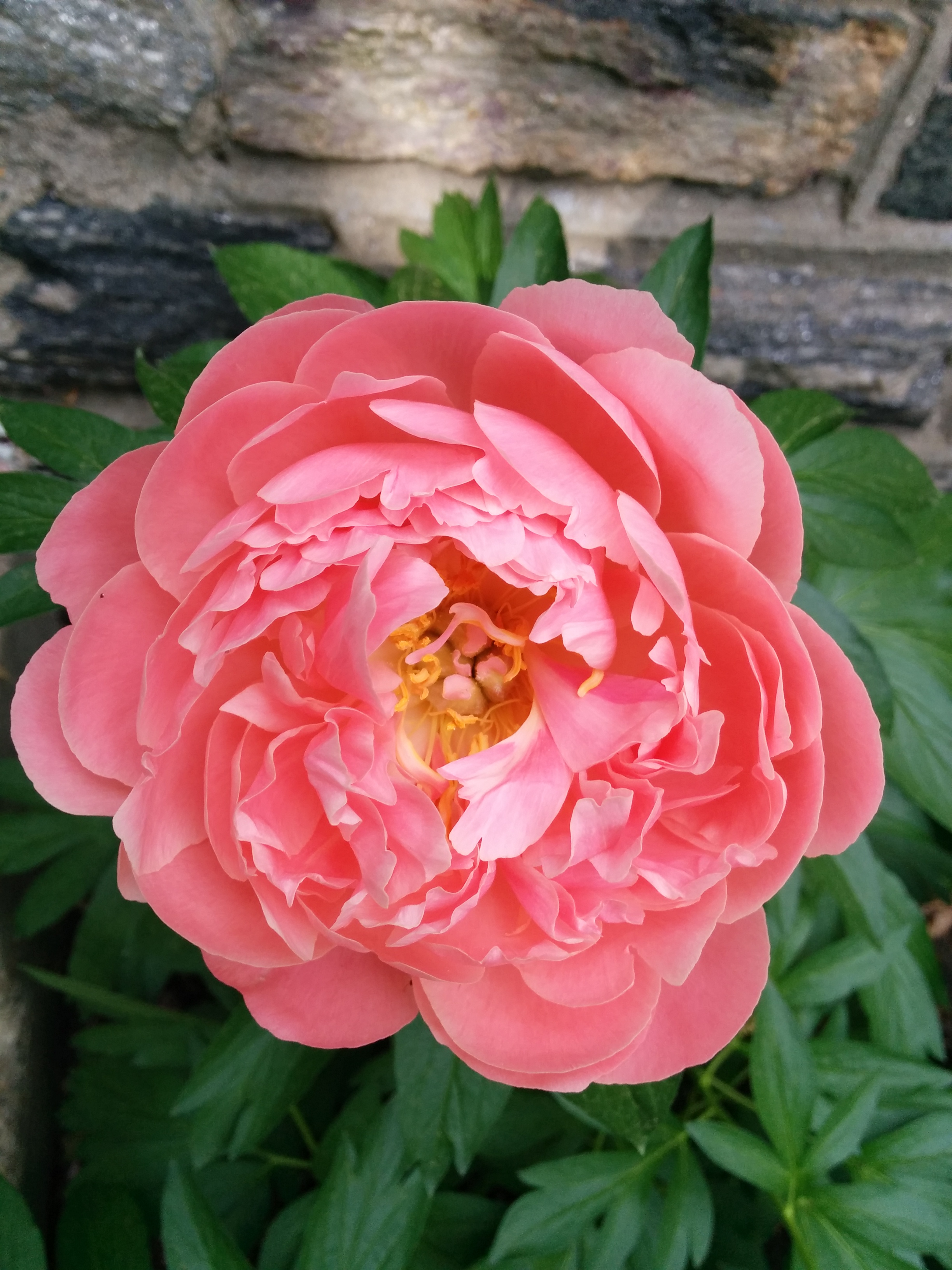
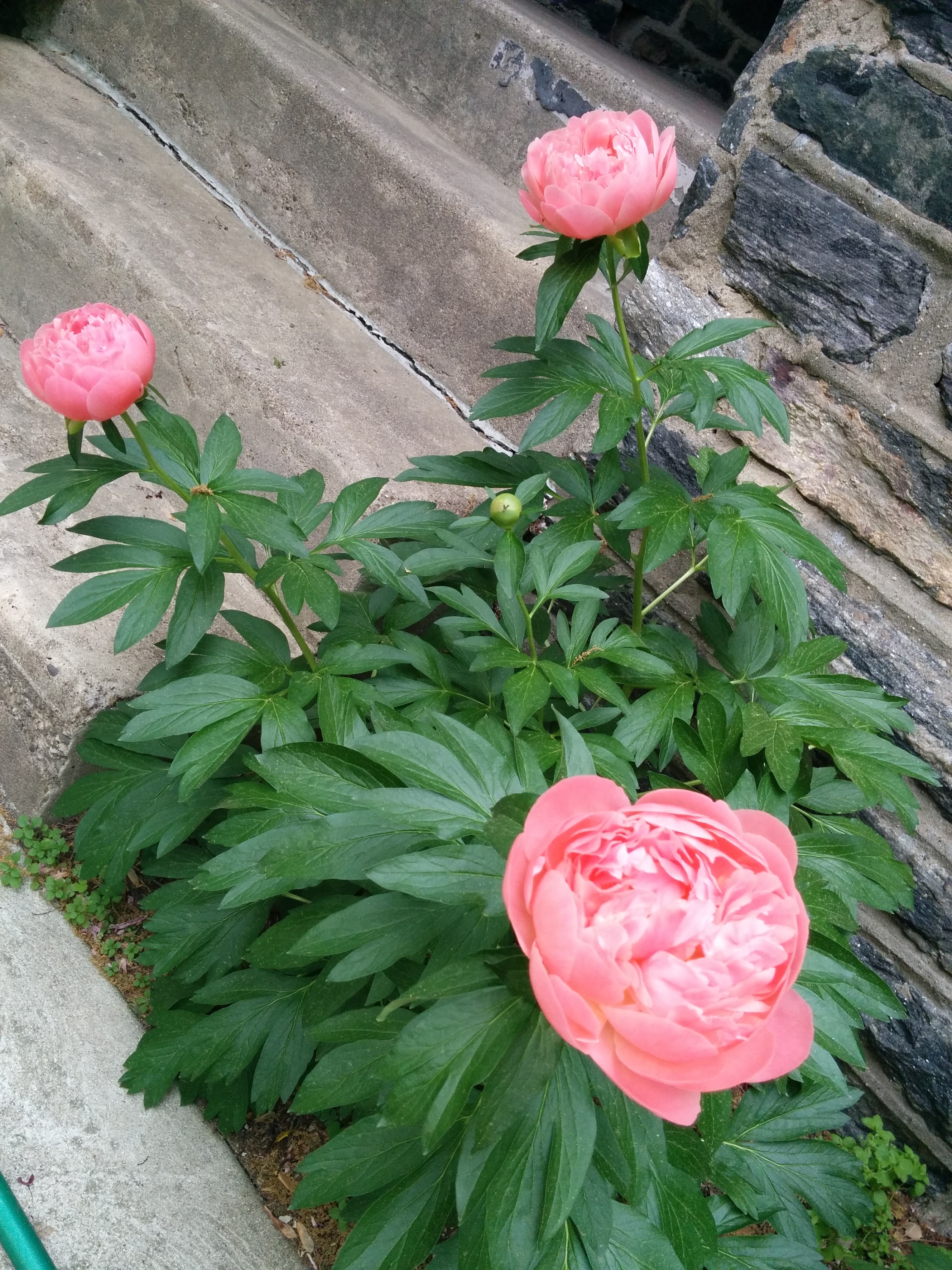
Another blossom on the coral peony on May 16.

Same coral peony on May 16.

Same coral peony on May 16.

IMG_20150515_171056

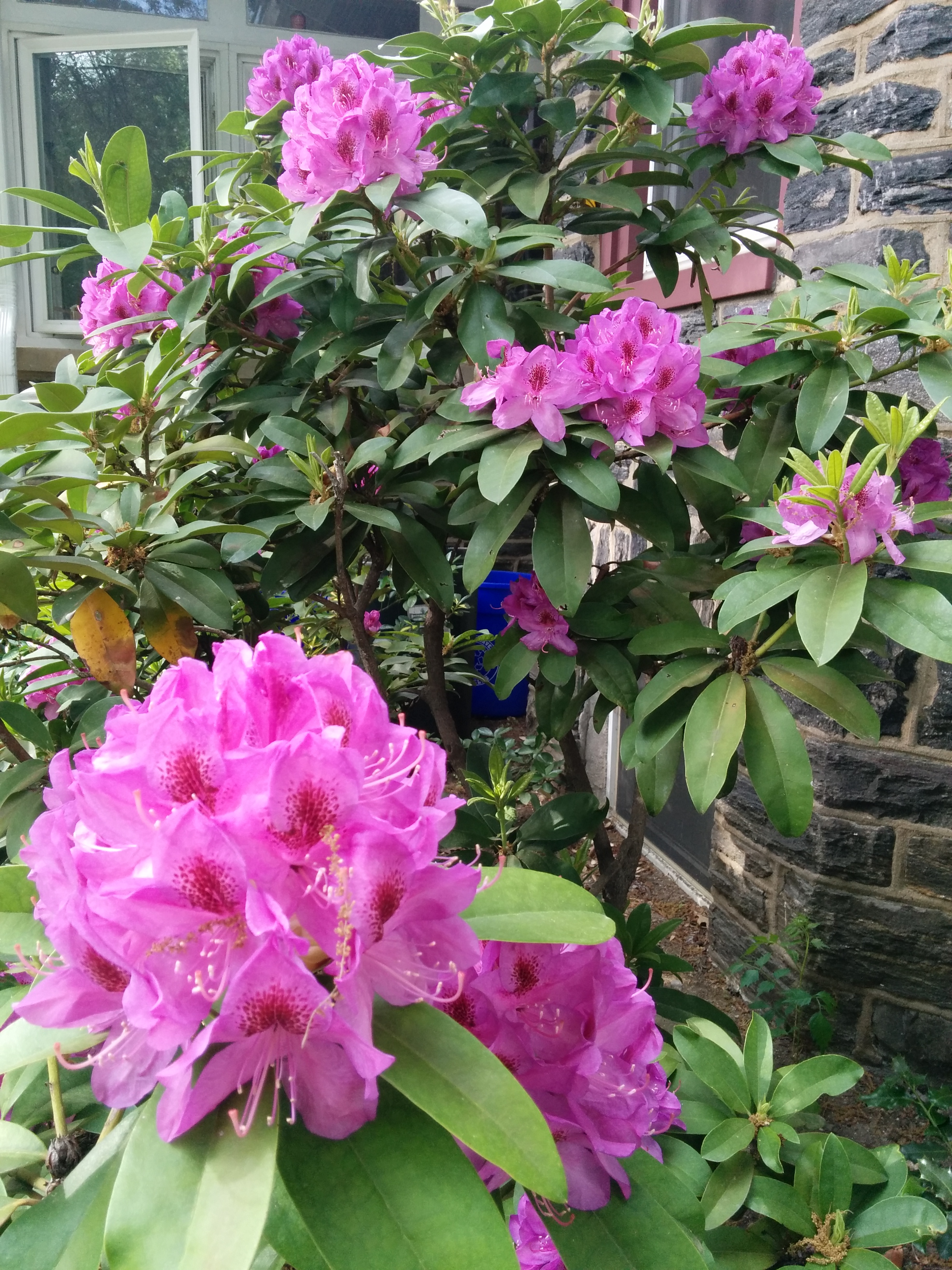
The rhododendron is blooming on May 16. It needs to be pruned to give it a better shape.

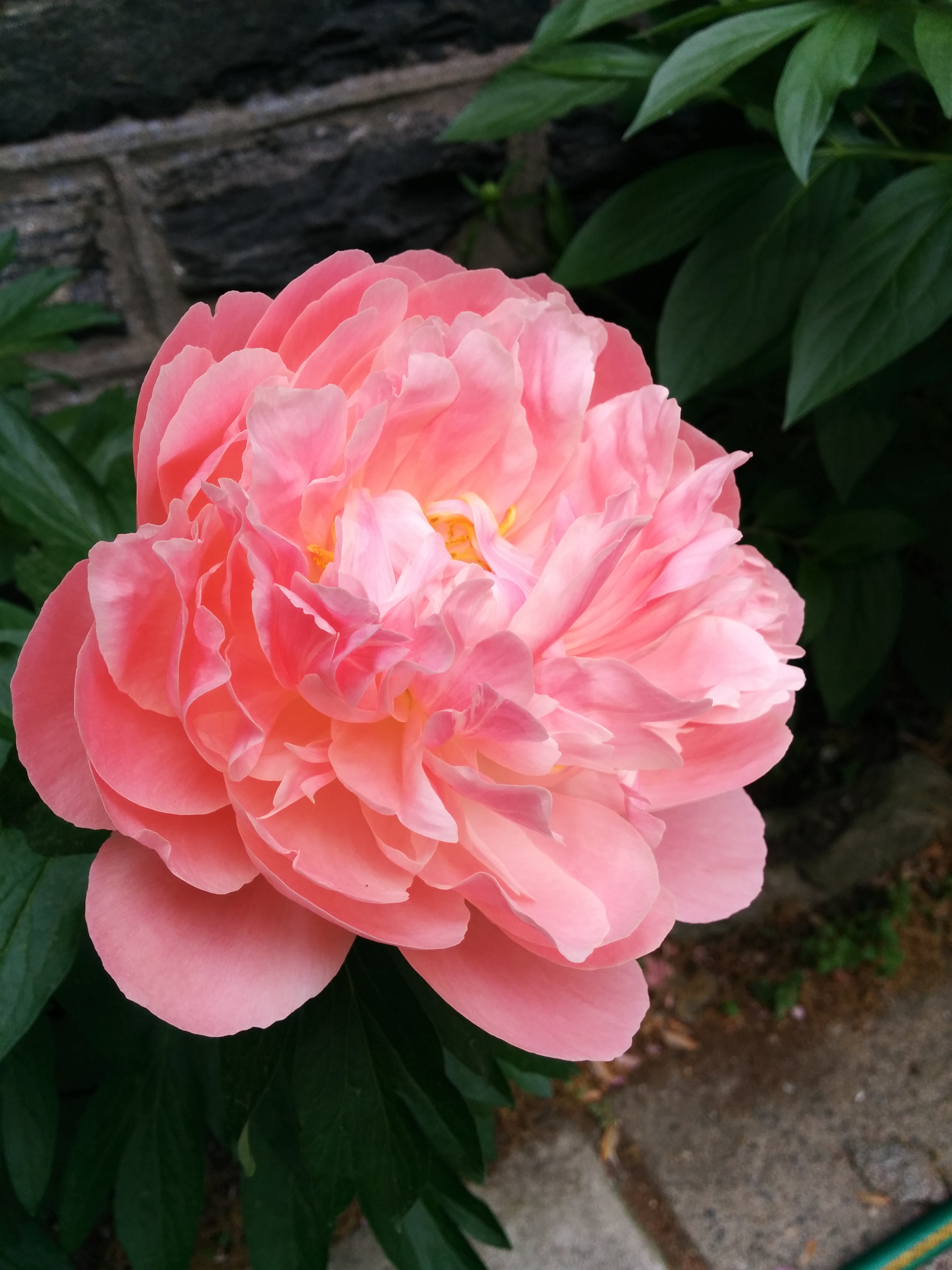
Same peony but the color has changed after a day of bloom. This picture was taken May 15.

Same peony but the color has changed after a day of bloom. This picture was taken May 15.

IMG_20150515_170958-EFFECTS

Coral herbaceous peony along the front walk on May 14.

Coral herbaceous peony along the front walk on May 14.

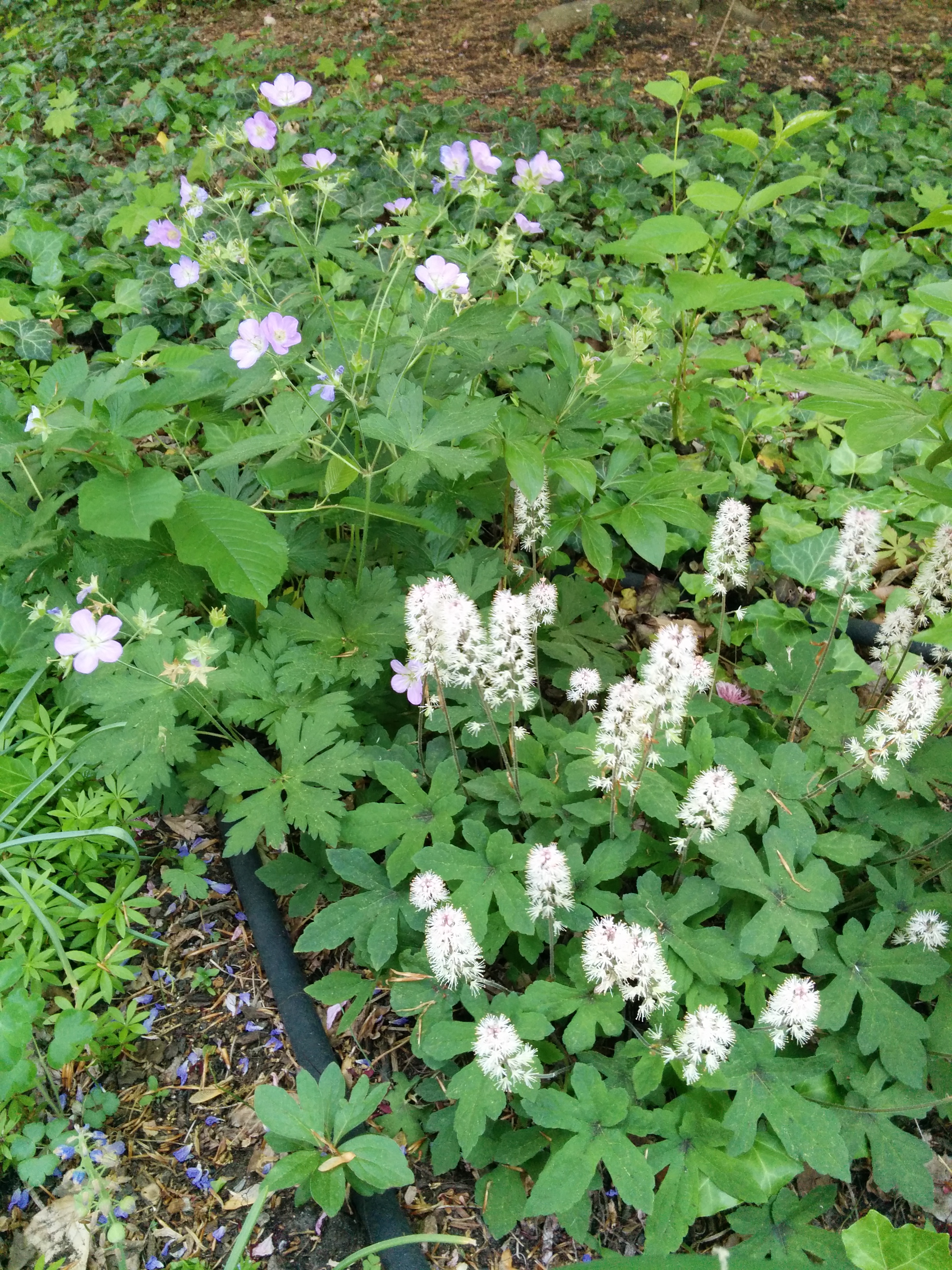
May 14 picture of foam flower and woodland geranium.

May 14 picture of foam flower and woodland geranium.

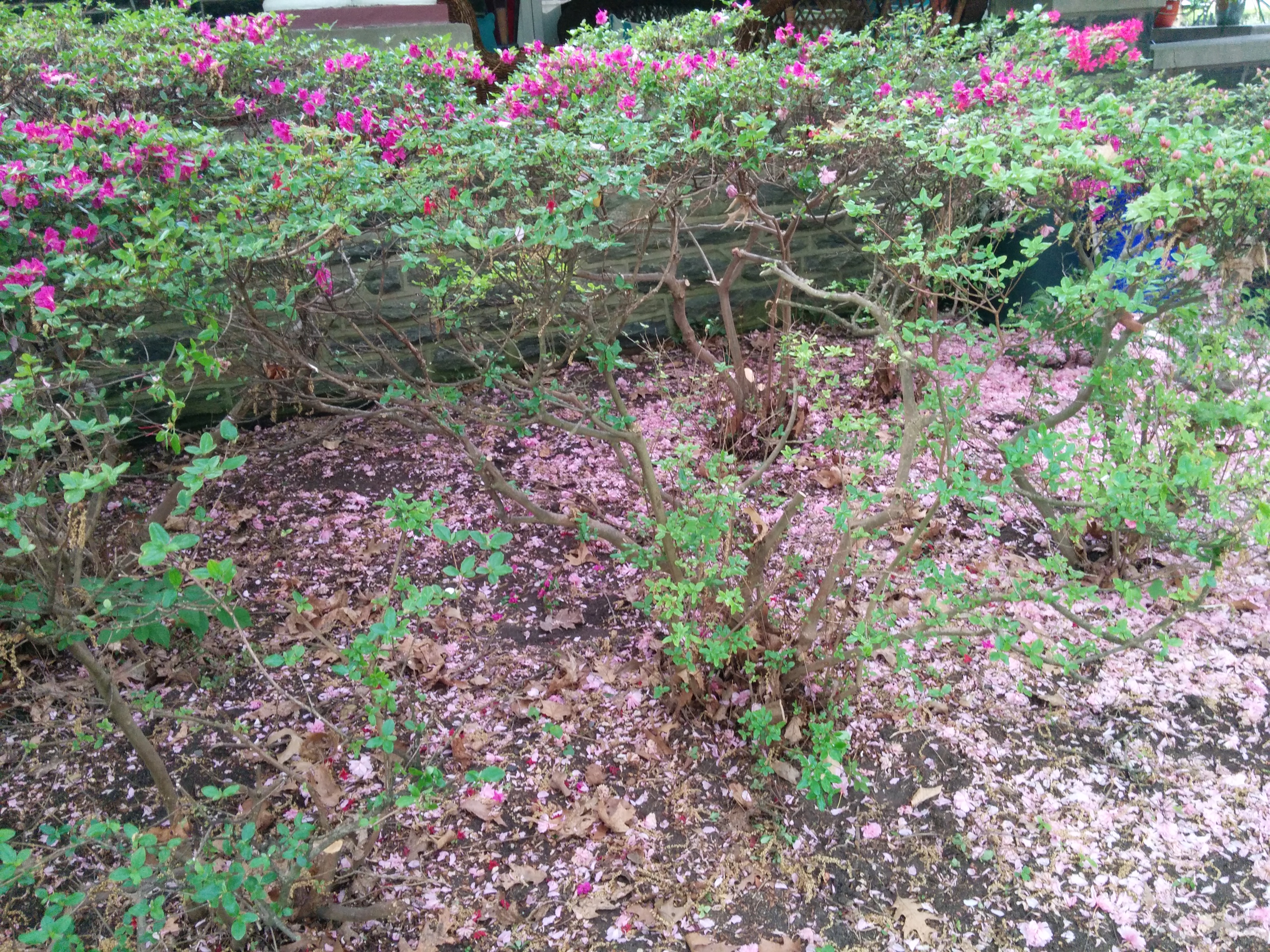
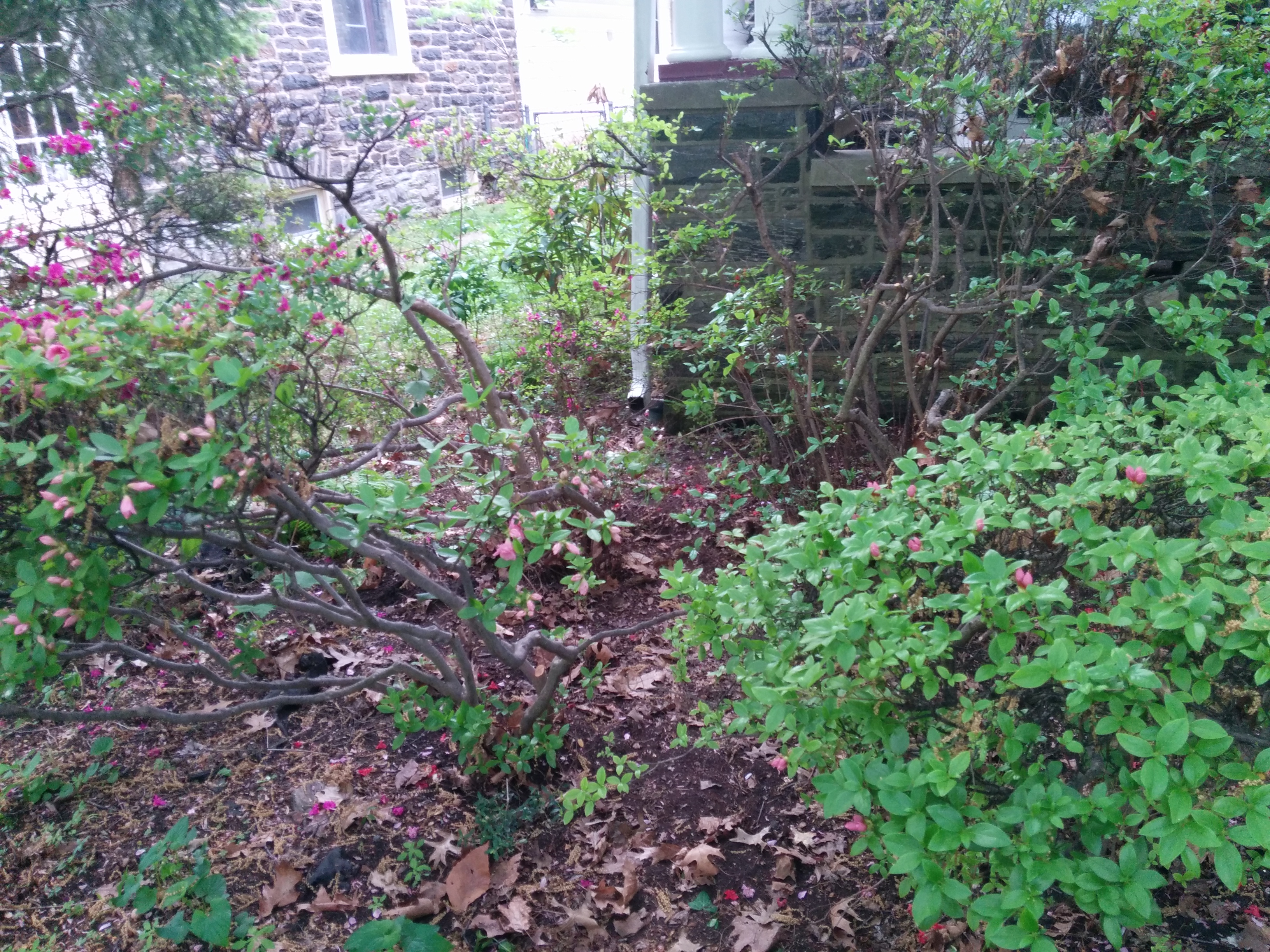
More severe pruning of old azaleas -- maybe over 100 years old since the house was built in 1908.

More severe pruning of old azaleas — maybe over 100 years old since the house was built in 1908.

IMG_20150510_174010

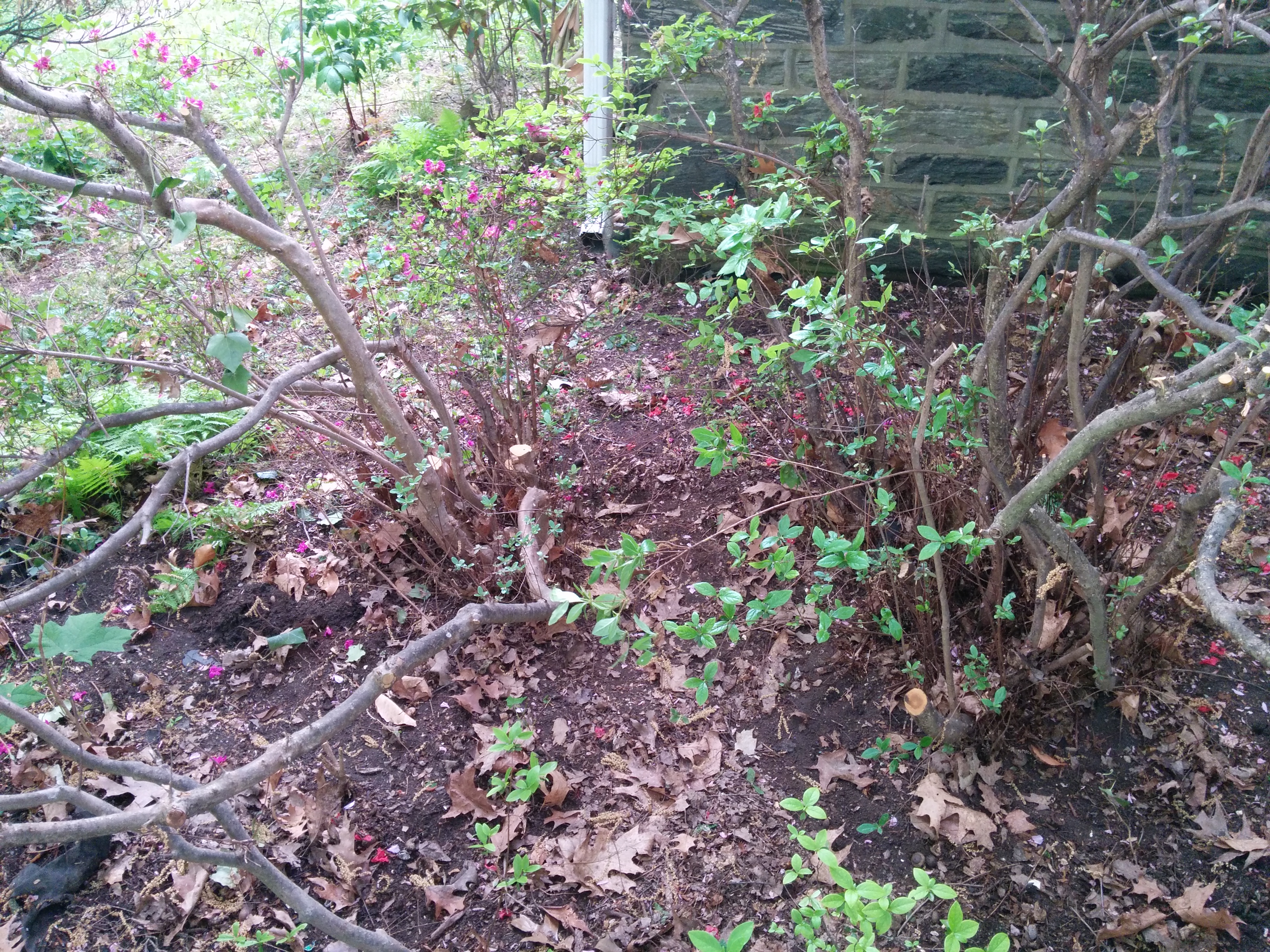
Azaleas after major pruning on May 10

Azaleas after major pruning on May 10

Tree Peony on May 6

Tree Peony on May 6

IMG_20150506_185345

Posted in garden | Tagged | Leave a comment

Long Live Exams!

School years and semesters end with final exams which are cumulative tests which assess a student’s command of the material taught. These sorts of tests are not in favor at the moment. I have had colleagues say they never took an exam in college, that their final assessments were independent projects or collaborative presentations. I have heard about how these tests are unfair for certain types of students who learn differently.

I disagree — with respect — but disagree vehemently.

I see the points being made, but I also see the value in the two hour time period when a student must sit down and all by herself formulate and shape what she has learned into coherent pieces of argument and logic.

Many times when grading exams, I have been surprised and astonished by the insights students express as they write an essay about ambition and its lessons as demonstrated in Macbeth and Frankenstein. Or when I am reading essays asking students to explore how what a character sacrifices shapes that character’s spirit and defines that character’s ideals. There are beautiful moments when students spring out of their usual mode of thought or their expected writing and reach for a concept which is original, unique, startling, and inspirational. And this mental spring, this leap of intuition, this flash of brilliance I have seen happen in even the so-called weaker students.

I believe in the sacred space of the exam. It is a time and place set apart for the academic agon. Some students do suffer defeat, but others emerge victorious and amazed at their own intellectual capacity.

Long live exams!

Posted in Uncategorized | Leave a comment

The Garden Moves (metaphorically)

I have made an executive decision to include my garden as part of the posting on this main page.  This means that I copied everything on the Garden Page and pasted into this post.

My decision did not come except after some consideration since it set me thinking about the purpose of this blog: teaching, honing the craft of writing, ruminating?

This is my blog. It is for my pleasure and if others enjoy it, bless them!

So cie le vie!

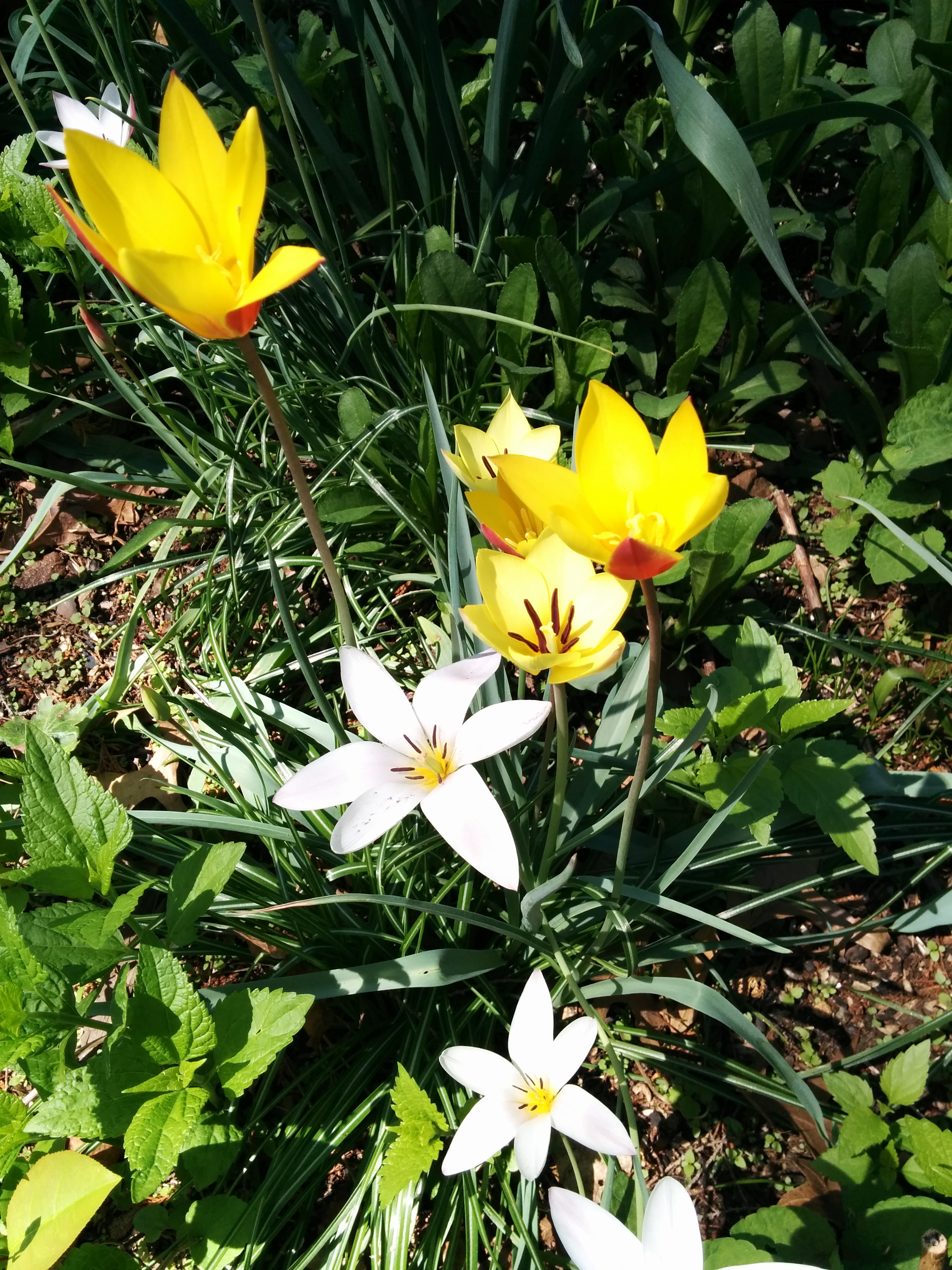
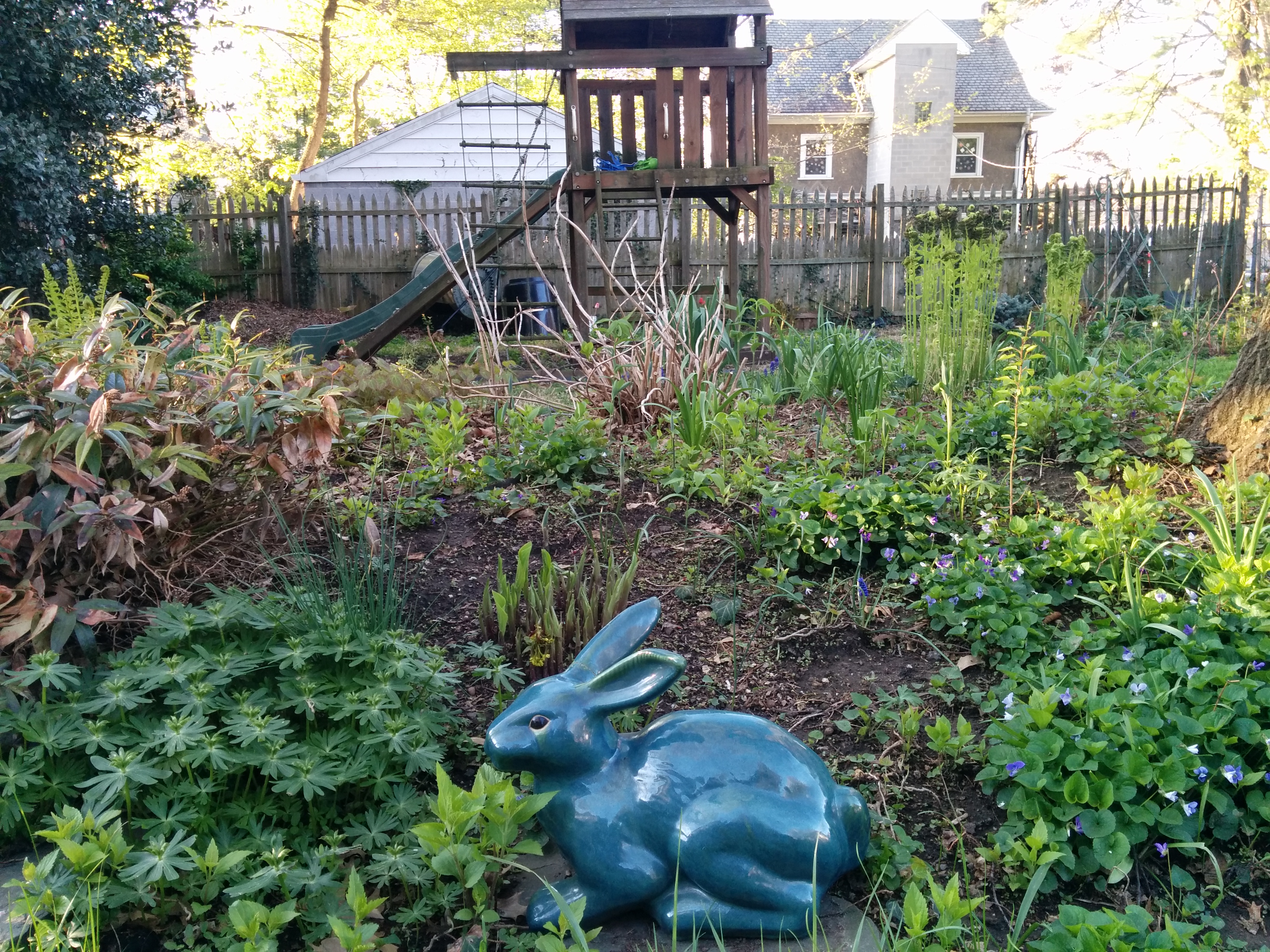
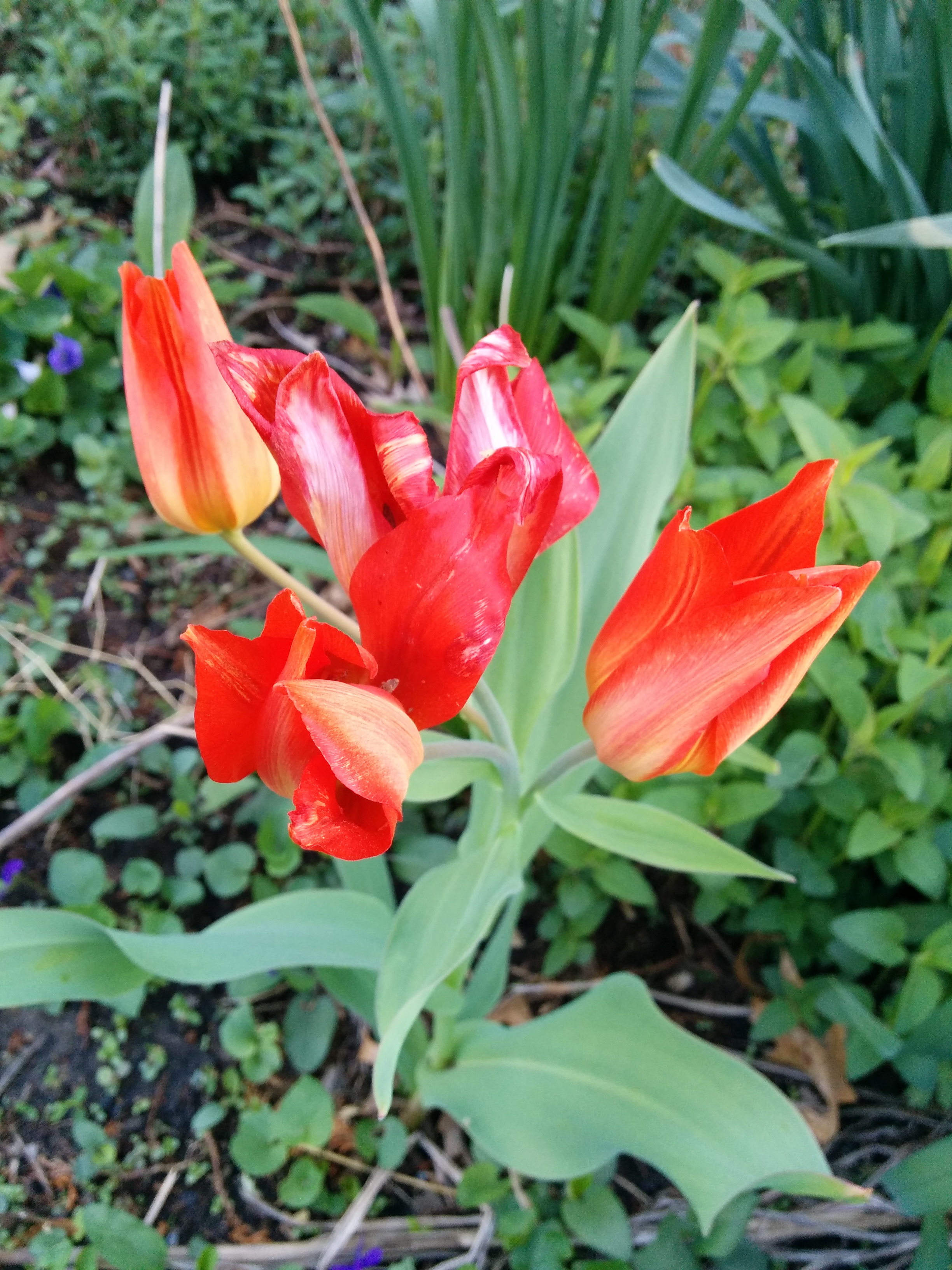
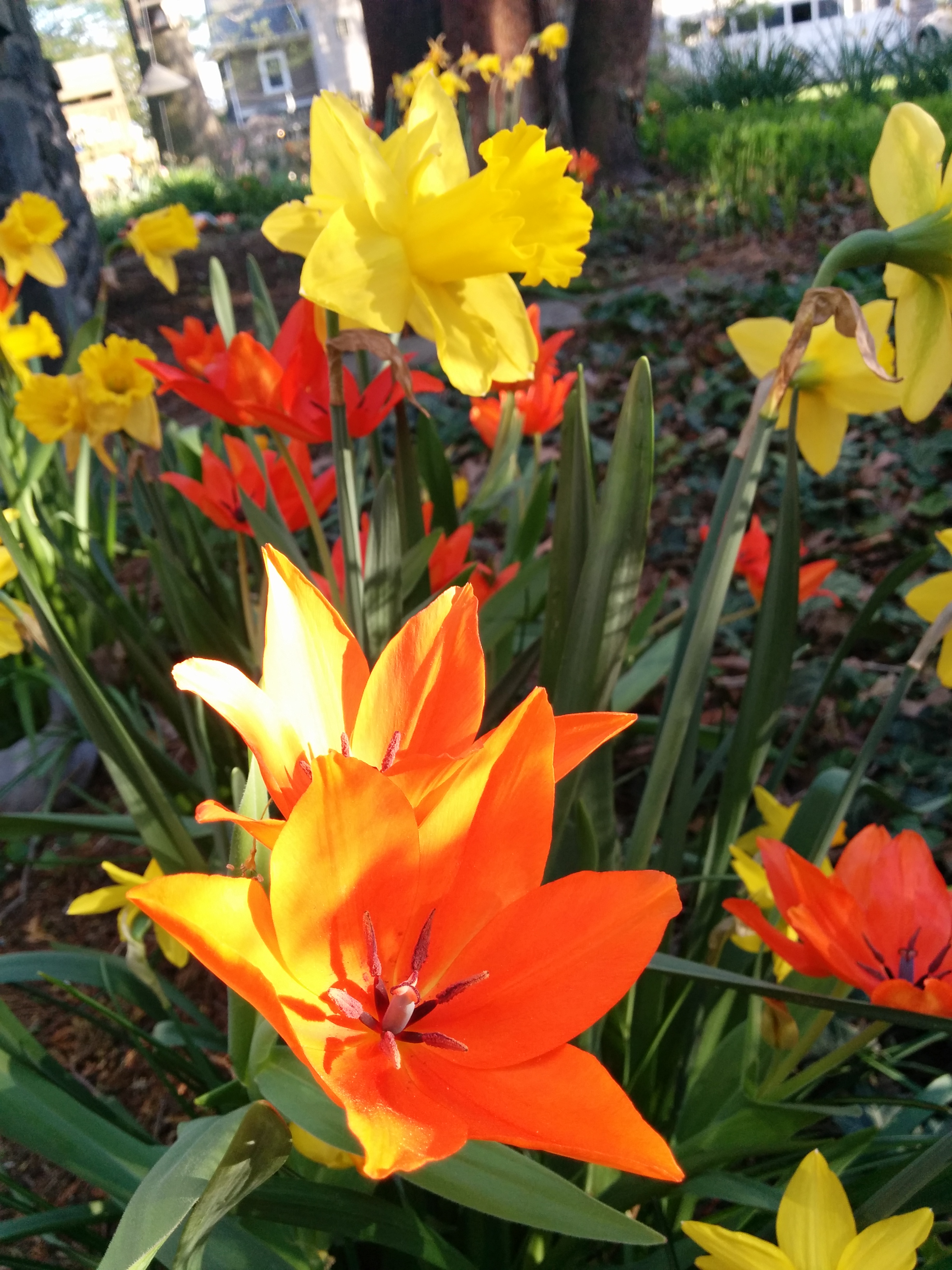
The weekend of May 1/2 saw more Turkish tulips blooming. The blue ceramic bunny was a find at a local consignment shop. His one ear is broken but I still thought he needed a place in our yard.

IMG_20150502_105748 IMG_20150502_105810 IMG_20150502_105731 IMG_20150429_070743

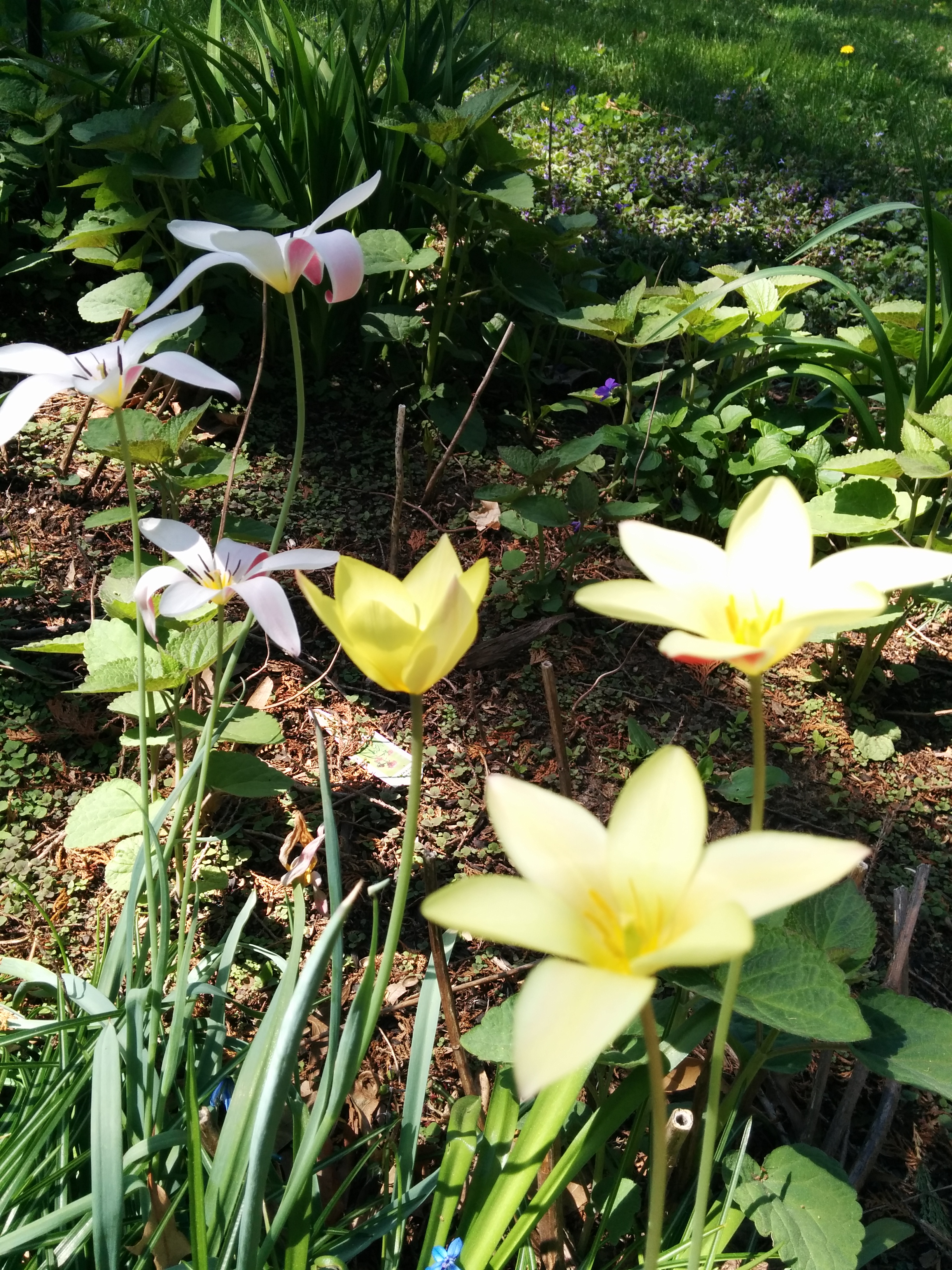
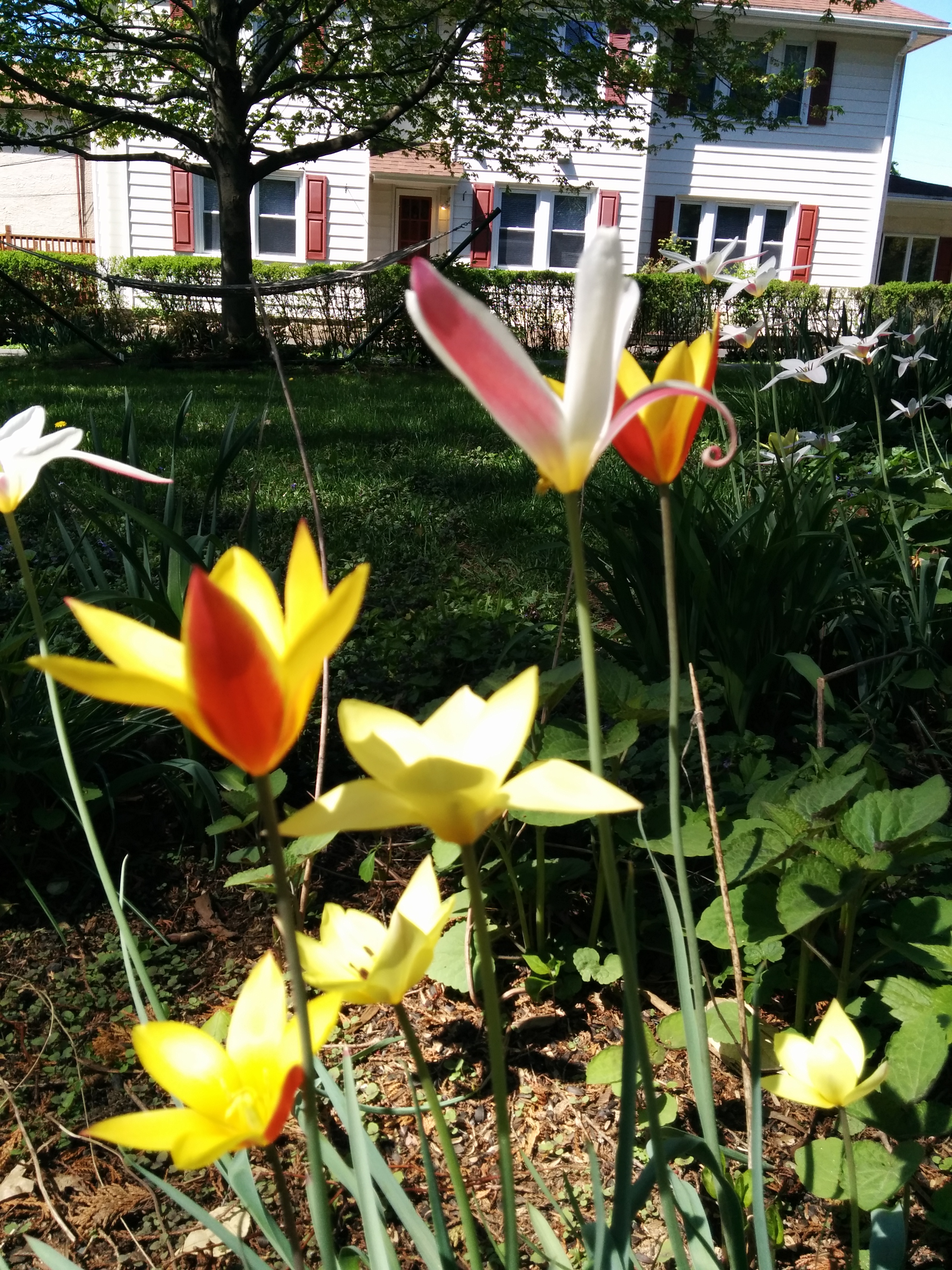
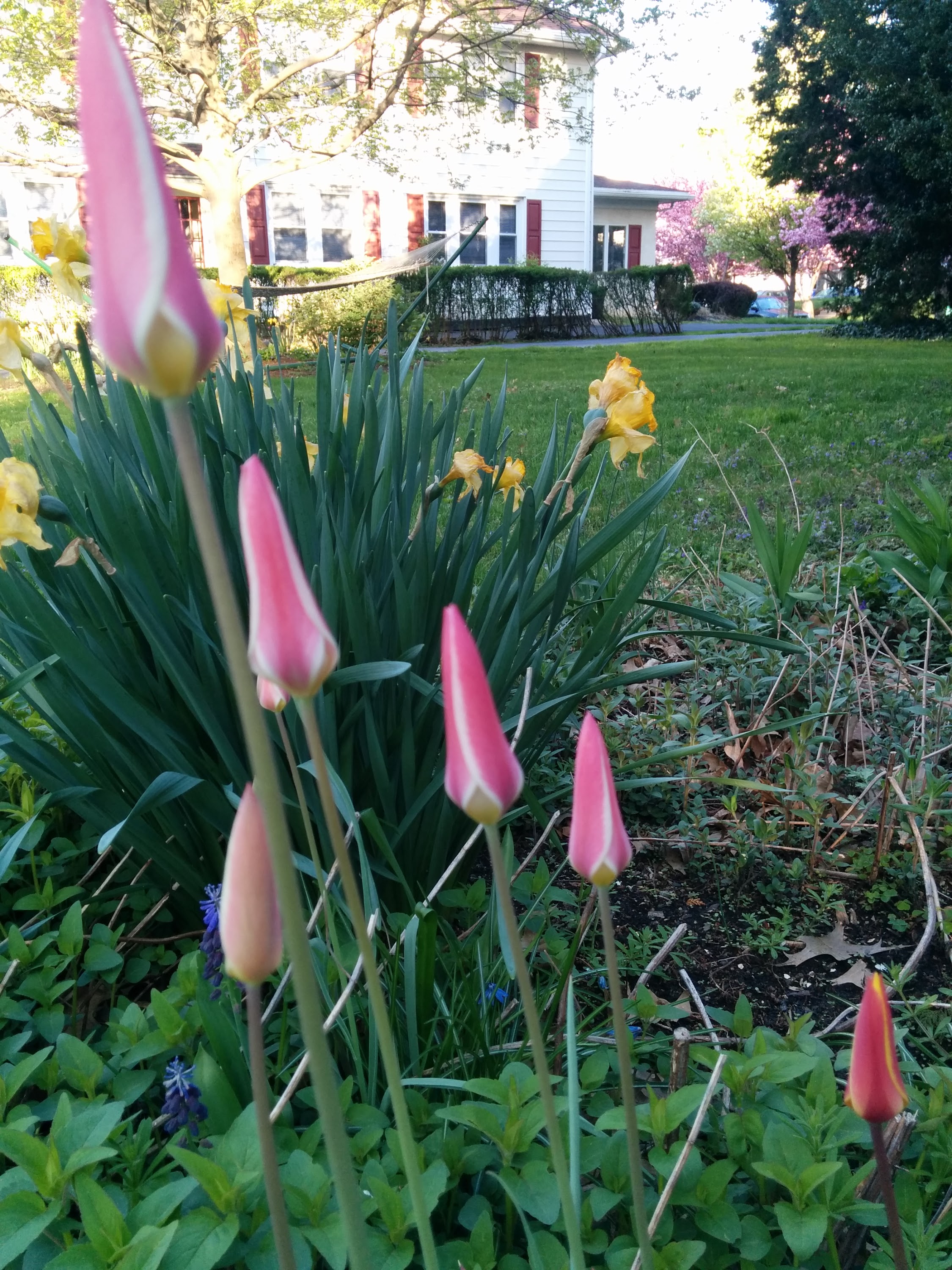
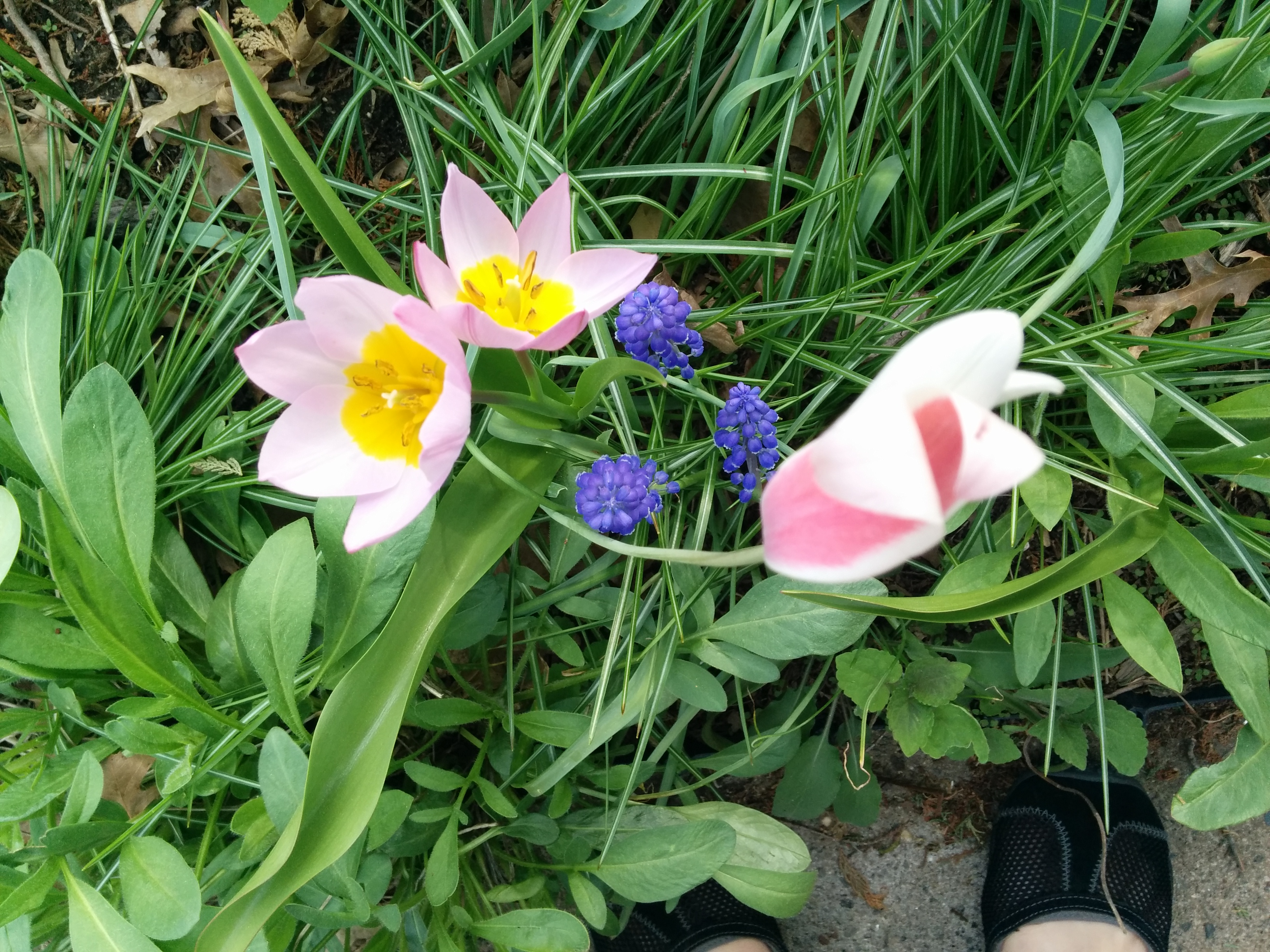
By April 30, the Turkish tulips are opening in their delicate, elegant glory. Slender, pointed buds that peel apart petal by petal to reveal the contrasting inner eye or petals.

IMG_20150429_070637IMG_20150429_070802IMG_20150429_070715-EFFECTSIMG_20150429_182003IMG_20150430_173019

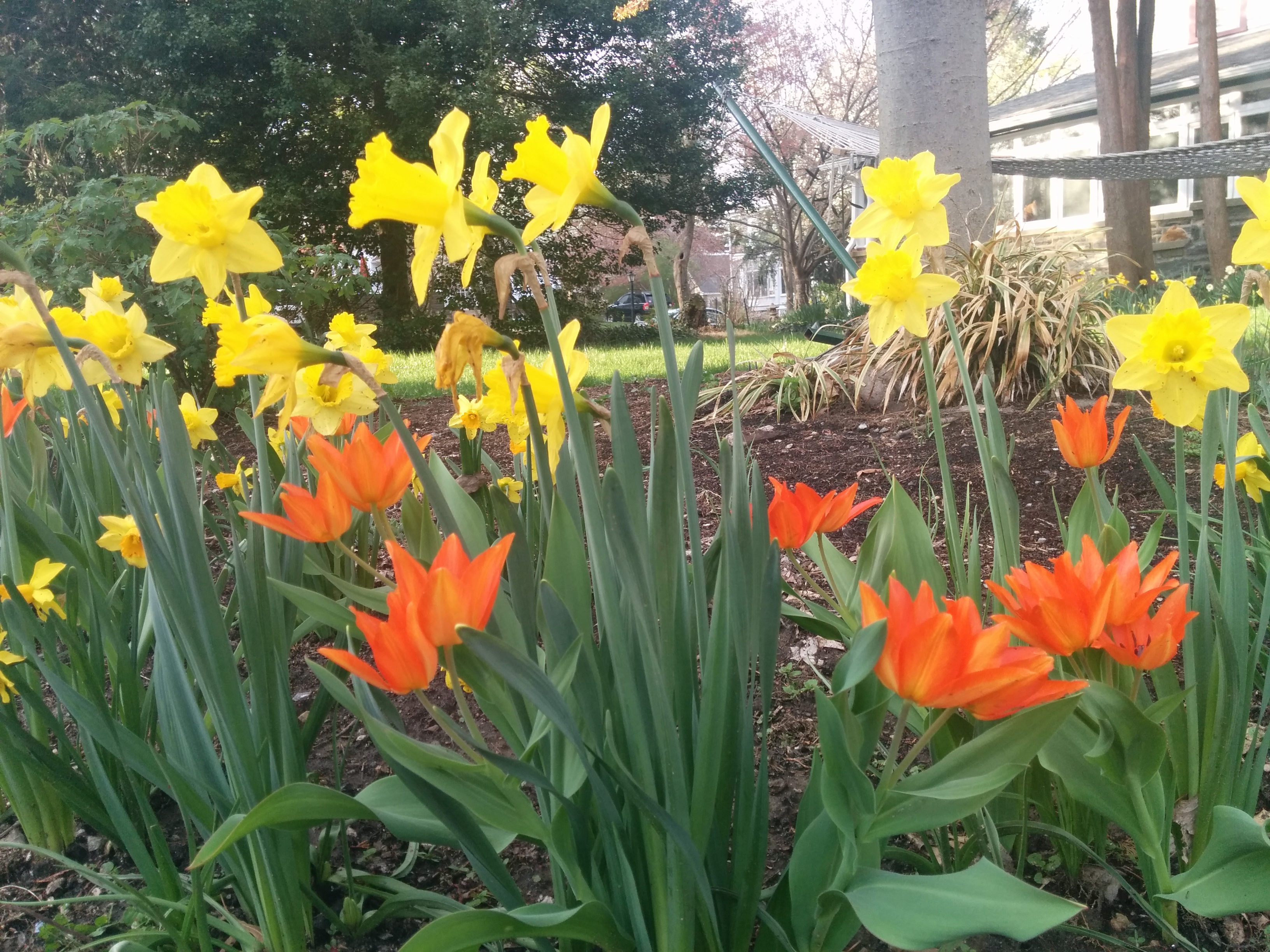
This weekend (April 18/19) the flowering trees started blooming: magnolias, pears, cherries. The warmer temperatures just popped out the blossoms. And now the trees have those tiny yellow-green leaves (as Frost says “Nature’s first green is gold) but those will soon transform into full green leaves in must a matter of days.

IMG_20150420_183102

Turkish tulips in amongst the daffodils.

IMG_20150420_183131

A new addition to the garden sculpture. A heavy cat. And look at his purple bow tie!

This weekend (April 11-12, 2015), I spent several hours cleaning up the leaves and branches from the winter. Below is a series of pictures which shows what is currently blooming and also what I planted and where in the garden.

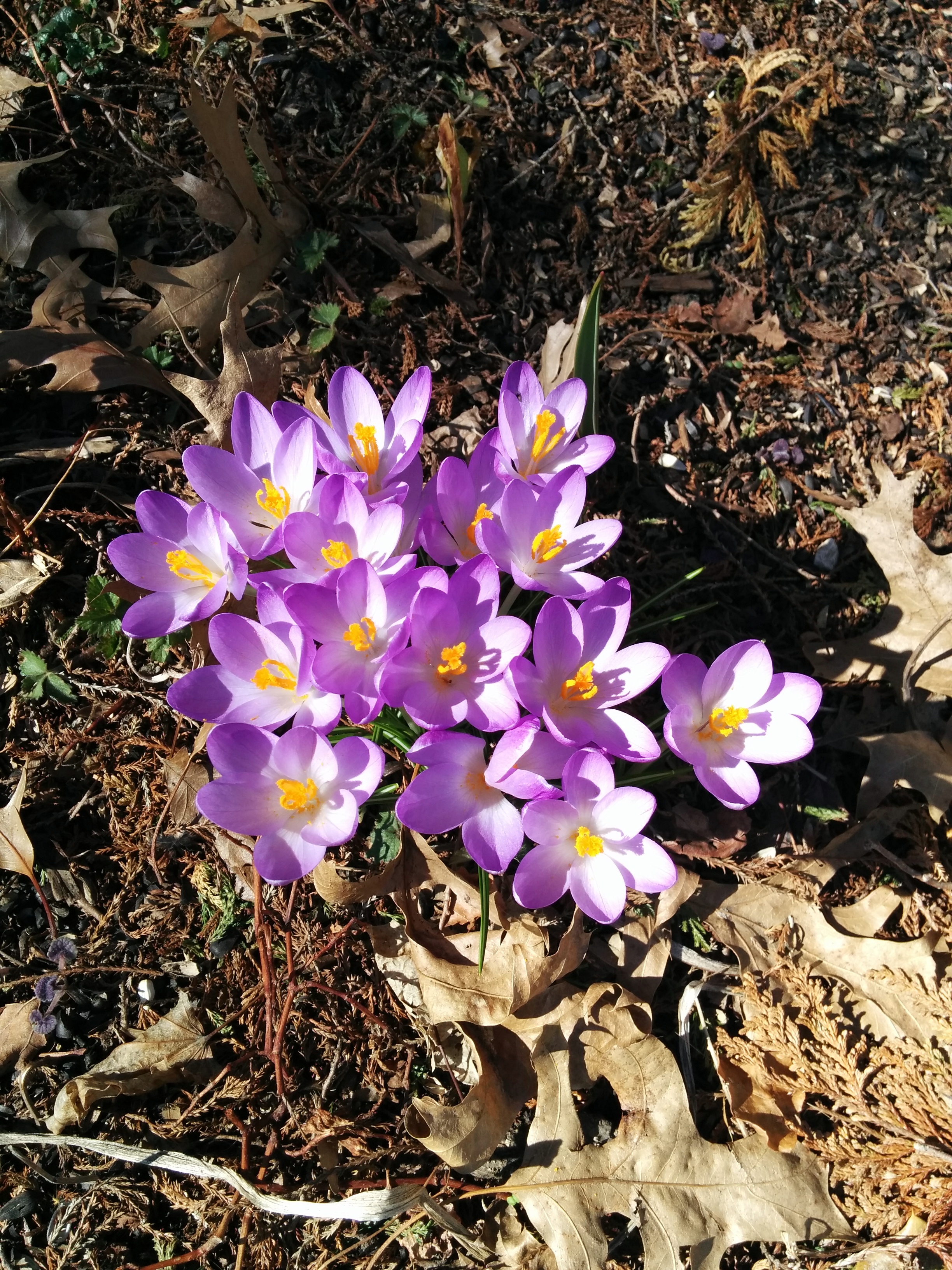
Bright purple crocuses.

Bright purple crocuses.

Assortment of crocuses along native plant bed.

Assortment of crocuses along native plant bed.

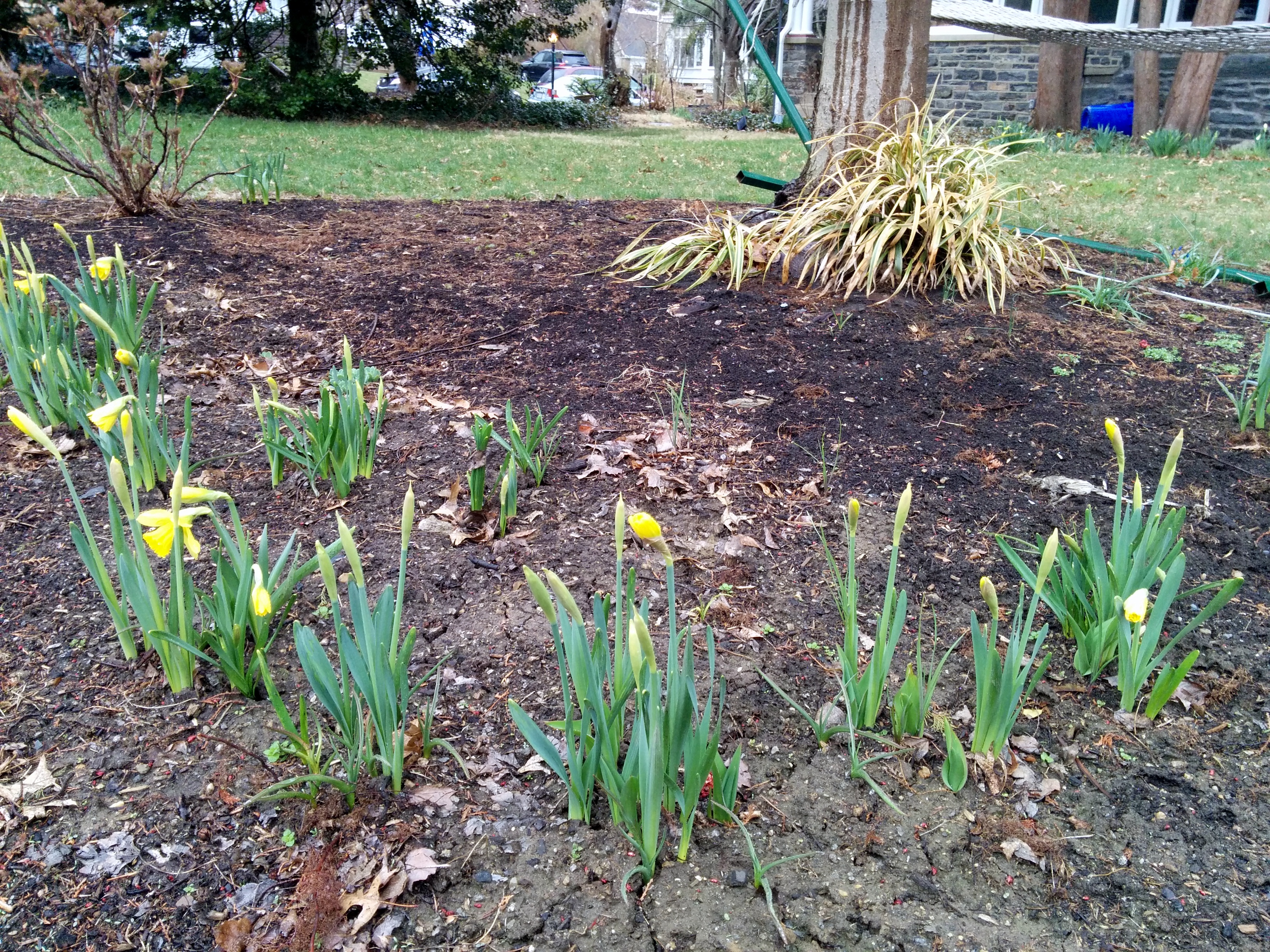
Daffodils beginning to open underneath the flaming maple by the driveway.

Daffodils beginning to open underneath the flaming maple by the driveway.

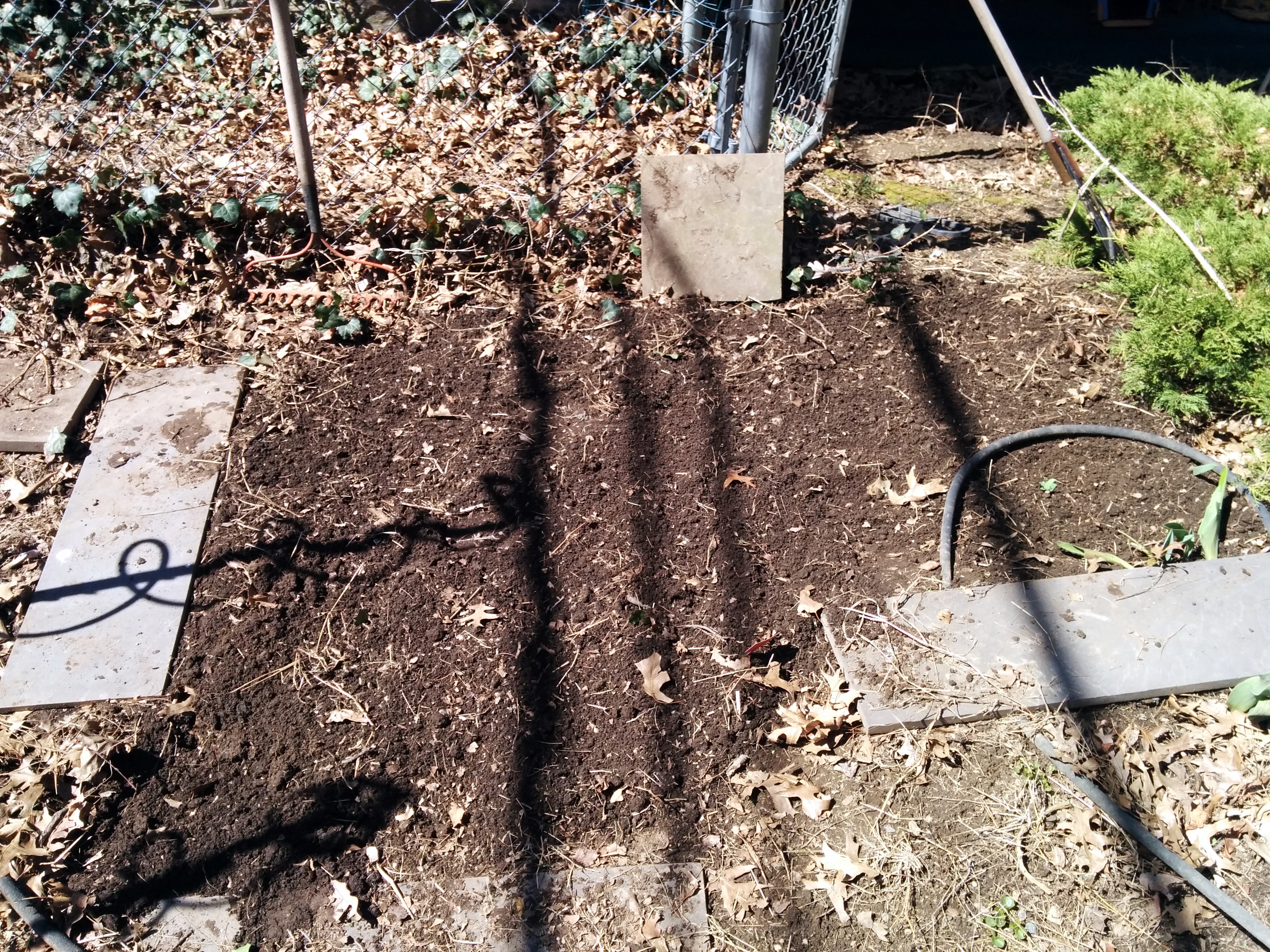
Near the fence is a row of buttercrunch lettuce and next to it is a row of gourmet leaf lettuce.

Near the fence is a row of buttercrunch lettuce and next to it is a row of gourmet leaf lettuce.

Different types of beans planted here.

Different types of beans planted here.

Daffodils beginning to open underneath the flaming maple by the driveway.

Daffodils beginning to open underneath the flaming maple by the driveway.

IMG_20150412_111412b

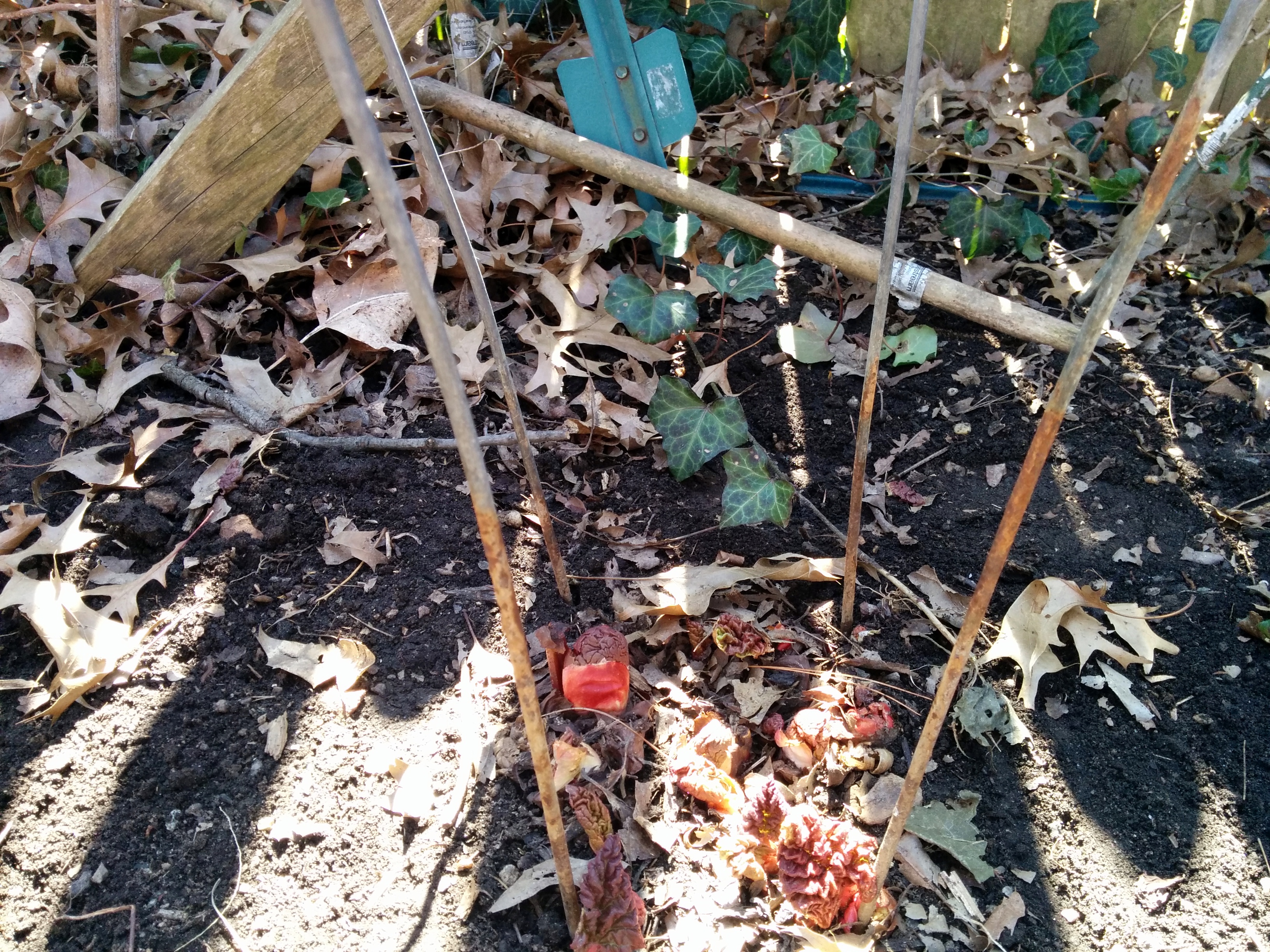
Rhubard coming up through the oak leaves.

Posted in garden, nature | Tagged | Leave a comment