Traveling Through the Iron Country

fields-minnesota-2015 This past Monday and Tuesday, I drove back and forth from Minneapolis to Decorah, which is a small town of about 8,000 people in northern Iowa. The night before the drive, a winter storm dropped several inches on snow. Driving on 52 South between Cannon Falls and Rochester, I saw two cars which had veered off the left hand lane going north and slid into the median. They had hit patches of snow and ice in the left hand lane, which is less traveled than the right lane. After observing that, I stayed contentedly in the right lane as I drove south.

As someone living on the east coast where houses, trees, buildings, wires cut cut the sky into small chunks, the wide open land and sky on either side of 52 made me feel diminished and, at the same time, enlarged. It also reminded me of Willa Cather’s descriptions of the prairie in O Pioneers!

In the first part of the book, “The Wild Land,” Cather describes how the land and the farmers strive against each other. One could call this a struggle, a fight, a taming, but I prefer the Greek word “agon,” which means competition or contest. In its strictest meaning, “agon” refers to an athletic competition, chariot racing, or a music competition. But in his Greek Hero course, Greg Nagy defined “agon” as a competition in battle as well. He called the struggle of Achilles with Hector an “agon” — if memory serves. He also refers to Oedipus’s quest as an “agon.” The protagonist’s father, John Bergstrom, struggles against the land and loses, dying of exhaustion as he gazes out upon his farm and tallies up what he will leave his children. However, he puts the responsibility of the farm upon his daughter Alexandra and not her brothers, Lou and Oscar. He recognizes in Alexandra strength of will, incisive intelligence, and imaginative determination. Alexandra has an intuitive understanding of the land. She rejects entering into a renewed agon, and instead melds with the land. In the last chapter, Cather describes the ecstatic melding:

When the road began to climb the first long swells of the Divide, Alexandra hummed an old Swedish hymn, and Emil wondered why his sister looked so happy. Her face was so radiant that he felt shy about asking her. For the first time, perhaps, since that land emerged from the waters of geologic ages, a human face was set toward it with love and yearning. It seemed beautiful to her, rich and strong and glorious. Her eyes drank in the breadth of it, until her tears blinded her. Then the Genius of the Divide, the great, free spirit which breathes across it, must have bent lower than it ever bent to a human will before. The history of every country begins in the heart of a man or a woman.

Cather, Willa Sibert (2009-10-04). O Pioneers! (p. 31). Public Domain Books. Kindle Edition.

The paragraph has an almost orgasmic flow to it. Alexandra drives the wagon up the Divide; the Genius bends down to her. Alexandra hums, her face shines, tears fill her eyes, and her little brother is awed by her expression. But of course with Cather, anything sexual is suppressed, diverted, squelched.

But even once the land is settled and tamed, cut across with fences, divided into fields, held down with telephone poles stringing wires across the sky, the land exerts its own power. I saw driving down how the land was marked by high-standing silos, houses set on hills, and stands of trees. I could see where each farm was by its silo. One hundred or more years ago, farms were identified by the windmills which pumped the water from beneath the ground. Yet, even so, the snow separates the farms.

In Decorah, the snow shuts down schools and businesses, because the dirt roads leading to the various farms can’t be plowed. People are isolated on their farms when the snow falls.  Cather describes the winter landscape in the third part, “Winter Memories:”

The variegated fields are all one color now; the pastures, the stubble, the roads, the sky are the same leaden gray…The ground is frozen so hard that it bruises the foot to walk in the roads or in the ploughed fields. It is like an iron country, and the spirit is oppressed by its rigor and melancholy.

Cather, Willa Silbert (2009-10-04). O Pioneers! (p. 93). Public Domain Books. Kindle Edition.

I saw that sameness of color driving along 52 — a grey, white broken by lines of brown trees, and squared buildings. Once I saw a black shape leaping through the snow. My first thought was “wolf,” but that was a romantic notion. The shape was racing toward the house at the top of the shallow hill, jumping above the snow line. The snow was so blindingly white, the dog was a flat, black shape with no distinguishing details. Just a silhouette like a cut-out stencil instead of a real three dimensional dog.

The other thing I thought about was what strength of heart and mind a person would need to live through a long winter in Iowa or Minnesota. Even today in 2015. If enough snow falls, a person could be cut off from the world for many days. I think the folks must have very different types and quantities of food stored in the basement than I do in Philadelphia, where I can usually get to a grocery story even in the worst snow storms because everything is so close.  But that is a trivial concern. While preparing to teach Cather’s O Pioneers!, I read accounts of women who went crazy after days and days all alone in a dugout house, left behind by husbands who had to find work, left behind with no one — or just little children. All the burden of running the farm and withstanding the winter and snow fell on them. Alexandra tells the story of Carrie Jensen who feels like life has no purpose until she sees the bigger world by staying with relatives in Iowa and sees the bridges over the Missouri and Platte Rivers. I have to feel a bit cynical that Carrie Jensen would think of any town in Iowa as the big world. But I think the mention of the bridges is key because those bridges represent human engineering crossing a natural boundary, taming nature.

I stopped along the drive and took photographs of the landscape. When I was preparing them for this post, I tried the “feeling lucky” button on Picasa. The change of the grey sameness to electrifying blue and high contrast black distorted the reality of the “iron country.”
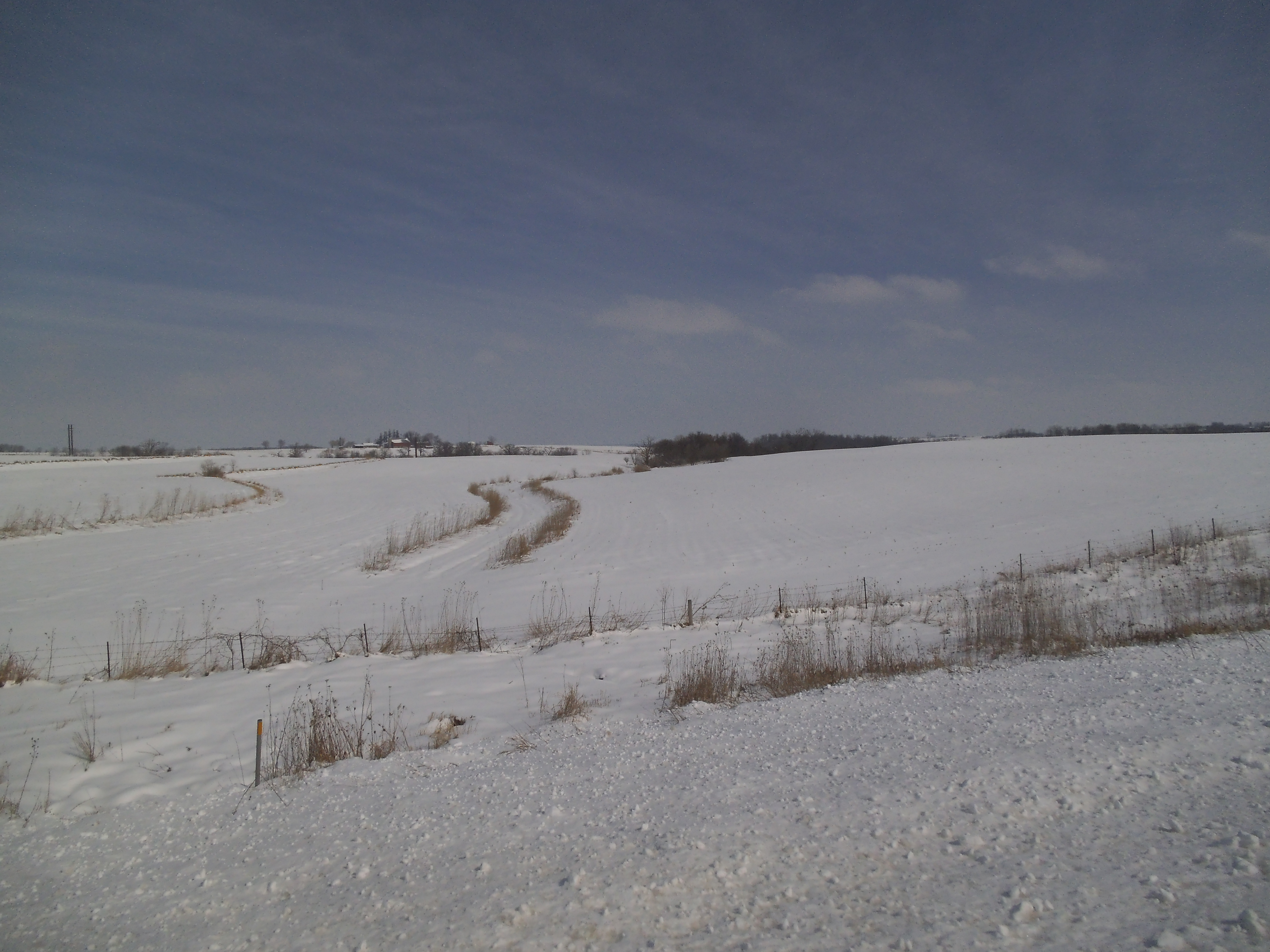
Iron Country of Minnesota
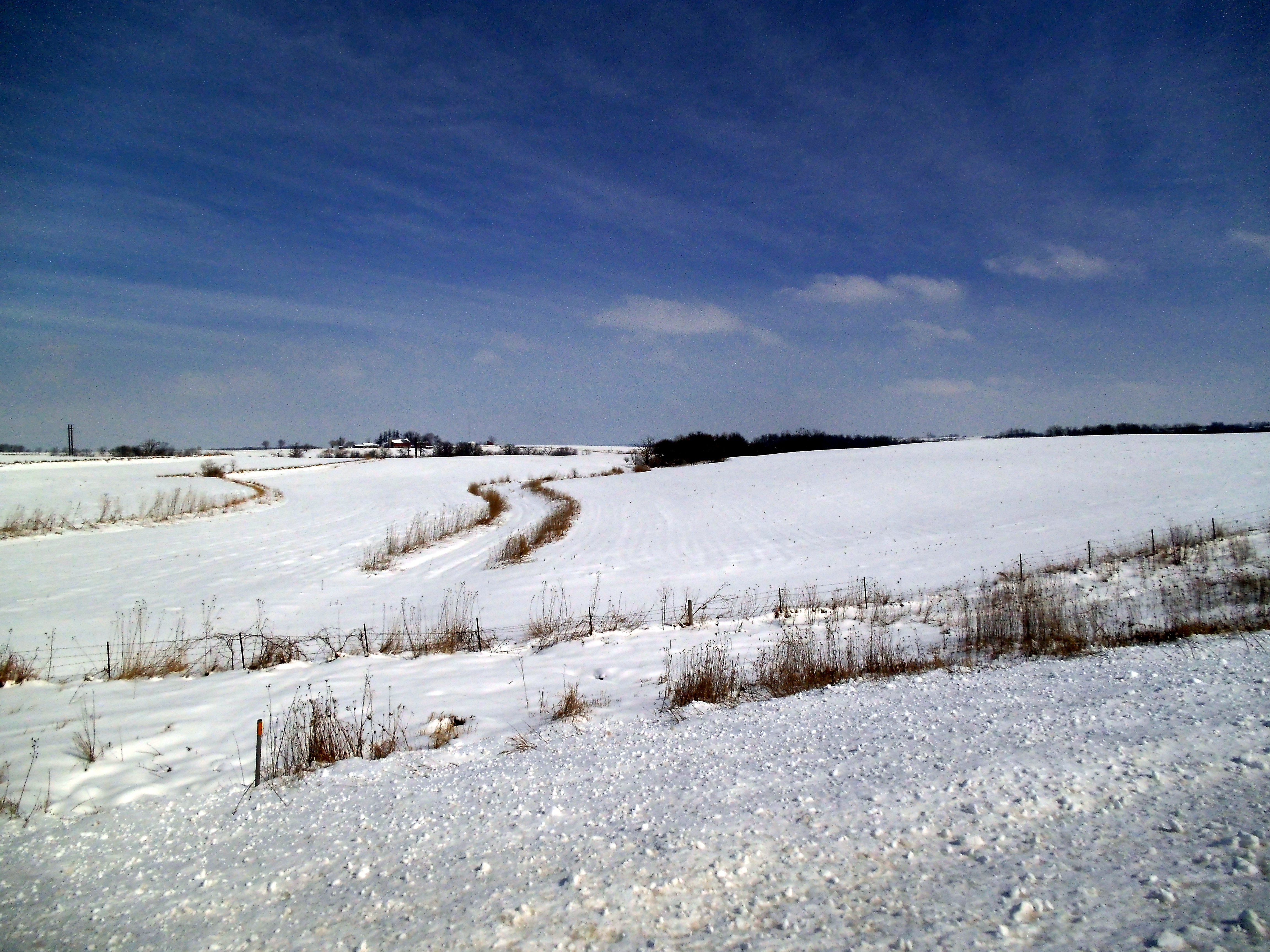
Iron Country of Minnesota

“Feeling Lucky” distortion

Posted in literature, nature | Tagged , | Leave a comment

Common Good Bookstore in Minneapolis

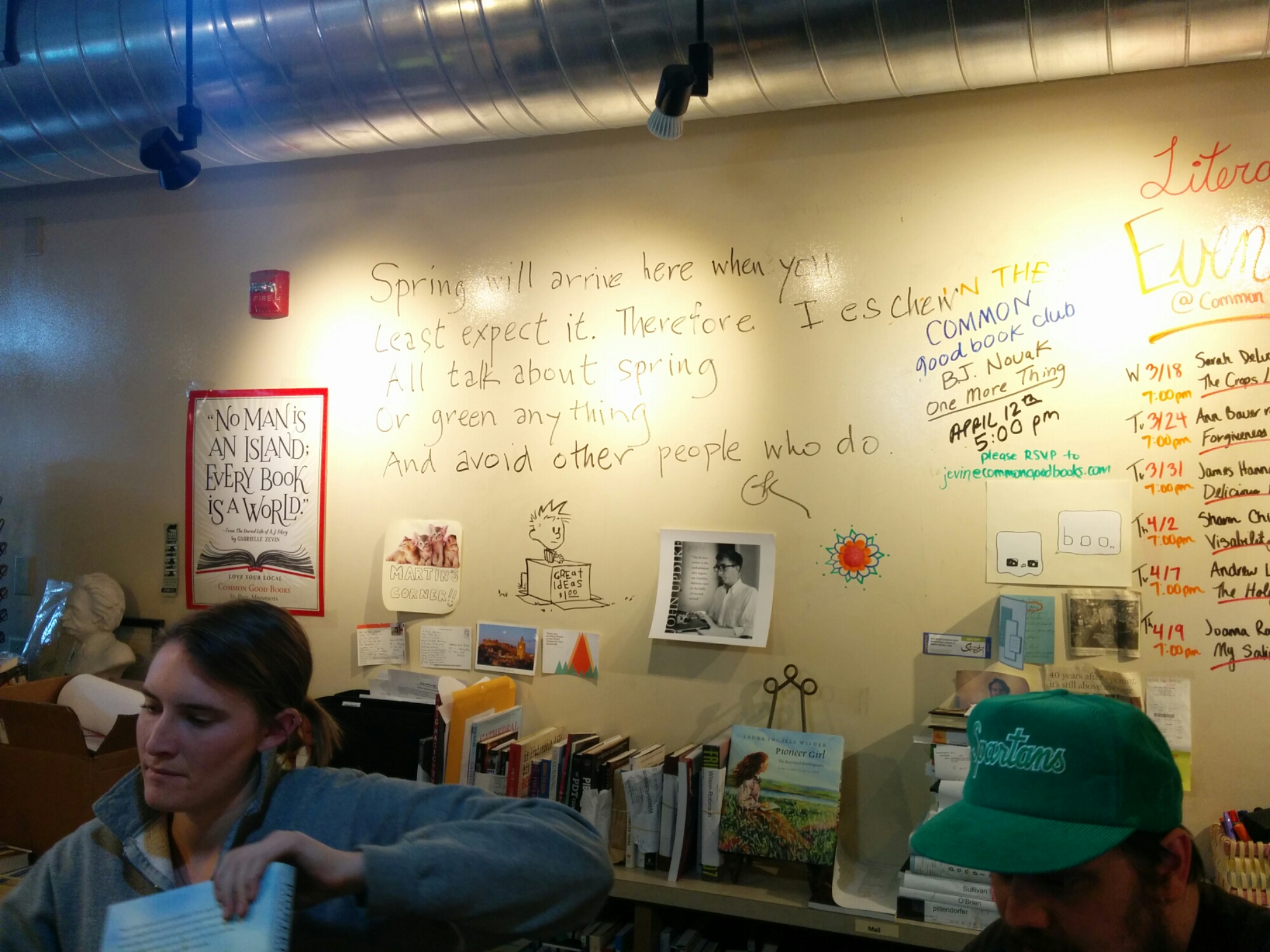
imageGarrison Keillor opened The Common Good book shop in 2006 and then he moved it to a larger location in 2012 on Snelling Avenue. This independent book shop does not stock the usual selection of items — no big table of New York Times Bestsellers. Instead the first table is simply called, “New Fiction” and “New Non-fiction.” Rather refreshing. The arbitors of taste are not famous critics or lists but the staff and Keillor. And if I am wrong here, that is totally on me since I am only giving my impression.

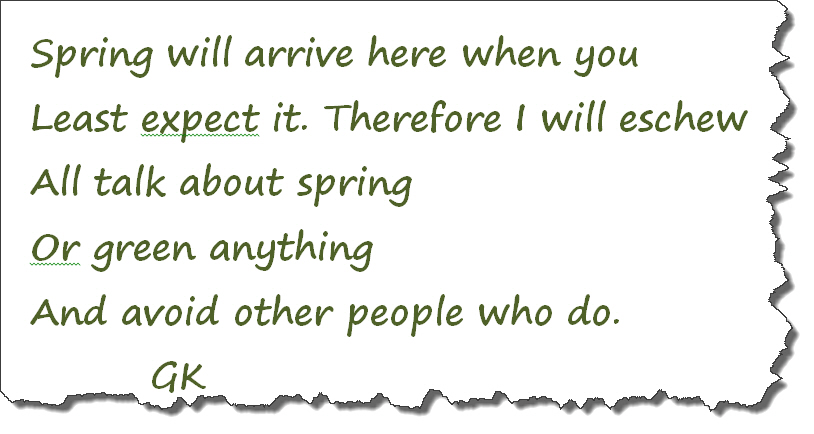
Behind the cashier’s counter was a huge white marker board with various cartoons, pictures, announcements. I snapped the picture because the quotation from GK gave me the distinct impression that he had just written this on the board and had walked out of the shop only moments before. In case you can read what he wrote:

garrison-keillor-lateNow to parse this statement, GK seems to be admonishing us not to anticipate spring or worry about when it will arrive since it will come unexpectedly. He seems to be saying that talking about spring and looking for signs of spring, won’t bring spring any faster. He also seems to be expressing a trace of annoyance or impatience regarding people who do talk about spring’s advent. I can’t quite figure out the tone of the statement but it does not seem altogether good humored.

Anyway, the store did have many copies of Laura Ingalls Wilder’s annotated autobiography called Pioneer Girl, which is rather hard to find since the small South Dakota publisher intially only produced a few thousand copies. They did not realize that interest in Laura Ingalls Wilder would spike. I bought a copy for my mom, who had read us the entire series when we were little. One chapter a night was our ration before bedtime. The store also had large annotated editions of Wuthering Heights, Sense and Sensibility, Jane Eyre, which I had never seen before but did not buy. I also found (and bought) a book of Arabic fairy tales translated from a single manuscript and these fairy stories precede The One Thousand and One Arabian Nights. And a volume of Pablo Neruda’s love poetry.

The bookshop was just the right size. Capacious enough to have books on many subjects, eclectic enough that you knew the books were selected by folks with discerning intelligence, but not so overwhelming that you leave without buying anything, stunned by too much choice.


Posted in books, shopping | Tagged , | Leave a comment

Where is a great local (Philadelphia area) shop to buy quirky, fun gifts?

Shop in Ardmore ,PA on Lancaster Ave.

Shop in Ardmore, PA on Lancaster Ave.

This weekend, my daughter and I are travelling to Minnesota so she can have an overnight visit at a college and I can visit family and friends. In my family, we have this unwritten rule that you must always bring a present for the host. This requires some thought and consideration. I prefer to bring a gift associated with Philadelphia – maybe it is a Philadelphia specialty or something made by a local artist. Right now my go to place for gifts is a little shop in Ardmore called Past, Present, and Future.

We have lived in Philadelphia for almost 20 years and I first went into this store about two years ago. It has a narrow shop-front on Lancaster Ave and the front window display has an eclectic mixture of items such as wooden folk cats, 1960s super hero items, blown glass ware, ethnic linens, lava lamps, etc. When you enter the shop, you are assaulted by the variety, abundance, and colors of the items which are crammed on display shelves from floor to ceiling. The shop owner has wisely set up near the large front window, a glass shelving unit to display the art glass. The light catches and refracts on the colors and embedded designs.

When I went in yesterday, I was looking for a gift for a married couple, whom I had introduced to each other. The husband is a friend from graduate school. The wife is a friend from our first days living in Boston. I did not know her until we moved to Boston. She was the best friend and roommate of another friend from Cincinnati and when the Cincinnati friend came to see us in Boston, she introduced us. Anyway, they have been married for a long while and have two children. They came to visit us when we first moved to Philadelphia from Boston. I was so happy when they came because I missed Boston dreadfully. When they came, they brought a host gift of a ceramic platter which we still use.

Two Love Birds

Two Love Birds

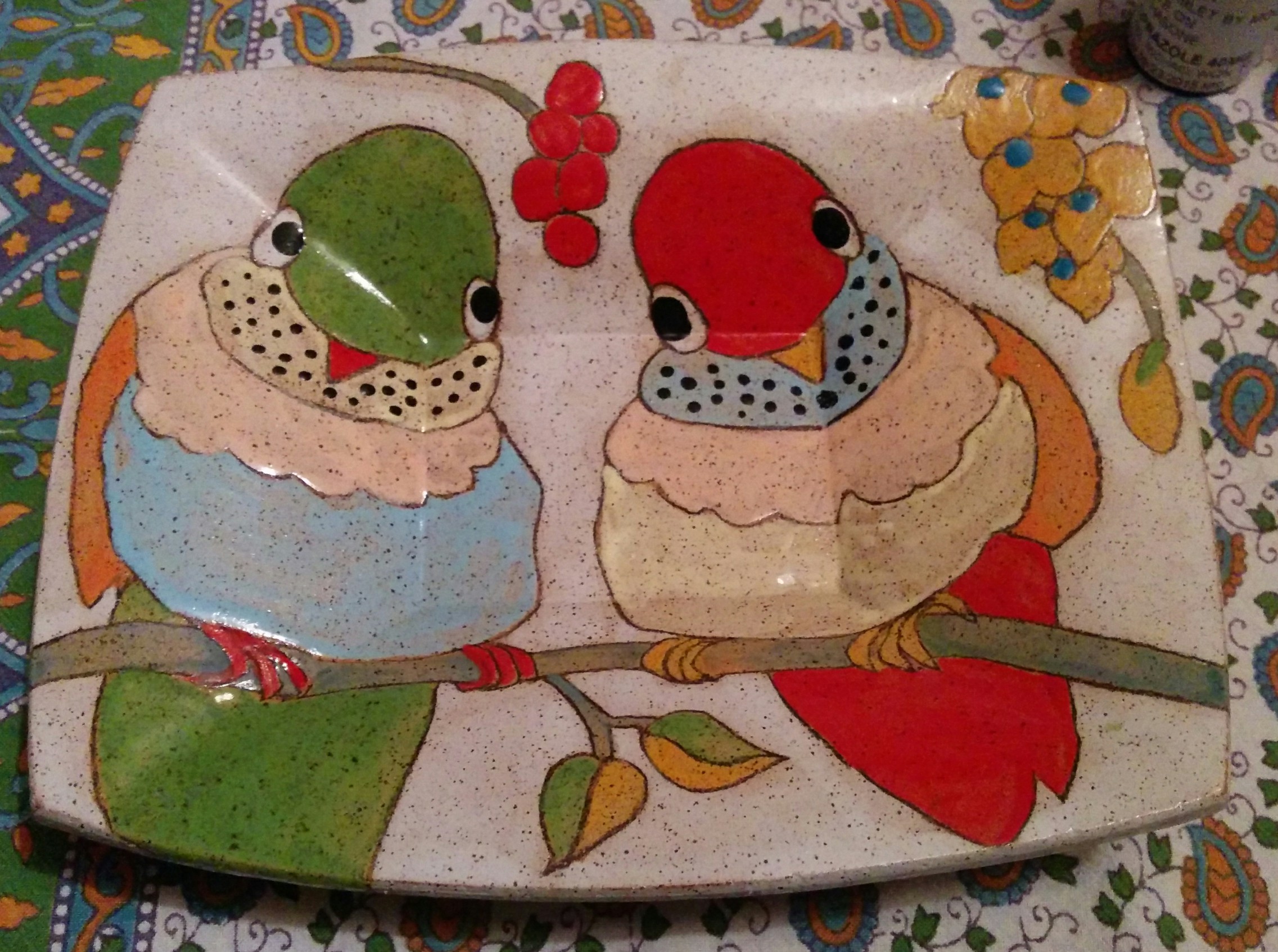
But back to the shop. Just inside, I saw a table displaying ceramic dishes. I saw some pieces with bright, imaginary birds. The clay was grayish and the primary colors stood out. One plate had two birds (something like budgies) leaning into each other, one with a red neck and one with a green neck and the eyes rolling toward each other as if they were in love. Perfect! First gift found.

The Buddha Cat and Owner

The Buddha Cat and Owner

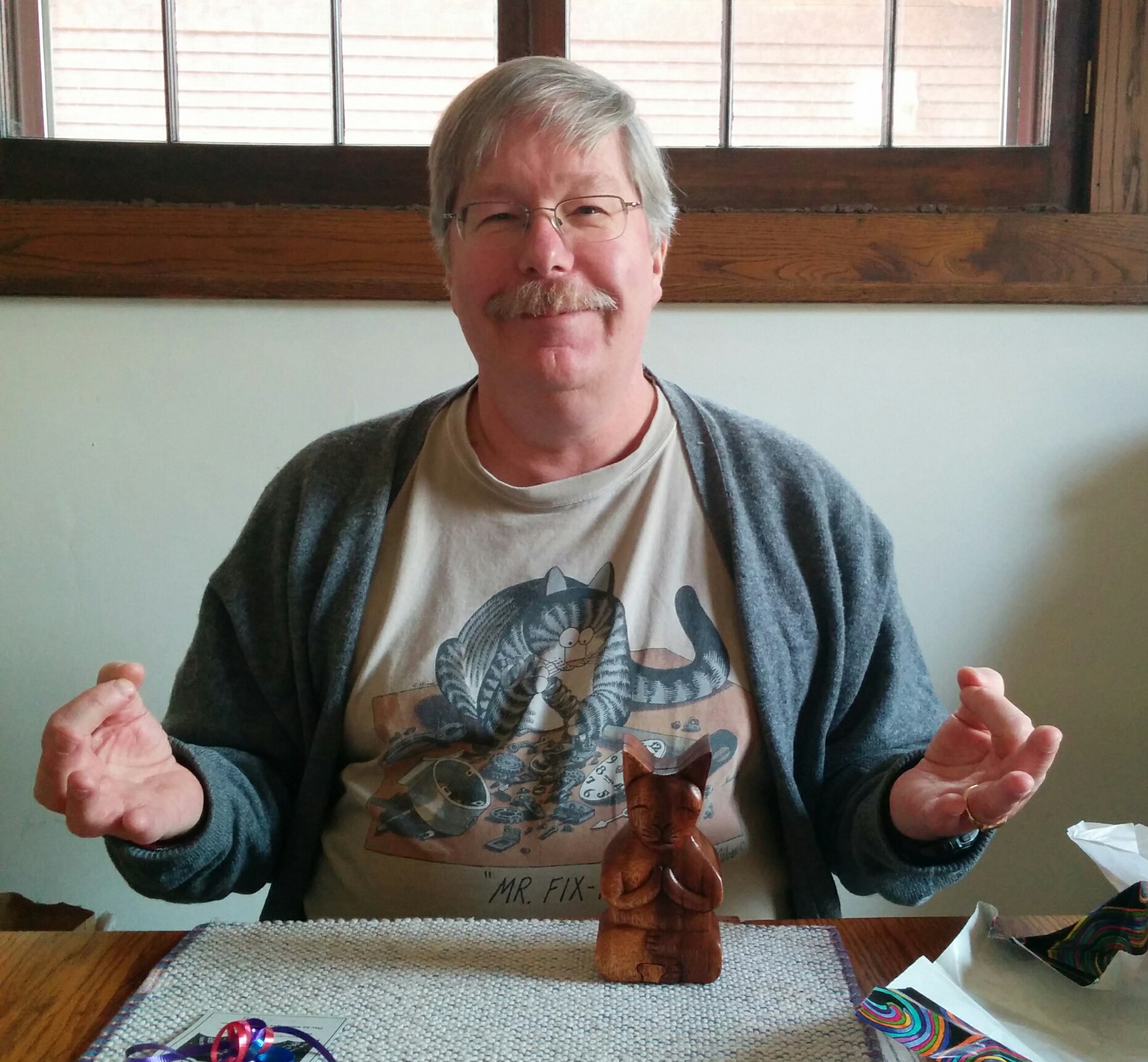
Now to find something for the family. I already had books, but I wanted one more thing because it was Neal’s birthday. He likes to work with wood. He turns bowls and the barrels of pens and the whorls of drop spindles which is why I wanted to find him something made out of wood. Ah ha! A Buddha cat puzzle box. Just the right thing. The cat is carved in lotus position with hands over the heart. Neal and my mom have two cats which they spoil shamelessly. Here is an example of the extent these cats are spoiled. If Neal eats ice cream, when he is done, he takes a bit on a spoon and holds it close to the floor so Boomer can lick the spoon.

Now you know what I actually bought, and I saw both of these items within five minutes of walking in the store. But I had to walk through the entire store, inspecting shelves, opening drawers, peering in cases to make absolutely sure I was not missing something even more perfect. I did get several ideas for later birthday presents such as dimensional silver Mobius earrings, horn bracelets, a red space-age plastic molded purse, drinking straw robots to make, chunky pop bracelets, stamped leather purses, etc.

Two Christmases ago, I sent my oldest boy to this shop, because he had to buy a birthday present for his girlfriend. He found her a long, white wool scarf. But before that, he asked me where to go to buy the gift and he said he wanted a locally owned shop. Now that was interesting. For him the shop had to be local. He said that he did not want to support some big national chain. It seems like recently people see-saw between two extremes: buying off the internet or buying from a local source.wpid-img_20150321_143245.jpg

Posted in shopping | Tagged , | Leave a comment

Back to the lesson!

Now we return to the original promised posting — interrupted by a passing bunny.

I called this lesson “Connect the Poetry Dots,” because the students begin with Shakespeare and end with Rossetti and in between are other poets. The way I say other poets might imply that these “other poets” are minor figures. Not so, well maybe Thomas Grey. They are all major figures in English literature but a some of them — Dryden, Pope, Donne — are not often taught in high school classes. When I think back on the poets I have tended to teach they either are Shakespeare (a category on his own) and the Romantics and twentieth-century poets. For these students to read these particular poems is a bit of a challenge.

In the previous post, I told the story of how the lesson evolved. Now here is how the lesson was conveyed to the students.

1. A web page was created which outlined the assignment, included the names and birth years of all the poets, provided links to other sources about British literary periods and a pinterest board. My colleague created a pinterest board with pins related to the authors and poems and images.

2. Xeroxed 4 copies of each set of poems.

3. When class began, I explained the task and showed the web sources. Each student chose at random a poem from the envelope. the envelope contained 16 poems (2 copies of 8 poems). I held back the Shakespeare and Rossetti sonnets.

4. On the basis of the poems chosen, the students organized themselves into two groups so that each poem was in each group. Then I gave each group the Shakespeare and Rossetti sonnets.

5. Each group was given a long sheet of white banner paper to use to create their timeline of the poems. As a group, they had to read the poems, discuss them, observe similarities and differences, notice development of style, discuss evolution of themes, narrator’s voice, subject matter, etc.

6. The students were given two class periods  — and when we return from spring break, they will have another class period to work on the timelines.

This last point is very important. Each class was told that the timelines would be hung up for the entire school to see. They were also told that the timelines would be judged by the other students and teachers on the following criteria: facts and analysis, creativity, and design. They were also told that there would be a prize. When I said “prize,” the immediate question was, “What is the prize?” Now we need to figure out something worthwhile! No pressure.

My classes were given the project first. Once the directions were reviewed and some basic questions answered, they took over. Each group proceeded in a slightly different way. One group spent the entire first class reading each poem aloud and discussing it. They wrote down their observations on a shared googledoc. Another group arranged the poems chronologically, read them quickly, decided on an overarching organizational scheme and then started sketching out their time line. It was really quite fascinating to watch each one’s process.

What was also impressive was how much they were able to see in the poems as single texts and as part of a poetic continuum. These students have a confidence in their own perceptions and insights which is astonishing. They just sing out their ideas and in debate and discussion with their peers modify and adjust. Their interpretation of the poems had just as much penetration and sensitivity as many of the literary scholars I have read.

My colleague’s classes had a substitute teacher the day the project was first rolled out. I was free for her first class and so I introduced the lesson to her class while the substitute observed. Once her class had started work, the substitute asked, “So they are going to do this without first understanding the poems?” That question took me aback. How did she mean that? The girls were understanding the poems, but definitely  not in the way typical for an English class. Often when a poem is “taught,” it is tied to a chair and beaten with a rubber hose as Billy Collins wrote so memorably. This lesson was not about atomizing each poem, but about seeing each poem as a column holding up a span of a bridge connecting Shakespeare to Rossetti. Another reason this was so different was the teacher was not the one imparting the “meaning” of the poem to the students. The students were creating their own meaning and insights.


Posted in literature, poetry, teaching | Leave a comment

Bunny hop

image

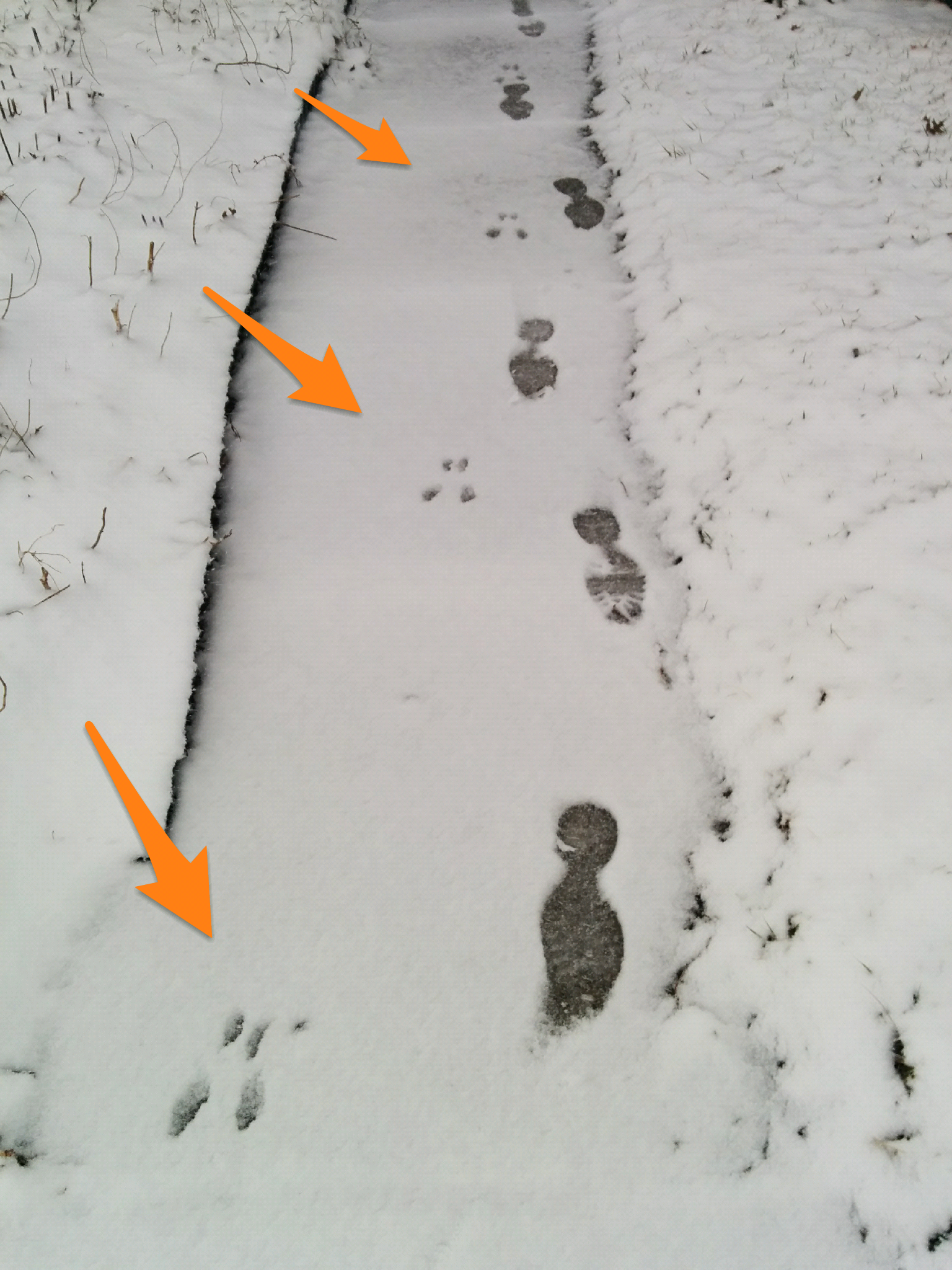
On my way out on this fine first day of spring, I noticed tracks. Distinctive tracks. They look like a bunny hoped down the walk and when I looked in the yard, this bunny had left a lot of tracks. Her must have been here recently because they were not filled in with snow.

Posted in life in general, nature | Leave a comment

How does a teacher keep students interested before spring break?

Yesterday was a post about technology learning. Today is a post about atechnology learning. Sometimes the students and I need to get away from the computers and instead of creating something in the cloud, create something tactile. And I needed a lesson to keep them engaged right before spring vacation.

My tenth-graders had just finished writing a paper about gender stereotypes in Shakespeare’s Macbeth. We were coming up to spring break and had two classes. Classes at my school are 75 minutes long and meet every other day. The longer class period allows the students to work for longer periods of time without interruption — of the bell and of their own mental distractions. They are with what we are learning more because they know they don’t have to change classes for at least an hour. The longer classes foster a more intense, engaged mindset.

Anyway, I started thinking about what I wanted to teach them over these two days. The other challenge was that several students were leaving for school trips so I needed to create a lesson that did the following:

  1. taught an independent unit that could withstand inconsistent student attendance
  2. had them read poems
  3. kept their attention when they really just wanted to be on spring vacation

They had just read Shakespeare and the next major text was going to be Frankenstein by Mary Shelley. Frankenstein connects thematically with both major texts which the students had read thus far spring semester: Oedipus Rex and Macbeth. I knew that before teaching Frankenstein, I had to introduce them to the Romantic period, its ideas, and themes. I also wanted them to read Coleridge’s Rime of the Ancient Mariner before we started Frankenstein. But I also knew that they would not have the toleration, stamina, or attention span to read Coleridge’s poem during these two days before spring break. That was just reality. Side note: sometimes I plan lessons based on the prevailing student mood, the time of year, and upcoming holidays. For example, just before Thanksgiving last year, on the suggestion of my colleague who teaches the other two sections of tenth grade, we read Rossetti’s “Goblin Market” because of the fabulous descriptions of all the fruits the goblin men have to sell. 

Another consideration was that I wanted to give them a sense for how the texts they have been reading connect to each other. Because of the way we teach books, students sometimes don’t see how the books are part of a time continuum. They say that Shakespeare is old English. That makes me cringe as a medievalist since Shakespeare in terms of the history of the English language is actually Early Modern. Old English is Beowulf. I thought then that I would just have them read a representative poem from each of the three major British Literary Periods: English Renaissance, Neoclassicism and Romanticism and I would tell them about each literary period and explain how each poem reflected its period. BORING. They would tune out after ten minutes of that. These students demand that they be active participants in their learning. They love to talk and debate. They don’t like listening to a teacher drone at them. (I wouldn’t either.)

Okay, next idea, I give them the poems and let them figure out how each poem represents a literary period and provide them with a little synopsis of each literary period. Better but still rather static.

Okay, next idea. I put them into groups and give them the poems and they have to figure out how the poems connect, ordering the poems by the birthdate of the poets. Better.

Now to find the poems and poets. Over the weekend, I attended a Philadelphia Orchestra concert featuring Beethoven’s Pastorale Symphony. Always a treat even if this performance was not very inspiring or innovative. In the program, they always include a timeline which connects the words in the program to each other and to other historical, literary, artistic events. Why not have the students create a similar timeline for the poems? Then I decided that I wanted to make sure the chain of poets between Shakespeare and Christina Rossetti was unbroken. I wanted to make sure that before one poet died, another was born.

Here was my first list of poets:

William Shakespeare (1564-1616)
John Donne (1572-1631) “The Flea”
John Milton (1608-1674) sonnet on My Blindness
******
Alexander Pope (1688-1744) extract from “Rape of the Lock”
*******
William Blake (1757-1827) “The Tyger”
William Wordsworth (1770-1850) “World is Too Much With Us”
Samuel Taylor Coleridge (1772-1834) “Kubla Khan”
Christina Rossetti (1830-1894) “Goblin Market”

There were two breaks in the list and so I had to turn to my Norton English Anthology to fill in the gaps with:

John Dryden (1631-1700) — can’t find anything good
Thomas Grey (1716-1771) “Ode on Death of a Favorite Cat”

It was easy to find a poem from Grey — this ode is pretty funny as he personifies a cat as a demure maid trying to catch “the genii of the stream.” Dryden was another matter since he was most well known for his plays. But then I remembered his “Song for St. Cecilia’s Day,” which is a poem narrating the creation and destruction of the Christian world.  Handel turned in to a gorgeous choral piece. Just listen to the last part when the full chorus sings “the dead shall live, the living die / And Music shall untune the sky.”

The list of poets and poems was good: several sonnets; interesting thematic connections; not too hard. Except for “The Flea.” In my experience, students have a hard time seeing the dramatic scene between the lover-narrator and the woman with whom he wants to get into bed. Throw that out and put in his sonnet “Death be not proud.” That is famous for the first line alone.

Then Pope’s “Rape of the Lock” is rather long. Find an excerpt. Why not that part that describes the Peer cutting off Belinda’s lock? That has some pretty funny circumlocutions and that hilarious simile comparing Belinda’s scream of anguish to the cries “When Husbands or when Lapdogs breath their last.” Add some explanatory glosses and that one is done.

“Goblin Market” is too long and they had already read it before Thanksgiving. My colleague suggested Christina Rossetti’s sonnet “In an Artist’s Studio.” That was a brilliant suggestion because it was a sonnet and it was about how men see women and thus connected to a video about women in western art which the students had seen on Arts Day. If you have not seen the video, “500 Years of Female Portraits in Western Art” by Philip Scott Johnson, you should!

That completed the list of poets and poems. Next post will be about the directions for the actual lesson.

Posted in shakespeare, teaching | Tagged , , | Leave a comment

What do I do on the computer all day?

“With tools like augmented reality, games, and coding, it’s possible to imagine a model of schooling that departs from its behaviorist past — creating Ludic Education for a Ludic Age, promoting inquiry, collaboration, experimentation, and play.” Sophia Nguyen

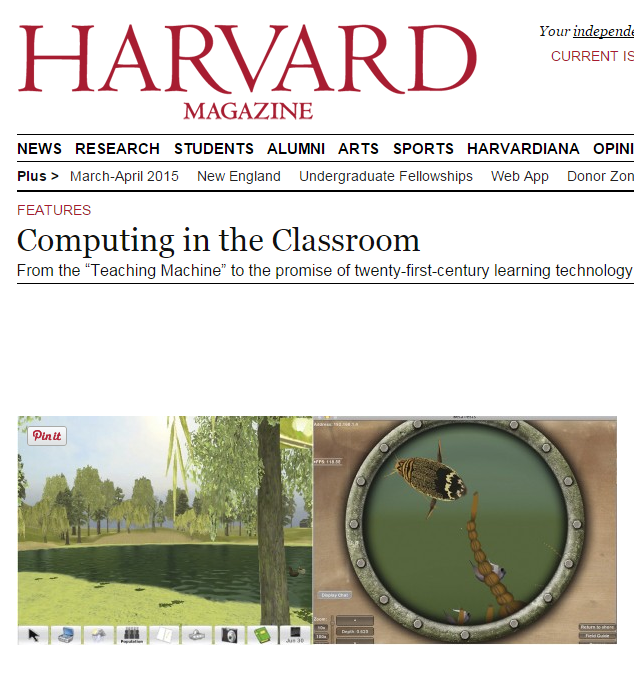
The March/April Harvard Magazine arrived in the mail recently and I finally got around to reading the article, “Computing in the Classroom: From the ‘Teaching Machine’ to the promise of twenty-first-century learning technology” by Sophia Nguyen.

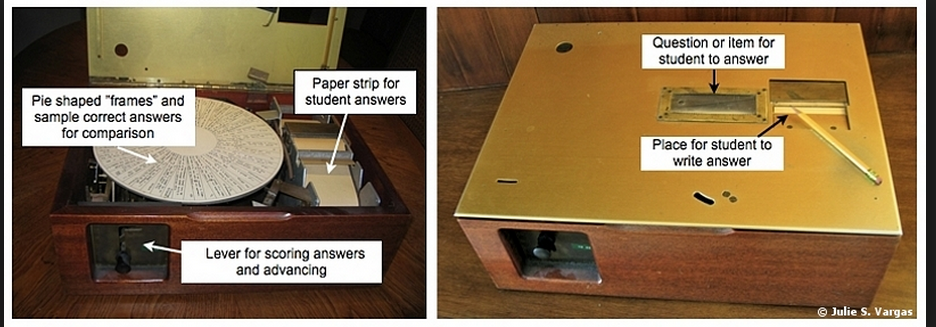
picture from eLearn Magazine article "A Science for e-Learning: Understanding B.F. Skinner's Work in Today's Education"

picture from eLearn Magazine article “A Science for e-Learning: Understanding B.F. Skinner’s Work in Today’s Education”

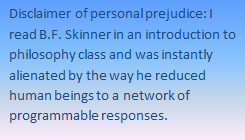
This article entered into the current philosophical fray of whether computers actually improve student learning by providing some historical context for how computers first gained a foothold in the classroom. Interestingly, Nguyen said that B.F. Skinner originated disclaimerthe idea of having students use a “learning machine” to get immediate reward when they answered correctly. Nguyen basically argues that education has been “tainted” by this initial idea and is still trying to shake free of it.

Perhaps, but this “mechanization” goes back to the founding of public school education which tried to teach the largest numbers of students most efficiently.

How can we shift education so it is more personalized and individuated? Could the integration of technology allow this? In the ideal world, yes!

Remember how Wesley Crusher in Star Trek: The Next Generation basically established his own curriculum based on his interests, questions, knowledge? The computer (and the hidden teachers) established the learning goals and he happily researched, problem-solved and learned in a real environment where what he did had real life application. I think in one episode, one of Wesley’s school experiments saves the Enterprise from destruction.

Personal Retrospective on how Teaching has Changed

Okay, okay. How does this apply to me and teaching at an independent school on the Mainline? When I shifted form college teaching to high school teaching in 2002, no high school student came to class with a computer. Now in 2015, most students bring a lap top (or a smart phone) to class. In 2002, assignments, syllabi, and handouts were all xeroxed; in 2015, the students access these texts through a classroom management website called “Haiku” (there are several different platforms: Blackboard, Alma, etc). Now students can opt to read the text on their computers or smart phones. My teaching has also changed; it is less teacher-centered and more student-centered. I will set the parameters for a class discussion and then let them debate. Or I will teach a hard facts (grammar, historical context, literary analysis techniques) and then the rest of the class is them applying the information and making it their own. Only 1 month ago, I was still handing out lists of vocabulary words for the students, but now they are training on Membean, which is an individuated computer program for learning vocabulary. Even though we have only been using Membean for a month, the students tell me they are not tired of it and love how it feels like a “simulation” (see below for importance of semantics) with goals, statistics for training, and varied hooks for learning each word.

Now

Now when I am not actively in class, I am working on a computer. What do I do all day with this computer?

  1. update each class’s Haiku page with homework, information, class notes and handouts, links to outside resources
  2. creating new lessons which are generally presented using smart board software; this means determining substance of the lesson, preparing slides with text information, questions; finding appropriate images to keep their attention
  3. grading homework and papers on line
  4. answering emails from students, colleagues, parents
  5. researching next lesson, unit, text

I am an early adopter. I love my computer and learning to do new things on it. Just yesterday I finally decided to make a little how-to video to show students how to create a subpage on WordPress. I used Jing to create this little 2 minute video. That part was easy but then I had to figure out how to post the video and I wanted to preview it to make sure it worked. Then I learned that Jing saves videos in a special file format that means the video can only be accessed using a webbrowser. Live and learn.

Bottom line: technology has transformed how and what I teach. Therefore the lessons are more tailored to a specific group of students’ needs. I try to prepare lessons which pilot themselves but this requires a great deal of research and time to create a structure and provide resources which support the lesson’s learning goal and yet gives the students a degree of autonomy.

Technology has also made possible the publication of student work to a much larger audience — the entire world! I think this may be one of the most powerful consequences of computer usage in the classroom — at least for me as an English teacher. In 2002, when students wrote a paper, they handed it to me and I was the only one to read it. In 2015, when students write an essay, they can post it on a class website for their peers to read. I think my students in 2015 have much better “voices” when they write because they have a sense of audience. They also take more pride in their work because they know many people will be viewing their product. They also see their work more as a product or something that is consumable (I need to think about this idea more). Another way these students are different is that in general, they write more than ever before — blogs, texts, emails, etc. It is a different type of writing, more casual, informal, ephemeral. But it is writing.

Yet….

…. there are times when I cannot look any longer at the computer screen. When the idea of reading 40 papers on line is too much and I print all the papers out to read sitting on the couch at home. And there are times when I feel I am serving technology instead of technology serving me.

End note: When I typed the quotation at the beginning, the adjective “ludic” was ringing a bell in my mind. I think that title is indebted to a book called Homo Ludens by Johan Huizinga, a Dutch historian and cultural theorist. He published the book in 1938 and it is all about how man is the only creature who creates games with rules and playing fields. I read it a very  long time ago while an undergraduate or graduate. I could only remember the title but through the magic of the google found the author’s name!

Terms gleaned from “Computing in the Classroom”

Terms picked up from the article to sound like you know what you mean when talking about technology and education:

  • digital fluency — ability to easily use technology
  • “gamification” — teaching through games
  • deep game experience — game is created in such a way to provide verisimilitude — maybe even richer than the gamer’s immediate environment
  • “simulation” — use this word instead of game if you want to avoid criticism for being frivolous
  • “learning space”  or “learning environment” — the materials, information you gather around yourself to learn
  • games — “‘the first designed interactive systems our species invented’ writes Eric Zimmerman, a games designer and professor at New York University” (quoted form article on p. 51)
  • constructionism — teaching philosophy from 1960s postulated by Seyour Papert which said students must actively build knowledge when they interact directly with materials
  • digital confidence — self explanatory
  • digital illiteracy
Posted in School, teaching | Tagged , , , | Leave a comment

Why do we always teach the tragedies in high school?

p072I am teaching a group of seniors and juniors about Shakespeare’s Comedies. In my last two jobs, the students only read the tragedies unless they elected to take a senior English elective. Yes, Hamlet, Macbeth, Romeo & Juliet, Othello are pinnacles of writing and anguish and yes, those plays contain their moments of comedy. Think of the drunken Porter talking to the stern and Puritanical Macduff about pissing and floppiness. Think of Mercutio taunting Tybalt as “The Prince of Cats.” But for the knowing audience, the laughter echoes blackly.

Let’s read about reunions and forgiveness and love and marriage. Give me the comedies. But even they have their dark moments. In Tempest, Prospero abuses Caliban, making him a salve and pinching him with torments. Prospero also dominates and commands Ariel and threatens to put him back in the cleft of the tree where Sycorax trapped him. In Taming of the Shrew, Petruchio starves Kate to tame her and after reading T.H. White’s book The Goshawk, I know that he models his taming of her on how a falconer would tame a falcon — be starvation and food rewards. In Much Ado about Nothing, Hero is accused publicly of sexual incontinence. What worse fate for a maiden than to be accused of having casual sex. And even the title of the play is violent since “nothing” is Elizabethan slang for a woman’s vagina and it suggests that making the woman’s virginity is not worth noting. Or Measure for Measure where the brother Claudio asks his sister Isabella (who wants to be a nun) to have sex with Angleo so he can be set free. Now what is with that?

When we read the tragedies, the students enter into the plot with no difficulty. Well, the language of Shakespeare is an impediment, but they get the sorrow and the sadness. Of course they understand why Hamlet is despondent when his mother remarries within two months of his father’s death. Of course they understand why Othello feels betrayed by his wife whom he thinks has given his leiutenant his mother’s handkerchief embroidered with strawberries (now are those strawberries a symbol or what? Red fruit on a field of white). They get that Lady Macbeth goes mad from guilt, especially after her husband Macbeth orders the murder of another woman. Might he go for her next since he is out of control?

The comedies seem to require more effort — does that mean that finding happiness is harder?

Let me reframe the question. The comedies end happily because the characters adapt and change and accept. Does that proposition hold?

We just finished studying Twelfth Night in this senior class. I remember the first time I read the play as a first year student in Elizabeth Armstrong’s Shakespeare class. I was the only first year in the class. We read a play a week for two quarters. She spoke to us with only the huge yellow Riverside edition opened on her desk. She would take a breath and launch into her disquisition about each play. She brought my attention to the references to time and the twins (Viola and Sebastian) acceptance of time and its passage. She talked about sprezzaturra and how that flowing resilient grace allows the twins to find their happiness. Viola says:

O time, thou must untangle this, not I:
It is too hard a knot for me t’untie. (Act 2, scene 2, ll. 39-40).

Sebastian says,

What relish is in this? How runs the stream?
Or I am mad, or else this is a dream:
Let fancy still my sense in Lethe steep;
If it be thus to dream, still let me sleep!
(Act 4, scene 1, ll. 54-57)

After so many years (this class I took in 1982), I don’t remember what she said but I remember how she communicated her excitement about the speeches. She exclaimed and frothed and marveled. She paced back and forth in front of us.

Initial observations on Viola’s speech

When Viola talks she addresses time in the intimate second person singular “thou.” She makes time into a friend and a partner in her situation — shipwrecked on a foreign shore, disguised as a boy, and serving a changeable duke. The two lines has lots of alliteration: time, untangle, too, untie. The alliteration highlights the semantic contrast between “tangle” and “untie.” There is also quite a bit of consonance on the /n/ sound. The iambic stresses of the first line fall on: time, must, tan, this, I. This means that the line balances stress wise between “Time” and “I,” again emphasizing how Viola and Time are  team. The other noteworthy sound patterning is that this is a closed heroic couplet. The rest of the speech is blank verse or unrhymed iambic pentameter, but it ends with this couplet which creates a partnership between Viola and time. Nowhere else in the soliloquy is Time addressed or even mentioned. Time only comes in at the end of the speech.

Initial observations on Sebastian’s speech

Sebastian’s speech is two paired closed couplets. He is responding to Olivia’s plea that “Cesario” forgive Sir Toby for attacking Sebastian. I think Olivia’s speech is also interesting in terms of rhyme form. She is speaking in blank verse until the last two lines when she says, “Do not deny. Beshrew his soul for me! / He stated one poor heart of mine, in thee” (Act 4, scene 1, ll. 52-53). Then when Sebastian speaks his aside in heroic couplets, even though he is not talking too Olivia, the form of his speech shows that he is falling into line with her. The sense of the lines tells us this because he decides to go with the flow and dream on! The imagery of these four lines includes: streams, sleep, dreams. A person can fight against a stream, struggling against the current. A person can fight sleep, trying to stay away. A person can wake herself up from a dream, opening her eyes. Or a person can do what Sebastian does: accept, bend, succumb, obey, submit. But he does it with a free will. He decides to go along. No one forces him. I wonder if one could talk about his acceptance of this grace which has been granted him in the same way one could talk about a person accepting the grace of God? Or is that too much? I always warn the students about pushing connections too hard but could it be possible? Of course in the scope of comedy. This reminds me of the storm scene in King Lear, when Lear runs out into the storm and accepts its fury, crying “Blow winds, and crack your cheeks! rage! blow!” (Act 3, scene 2, l. 1). But of course King Lear is a tragedy and his acceptance comes too late.


Posted in shakespeare, teaching | Tagged , | Leave a comment

Reflection – Naval Gazing – a time honored activity

Life teaching at a girls’ school on the Mainline. I step out of my classroom to  speak to a colleague who just has returned from visiting her new doctor who has put her on a routine cycle of scans to detect any early signs of breast cancer. At the same time, I am monitoring two students who need extra structure so they can complete assignments. Earlier I assisted a substitute introduce a new project to a class and realized she thought the project crazy because the girls were not expected to “understand” each poem but to get a sense of a general trend in poetic development over 200 years by comparing 10 different poems. In between, I try to answer questions about drafts and provide guidance for revising papers for clarity, and grade papers, and plan a new lesson, and update the various class websites.

And I wonder why at the end of the day I don’t want to to anything more than go home, take a nap, knit, walk the dog, and ease my brain.

At one point in my life, I was an intellectual creature. I had gotten a ph.d. an the esoteric field of medieval comparative literature from an august institution — so august that the name is sometimes embarrassing. Now I wonder if I have the mental capacity to read anything for a sustained length of time. There must be something left since I did read Greenblatt’s study of Hamlet and purgatory and Kurlansky’s Salt: A World History. But reading is nothing like writing. Writing about something actually creates knowledge and understanding. Reading is a superficial skimming compared to the depth and energy required to write even a paragraph.

In between the ph.d. and now, my life got absorbed by three children all two years apart and a job. At first that job was teaching at a university but that shifted to high school teaching 12 years ago. Now two of the children are grown and have gone off to college and the third will leave next year. All three are fully capable, independent people. I like each one and find them quite interesting. My husband the doctor gets home late most nights and he is a committed, accomplished scientist-physician, a bench-to-bedside researcher.

So how will I fill the time when I am alone in the evening? Knitting is not an answer since I can tell that full-blown arthritis is waiting for me if I over do it. I could exercise more and I should if I want to live a longer and healthier life. I would like to practice piano (harpsichord) more but some days the mental effort to open the keyboard is too much. My husband swears that I need something to do with my brain or I will go crazy. He is probably right but what?

Right at this point, this blog entry is 461 words long. The other night I toyed with the idea of trying to write at least 1,000 words at a certain interval of time. I always tell my students that writing regularly is like building muscle, that writing gets better only with practice. I expect so much writing of them — with sophisticated diction, complex syntax, insightful observations. But I am not certain that I can even live up to that ideal.

What would happen my writing if I made this commitment for a month? My oldest son who hated writing too a challenge to write a novel in a month. He managed it and the very activity broke a mental block he had about writing. I wonder if I could achieve the same benefit with a similar exercise.

The words written would not have not have to be public. They could just be a series of unposted entries. Maybe over time a narrative would emerge which could upon reflection be shaped into something. T.H. White kept a journal about training a goshawk. From that journal he created a book called The Goshawk. I just finished reading it and it was an interesting account of how a broken man (T.H. White does sound broken because he is avoiding most human contact) mail orders a hawk from Germany and tries to “man” it. (spoiler) He loses the hawk because he is too lazy to trade the rotten twine he is using to tie the hawk for a stronger twine. So ends the first part of the book. I skimmed the second and third part because without Gos, those just weren’t interesting. Both White and this reader lost heart when Gos flew away. White is careful to squash any romantic visions of Gos flying free by saying he probably died danging upside down by his jesses from the branch of a tree. Depressing.

I only picked up the book because the New York Times reviewer of H is for Hawk said that this book published in 2015 must be read against its predecessor by White. Since H is for Hawk is on endless backorder at Amazon, I decided to read White’s account of an austringer. I don’t think White’s book would ever be published now. It is too narrow, but then who would have thought this other book would be published – -and given a major literary award (don’t ask me which one).

So much of what gets published and read now rests at extremes.

1) the personal memoir — everyone can write one now; you don’t have to be old or famous or anything to justify making others read your thoughts

2) pornography — just that; thinks of Fifty Shades of Grade and all the vampire and werewolf porn

3) political mud slinging — take your pick; all of the parties do it

4) weight loss and cooking — we starve ourselves to eat in a vicious cycle. Anyone ever hear of moderation?

I have read that we Americans read more now that ever before. And that we write more than anyone in the history of the world has ever written. But is anything we read or write worth reading or writing?

In many ways, that is my question as I look into the future and the possibility of time to begin thinking and writing again. Writing is such a painful process so why would I make myself do it?

Posted in life in general | Leave a comment

Bread Baking

The timer has gone off and I can smell the bread baking in the oven. As I try to think of words to describe the aroma, I am reminded of all the ways wine critics try to describe the bouquet of a wine.
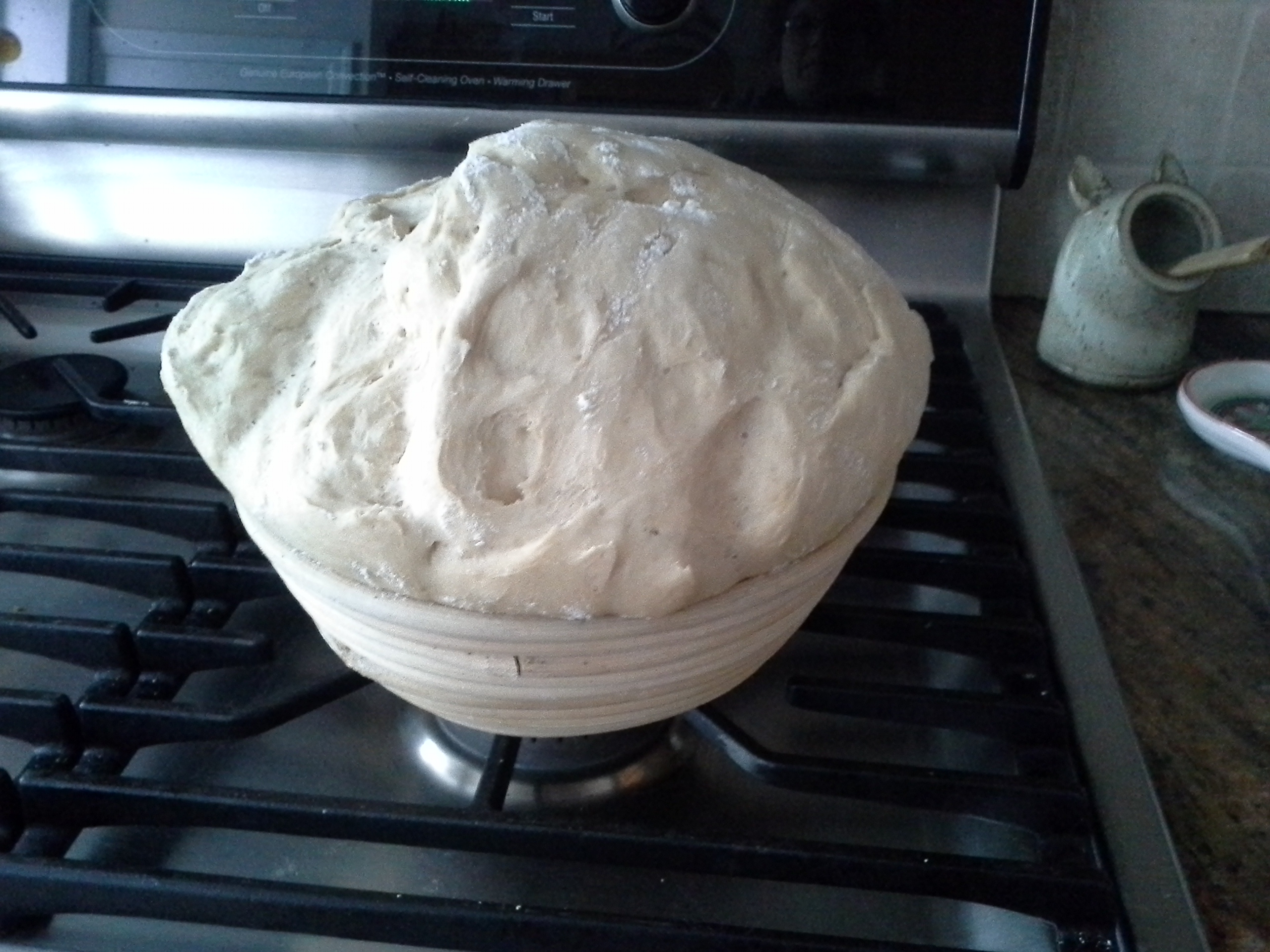
20140216_161517
Obvious words include: yeasty, warm, toasted, browned, but none of them do justice to how smelling that loaf of bread makes my mouth water, and my thoughts go back to the past. I remember watching my mother pull out loaves of bread from the oven. We were not a wealthy family, but I never felt poor because all the other children were jealous of my mother’s homemade bread and cookies and cakes.
I remember so many suppers where the centerpiece of the meal was a thick slab of bread hot from the oven. We would slather great chunks of butter on it and watch the butter melt into the crevices and air pockets. That slice we would eat with dinner but then we would get another slice and eat that with butter and honey for dessert.

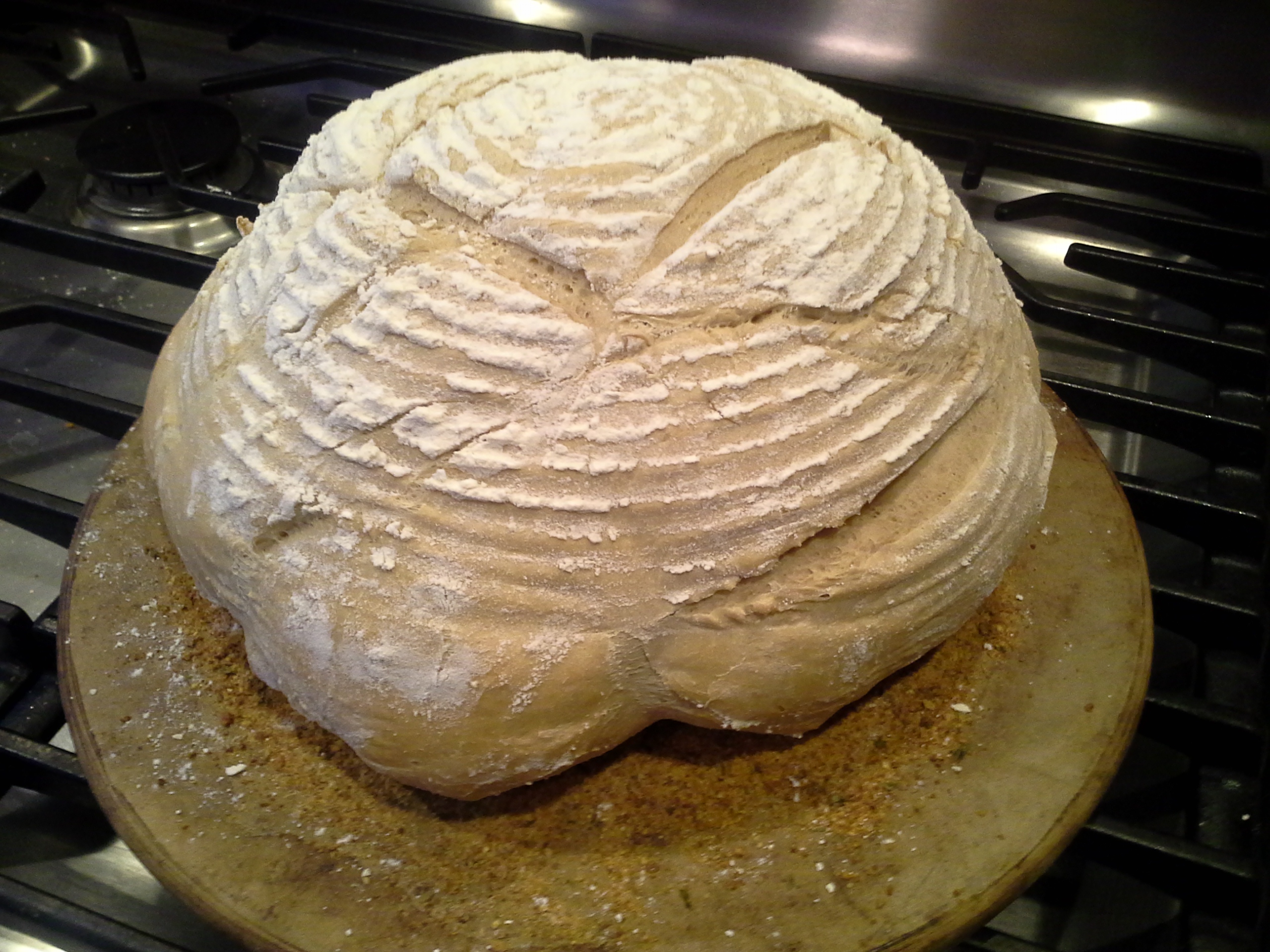
baked-breadMy husband bought me our first bread machine when we still lived in Boston. It was a Breadman 2lb loaf machine. I think we must have put 1,000 lb of flour through that machine before it finally broke. It had a timer and I remember the first time I set it the night before for 12 hours and crossed my fingers as I went to bed, wondering if the next morning the loaf would be risen high and baked golden brown. The next morning, we woke to the smell of baking bread and our little condo seemed like a kingdom. We breakfasted on bread, butter, and jam and Christopher who was just about a year old ate an entire slice by himself.

The loaf I just pulled out of the oven is cooling on a wire rack. It will be part of our dinner tonight with roast filet mignon and a salad.

Posted in Baking | Leave a comment