Spring Bulbs — future combinations

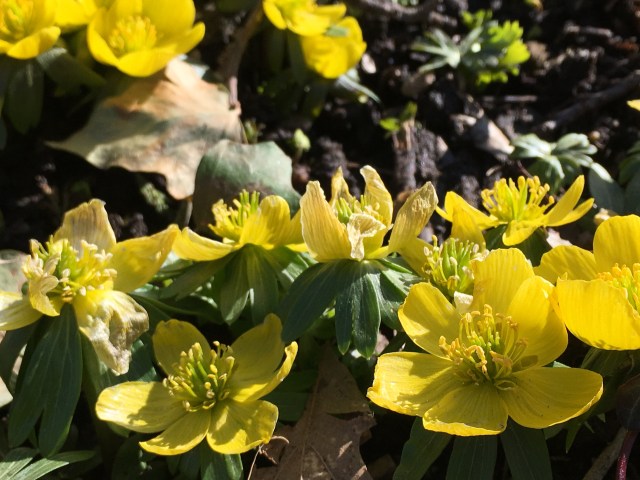
img_1572Winter wolf’s bane is blooming in patches of yellow in the front and back of the house. Winter wolf’s bane is also called winter aconite but that is not nearly so evocative a name. Actually, the full Latin name is Aconitum lycoctonum. Aconite is an alkaline toxin produced when you boil the roots of the plant. This toxin is highly poisonous and difficult to treat. Click here  if you would like to read about two recent cases of ingestion which happened in San Francisco. The second word “lycoctonum” means wolf’s bane. Sometimes the vowel gets shifted and it becomes “wife’s bane.”

I really should plant snowdrops among my spreading wolf’s bane. Or maybe plant a blue flowered bulb for contrast. I could also plant some early purple crocus. That would have the same effect, although purple is one complementary shade off from yellow. These are blooming right now at the same time as the winter wolf’s bane.


Posted in garden | Leave a comment

Hansel and Gretel in a Concentration Camp

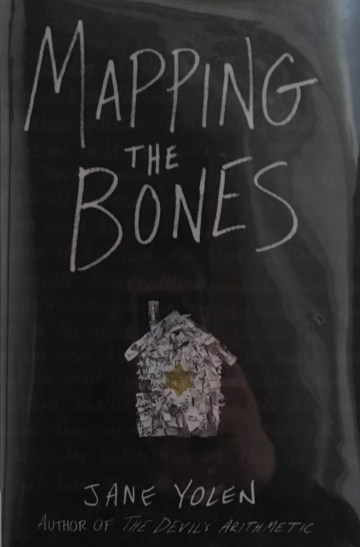
img_1342Jane Yolen has written the novel Mapping the Bones about Jewish children surviving the terrors of occupied Poland and a concentration camp and she uses the structural framework of the fairy tale of “Hansel and Gretel.” In both stories, the children are separated from their parents, wander lost in a forest, and suffer acute starvation and deprivation until they win free through their own determination and love.

Yolen tells the story in alternating chapters. One chapter is third person limited narration from the point of view of Chaim, the modern-day Hansel. The next chapter is first-person narration from Gretel told long after the events Chaim narrates. But Yolen is careful to in the Gretel narration to hold back whether Chaim survives their stay in the concentration camp.

The climatic scene is rather horrifying and bloody. I think I will just reference Josef Mengele and leave it there.

I read the book over about 4 days. The pace of my reading was motivated by my quest to identify the parallels between the story of Chaim and Gittel, twins born to Jewish parents with the story of Hansel and Gretel. Yolen’s novel does not unreflectively follow the Grimm fairy tale and she adds enough contrasting detail to keep the reader intrigued.


Posted in book review, fairy tales | Leave a comment

Snow day or delay?

Here is a rendering of what the street looks like out of our window. We only have a light dusting but if this continues all night….

Posted in Uncategorized | Leave a comment

Calculations in Knitting

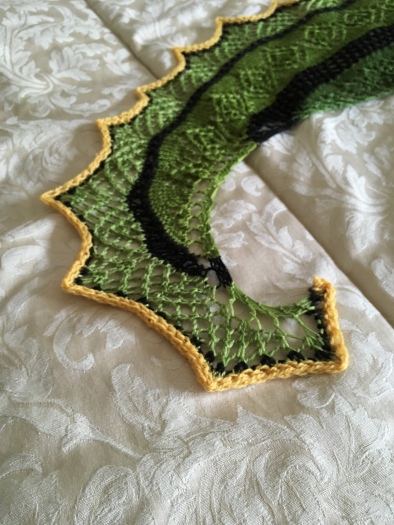
img_1041In December, I was madly knitting a scarf to give to an old friend of my husband’s family at Christmas. This person took care of my husband and his four younger sisters for several years. She came over from a small village in the Black Forest to Ohio and never returned. She stayed, earned her nursing degree, worked in a teaching hospital and retired so she could have adventures all over the world such as experiencing “summer” in Antarctica.

Anyway, I felt it was time she had a hand-knitted present. She is one of those unfortunate people whose birthday is very close to Christmas. They always seem to get short-changed.

For her special shawl, I used a skein of yarn which Brooke of the Painted Tiger dyed as a gradient with distinct bands of green separated by bands of black. It is absolutely amazing how Brooke manages to dye skeins of 490 yards with sharp transitions between different colors.

If you are interested, Brooke has the most wonderful yarn/fiber club! Each month she will send you a 4 oz skein of sock yarn or 4 oz of fiber to spin. When my sister turned the big 5-0, I transferred a year’s worth of my skein-a-month club to her. My sister really loved all the variation and color which arrived in her mailbox. And I felt a little envious when she would call and tell me about the special yarn in the latest package.

Anyway, for this friend’s present, I decided to use a variation of Evelyn Clark’s original triangular swallowtail shawl.  

This crescent variation was designed by Susan of the Raineysisters. Check out her original blog post here!

I sort of followed the directions (mostly) for the crescent swallowtail but did make a couple of variations when I saw the color change from green to black happening. For the first band of black,  I added a few rows of faggoting lace. For the second band of black I did a purl row, twist stitch row. If you look closely at one of pictures below, you can see where the transition between green and black happened exactly at the end of a row.

For the bind-off, I used bright gold wool to give the edge a pop of color!

Our old family friend seemed to like this Christmas/Birthday present very much!


Posted in knitting | Leave a comment

Snowdrops blooming – a sign of a special person’s birthday

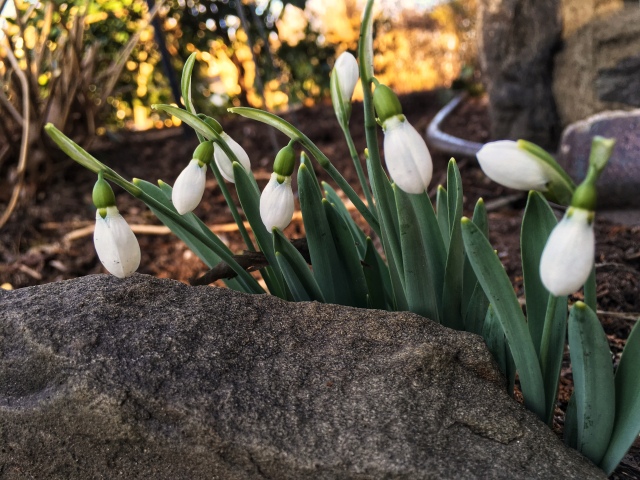
img_1329Stepping out of the house to walk the dogs last week, I saw the first snowdrops blooming.

Whenever I see them, I always think of my German father-in-law. My mother-in-law once said that the snowdrops always bloom on his birthday. And it is true. His birthday fell during the first week of February.

My SH says he was a strict German dad when his children were growing up; however, by the time I met him, he had mellowed. He always treated me with respectful chivalry. SH said it was because he respected my knowledge and studies as a medievalist. He knew multiple languages, including Greek, and, despite decades living in the US, he kept his German accent.

I remember he almost always had a book nearby. He read omnivorously. He loved Ian Fleming’s 007 books; they helped him improve his English when he and his wife first came to the States. He also read books about history, literature, and science. He was truly a great humanist and accorded everyone respect.

My mother-in-law once told me a story about how they had gone to a fancy restaurant for dinner in the south in the 1960s. They were seated at a table and started ordering food. When their colleague finally arrived, my father-in-law was told that the colleague would have to leave the restaurant because the colleague was an African-American. My father-in-law and mother-in-law stood up and left with their colleague. They just left with the first-course growing cold on the table.

He died almost 15 years ago on Friday, August 27, 2004.

Posted in family | Leave a comment

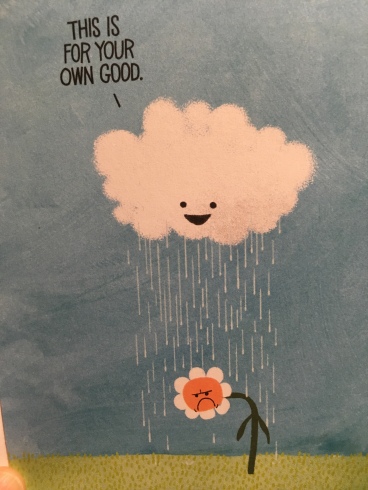
It’s for your own good

As a parent of grown-up children, things happen to them in the adult world that happen to lots of folks. But because these things happen to your own children, these things bother you still more. Or me anyway.

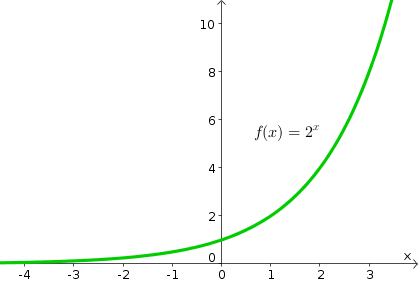
I just worry about them. And the amount of worry correlates with the amount of love. But as my math teacher friend explained, the amount of worry is not a direct ratio to the amount of love. She said that worry increases exponentially. Here is a graph of this:

exponential_function_two_to_x

In this graph, the variable x = love. So the rate of the curve is 2 raised by the variable x. So the x axis is the love and the y axis is the worry. Gosh, I have not done math in ages.

img_1321So here is the front of the card, I left for one of our children who now faces a challenge. No one grows if they are coddled. Growth happens in response to challenges.

When he told us, I admittedly went into hyper-worry mode (also quite unproductive). So I also need to remember the lesson.

And after a night of sleep, I feel sanguine. Everything looks better the next day!

I hope he feels that way too.


Posted in life in general | Leave a comment

Bird’s Eye View of History

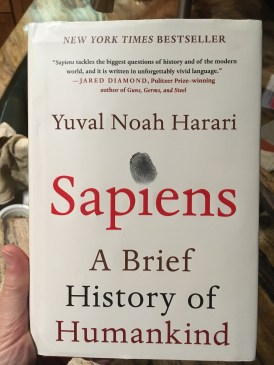
img_1318Yuval Noah Harari wrote his book Sapiens: A Brief History of Humankind in 2015. The book provides an expansive overview of 202,000 years human pre-history and history in under 450 pages (including index). His most provocative tenet is that the ability of humans to create fictions and then believe in those said fictions is what distinguishes us from all other species and might be our doom. This idea does seem somewhat indebted to the argument of Johan Huizinga made in his 1938 book  Homo Ludens which argued that humans are unique because of their ability to create imaginary narratives of play.

Harari divides human history into broadly themes epochs:

  • the Cognitive Revolution (70,000 years ago)
  • the Agricultural Revolution (12,000 years ago)
  • the Unification of Mankind through money, politics, and religion (starting approximately 5,000 years ago)
  • the Scientific Revolution (500 years ago)

The discussion of the Cognitive Revolution is highly speculative and it must be since our record from this time period consists of material artifacts from archeological sites. However, I did appreciate his rundown of the timelines of the six various human species and how they might or might not have intersected. He does make observe that the extinction of megafauna can be pinpointed on various continents to the spread of Homo sapiens. Here he echoes E.O. Wilson’s argument that human beings, when considered from the perspective of other species living on the planet, is, in fact, a destructive invasive species.

When Harari moves into his survey human behavior based on actual historical records, he makes some interesting propositions such as money as a mode of exchange was a great unifier which surmounted differences of religion (Christian and Islam) and language and culture. He also posits that human beings gift for metathinking and fiction-making enabled the unification of large groups of people (numbering in the thousands and tens of thousands) under shared ideas. Interestingly he groups political ideologies and religions together as types of fiction-making which unify populations and thus liberal secularism becomes as much as thing driving humanity and Catholicism.

Harari also suggests that the reason that Western Europe (as opposed to the peoples of another continent) becomes a leader of economic development, industrial technology, and natural exploitation is that the European scientific revolution first spawned an intense desire to answer all questions and solve all mysteries and later united with imperialistic capitalism. Now that was rather an arresting idea. He talked about how many of the early scientists were financed by capitalists who believed that new discoveries would lead to more opportunities for wealth so the capitalists kept pumping money into the scientists. What an unholy alliance.

In the last chapter of his book, Harari looks into the future when science might replace Homo sapiens with some genetically engineered being or even upload human consciousness into a computer. This seems truly farfetched but there are actual human projects which are researching such possibilities such as the Human Brain project or the Project Gilgamesh.


Posted in book review, books | Leave a comment

A book uniting two passions: fairy tales and knitting

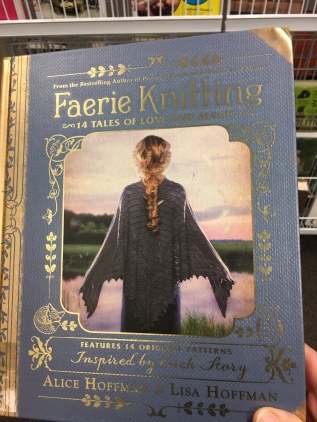
img_1295Yesterday on the new non-fiction shelf of our local public library, I found a book with a pebbled blue cover and gold gilded lettering and design. It was clearly a knitting book as you can see from the front cover and I love shawls so I had to pick it up.

The book Faerie Knitting interweaves fourteen fairy tales with fourteen matched knitting projects. The fairy tales are original ones written by Alice Hoffman and the knitting projects are designed by her cousin Lisa Hoffman.

The book is an interesting amalgam of the printing conventions of fairy tale books and knitting books. The photography has hazy edges, misty forests, medieval cottages, and beautiful, intense women. The models for the knitwear and the heroines of the stories are of several different ethnicities which is the corrective being applied to the Euro-centric stories which normally dominate the shelves of libraries and bookstores. The book is divided into chapters and the chapter titles reflect the stories which proceed the knitting patterns.
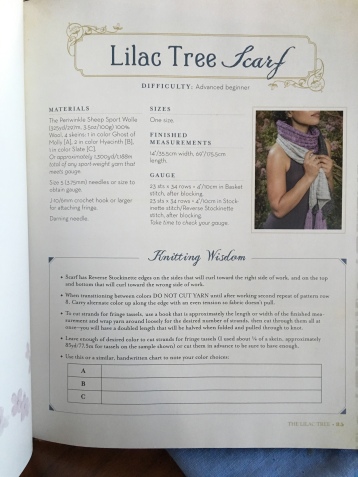
img_1297The knitting patterns are set up in the usual way: materials, needles, supplies, finished measurements, gauge. At the bottom though is a box called “Knitting Wisdom” which gives advice for knitting the project. It is almost as though an experienced knitter was whispering secrets into your ear so your project will turn out just right — like Goldilock’s porridge. The patterns include instructions for amulet bags, hats, shawl, gloves, vest, mittens and a baby blanket.

The volume has an introduction written by Alice Hoffman about the connection between fairy tales and knitting. She asserts that writers should be knitters because both activities require patience, redoing, shifting, imagining, and trusting.


I’ve always believed that knitting is a good practice for writers and that anyone writing fiction should be taught how to knit. There’s much to learn from the perseverance of knitters, their readiness to give themselves over to the process, to enjoy the act of knitting without expectation, to always be willing to change and revise, to make do with what they have, using scraps and bits of pieces that, if they’re lucky, may turn out to be glorious. The courage to take apart what you have worked so hard to create is worthy of a fairy tale heroine. (11)

Alice Hoffman’s stories all have women as their heroines. The women are faced troubles such as trying to keep their husband from another woman, or recovering after a spouse dies, or thriving in difficult circumstances, or bravely facing danger confronting an entire community. All of the narration is third person limited, the characters remain nameless (mostly), and the settings vaguely in the distant past. The first story “Amulet” seems like a variant of Little Red Riding Hood where a girl is given an amulet by her grandmother so she can vanquish a beast (wolf) threatening the village. Another story “Seventh Sister” has aspects of Sleeping Beauty and Joseph and his Coat of Many Colors from the Bible because of the confluence of jealous sisters and a long enchanted sleep. Hoffman does seem to like extending the lives of parents, allowing them to live beyond a 100 years unless she kills them off before the story really begins.

I read all of the stories last night before falling asleep. They were pleasantly enjoyable. And the knitting projects are inventive (especially the double sided rose mittens and the blue heron shawl), so I will have to remember to find this book again in the library sometime in the future.



Posted in book review, books, fairy tales, knitting, Uncategorized | Leave a comment

Sometimes you forgot you already read a particular book

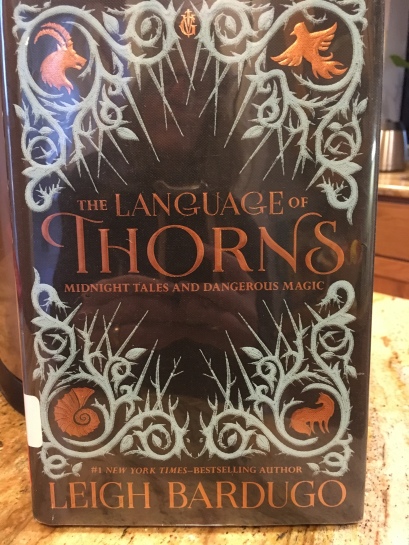
img_1284Leigh Bardugo‘s book The Language of Thorns: Midnight Tales and Dangerous Magic (2017) contains her six modern fairy tales with twists on old storylines to shake up the staid perspectives and assumptions of traditional fairy tales.

I read this book on my kindle as a loan from our public library. Then our school library got a copy of the book and I checked it out. It was not until I started reading the first story that I realized I had already read the book.

Bardugo assigns each tale an imaginary country of origin, and if you look in the back of the book, she provides a map so you can see them. This world is roughly like the current world (at least to my eyes) but with Africa, Europe and Asia still smushed together as though these tectonic plates had not moved apart yet. This is a rather clever play on how folklorists try to assign each fairy tale a country of origin.

The twists in the stories usually come at the end when a sudden revelation is made which makes you rethink the entire tale. In some ways, her narrative technique reminds me of how M, Night Shyamalan reveals at the end of Signs that the Bruce Willis character is actually dead. Her female characters are strong, intelligent, self-willed, and sometimes wicked. For example, she likes to go against stereotypes: the wicked step-mother is actually the little girl’s protecting guardian and the blonde beautiful girl is a cruel huntress. She has her own variants of “Little Red Riding Hood” with werewolf-vampires, “The Little Mermaid,” “The Minotaur,” and “The Nutcracker.’ She is not shy about violence or sex so I would not recommend these tales to the innocent or the young although the beautiful illustrations might make you think that the target audience of this book is the young.

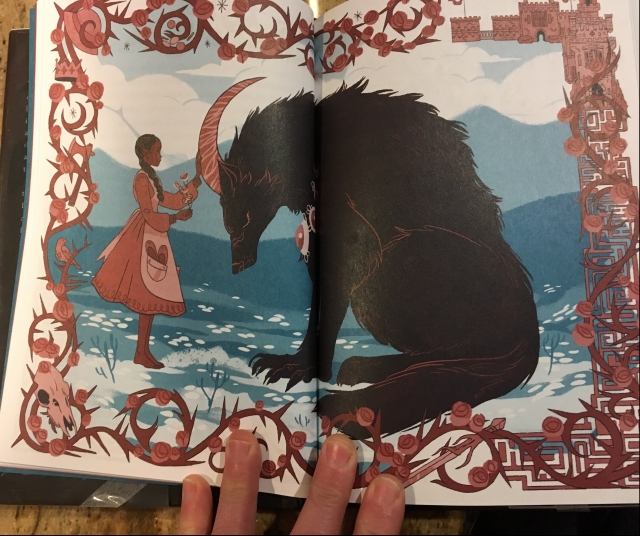
The stories are lavishly illustrated by Sara Kipin in the old-fashioned way with colorful borders and full double-paged drawings. This book really does harken back to the times of the great late Victorian and early twentieth-century illustrators such as Arthur Rackham and Kay Nielsen.

The border illustrations are not static and well worth observing closely because they provide artistic commentary on the action of the tales such as this border for the story “The Too-Clever Fox.” Notice the difference between the vitality status of the creatures on the left-hand side vs the right-hand side.

img_1288

One of the border illustrations for “The Too-Clever Fox”

img_1286.jpg

The last illustration for “Ayama and the Thorn Wood”

Posted in book review, books, fairy tales | Leave a comment

Things Break

img_1283Today I reached for a small ceramic bowl. It was a perfect size. Just right for holding in the palm. It was painted a robin’s egg blue. It looked like a round bird with a little beak and brown eyes and brown wings.
Of course, I dropped it.

I picked up the pieces with a sigh
Holding them for a moment concerned.
Before dropping them silently
In the trash. Finally I did not cry
Over what was broken. I have learned.

(Apologies to R. Frost)


Posted in life in general | Leave a comment