
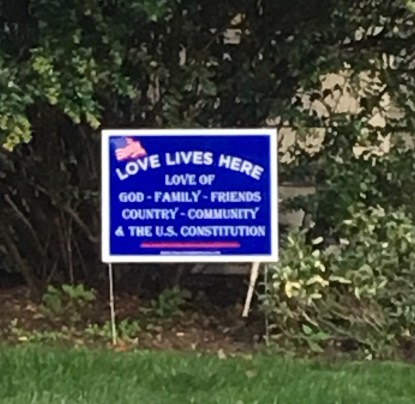
 These signs have been popping up in my neighborhood. I see them every day when I walk the dogs.
I took this picture. It is a little blurry but I did not want to walk onto their lawn to take a picture. Too weird.
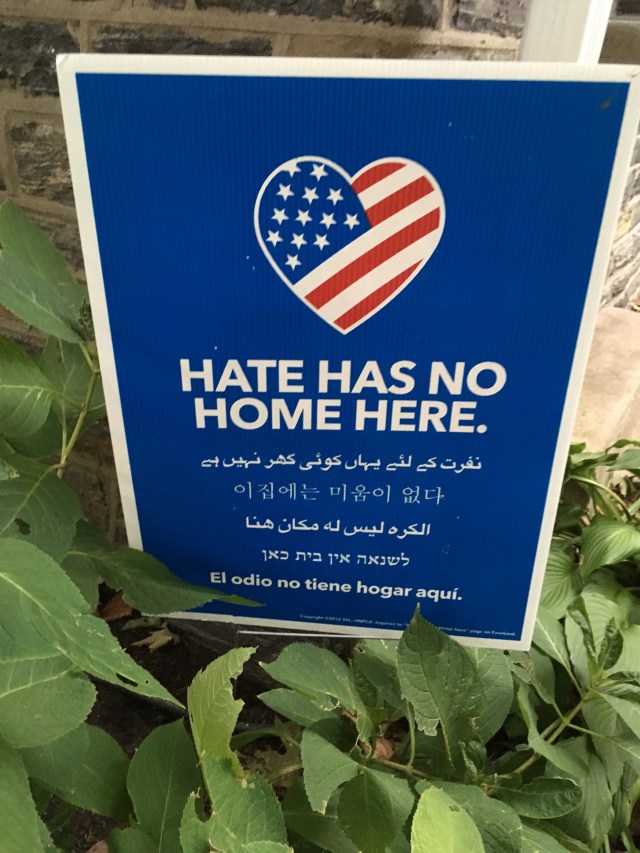
This sign responds to the one that folks like me put up after tRump issued his Muslim ban: “Hate Has No Home Here.”
This conservative reply in the sign wars illustrates the insularity, religiosity, and xenophobia of folks who have this sign.
First, there is the flag of the United States of American. This implies that the message only applies to citizens (and probably not legal aliens).
Second, the first noun of the list is God. This suggests that only believers in some sort of monotheism are included. If you are an atheist or agnostic, you can just forget it.
Third, family and friends — I guess only those folks who are known directly and personally qualify to be loved and treated as human beings.
Fourth, country — well, I guess USA always comes first. You can’t love other countries. Only 1 country.
Fifth, community could imply an embrace of a larger group of people but what about folks who don’t live in your community?
Sixth and worst, the U.S. Constitution. Clearly the message is that the Constitution should be regarded as some sort of sacred document — probably with special reference to the 2nd amendment.
The sign’s underlying message does not signal love of others, but love of a select group of like-thinking people.
Oh, yes. Let me know forget. The entire thing is in English.
Ours includes multiple languages and does not exclude anyone. Who has the better sign?


 Last week I finished the second book in Katherine Arden’s series about Vasilisa and her quest for freedom from medieval Russian norms for girls. The second book picks up exactly where the first book ends. But for those wanting to know about her relationship with the frost demon Morozko, you must wait several chapters as we are told what is happening in Moskow to her sister Olga and her brother Aleksander.






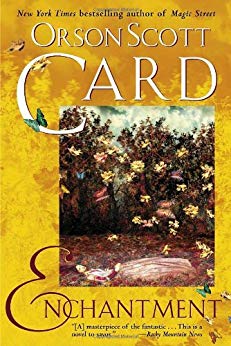 While I was in England, I finished Orson Scott Card’s novel Enchantment which has time-bending, a sleeping princess, linguistics, Baba Yaga, Russian politics, Jewish identity, and lost medieval kingdoms. Card certainly did he research into Proppian structural analysis of Russian fairy tales, synchronic development of folktales and languages, and medieval history. Quite an enjoyable book to read again after 20 years. I remember reading it the first time when we first moved to Philly and the children were quite little and every week we would trundle to the library for them to get out more books.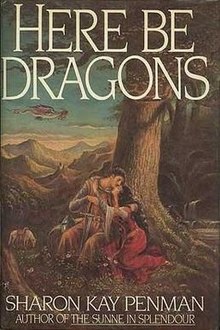






 Who needs to think?